
Gold in modern technology
Gold and Technology
Gold is not just a store of value or a luxury metal. Its conductivity, corrosion resistance, malleability, and reliability make it useful in electronics, aerospace, medical devices, clean-energy systems, and advanced computing.
Start with the technology question you need to answer.
Gold appears in many modern systems, but each use case has a different reason. Use this page to separate physical properties from hype, then move into the deeper GoldConsul guides where the details matter.
Where gold shows up
Electronics, aerospace, medicine, energy hardware, and advanced computing.
PropertiesWhy gold works
Conductivity, corrosion resistance, stability, ductility, and thin-film behavior.
RecoveryWhat recycling can and cannot do
Why industrial recovery differs from extracting gold at home.
ClaimsWhat to verify
How to judge claims about gold in phones, AI chips, solar panels, and e-waste.
Where gold matters in modern technology.
Gold is used when a small amount of material can protect reliability, signal quality, or long-term performance. The metal is expensive, so manufacturers usually use it only where the benefit justifies the cost.
Connectors and circuit contacts
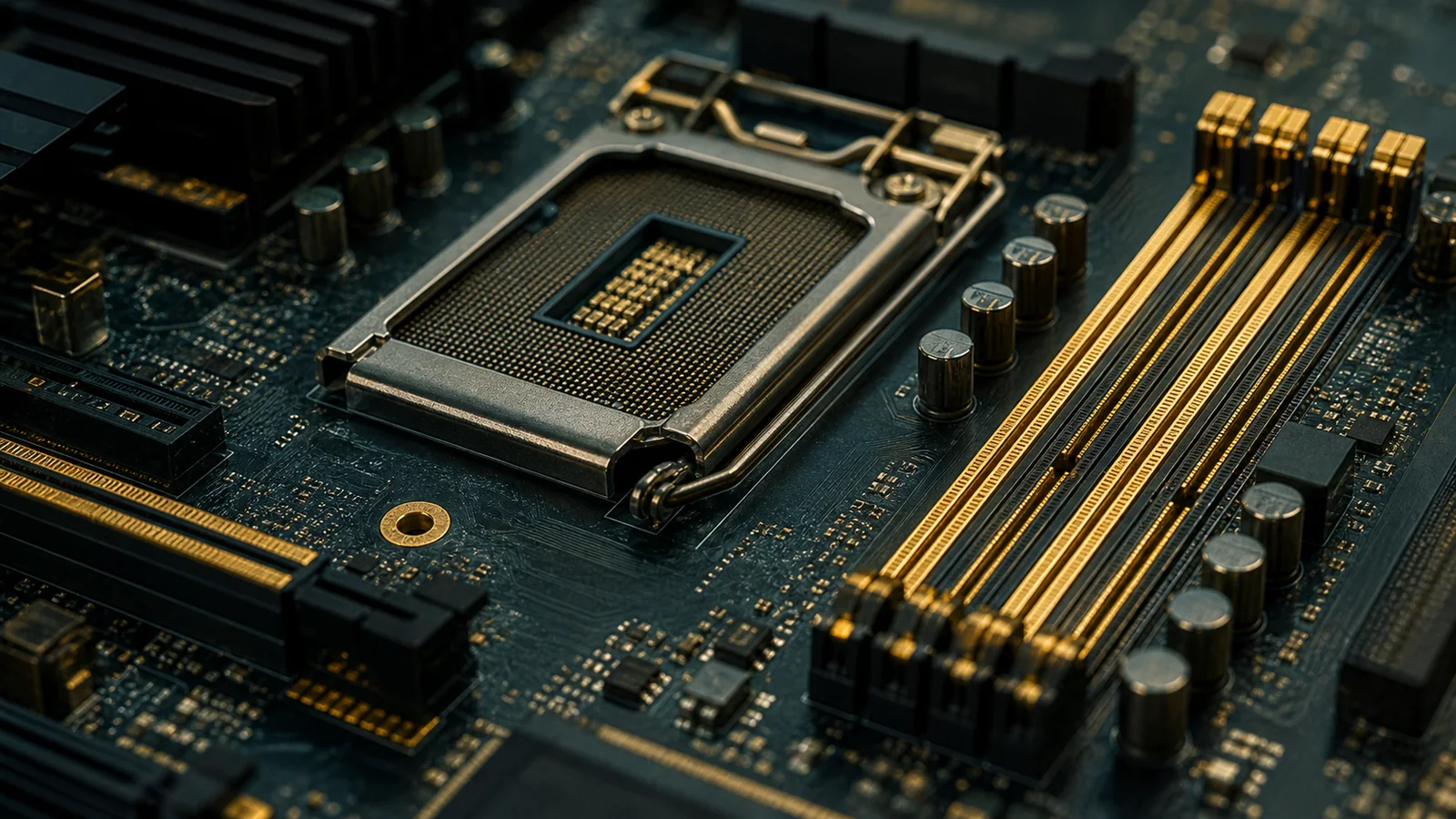
Gold-plated contacts resist corrosion and help maintain stable electrical connections in devices that need dependable signal transfer.
Spacecraft and high-reliability systems
Gold coatings and components are useful where failure is costly and materials must remain stable under demanding conditions.
Medical and dental applications
Gold’s biocompatibility, stability, and workability explain its role in selected dental, diagnostic, and medical technologies.
AI and quantum hardware
Gold can appear in advanced packaging, interconnects, contacts, and research environments where precision and stability matter.
Solar and clean-energy hardware
Gold may be used in specialized components, but most clean-energy stories need context because silver, copper, and other materials usually dominate.
Thin films and coatings
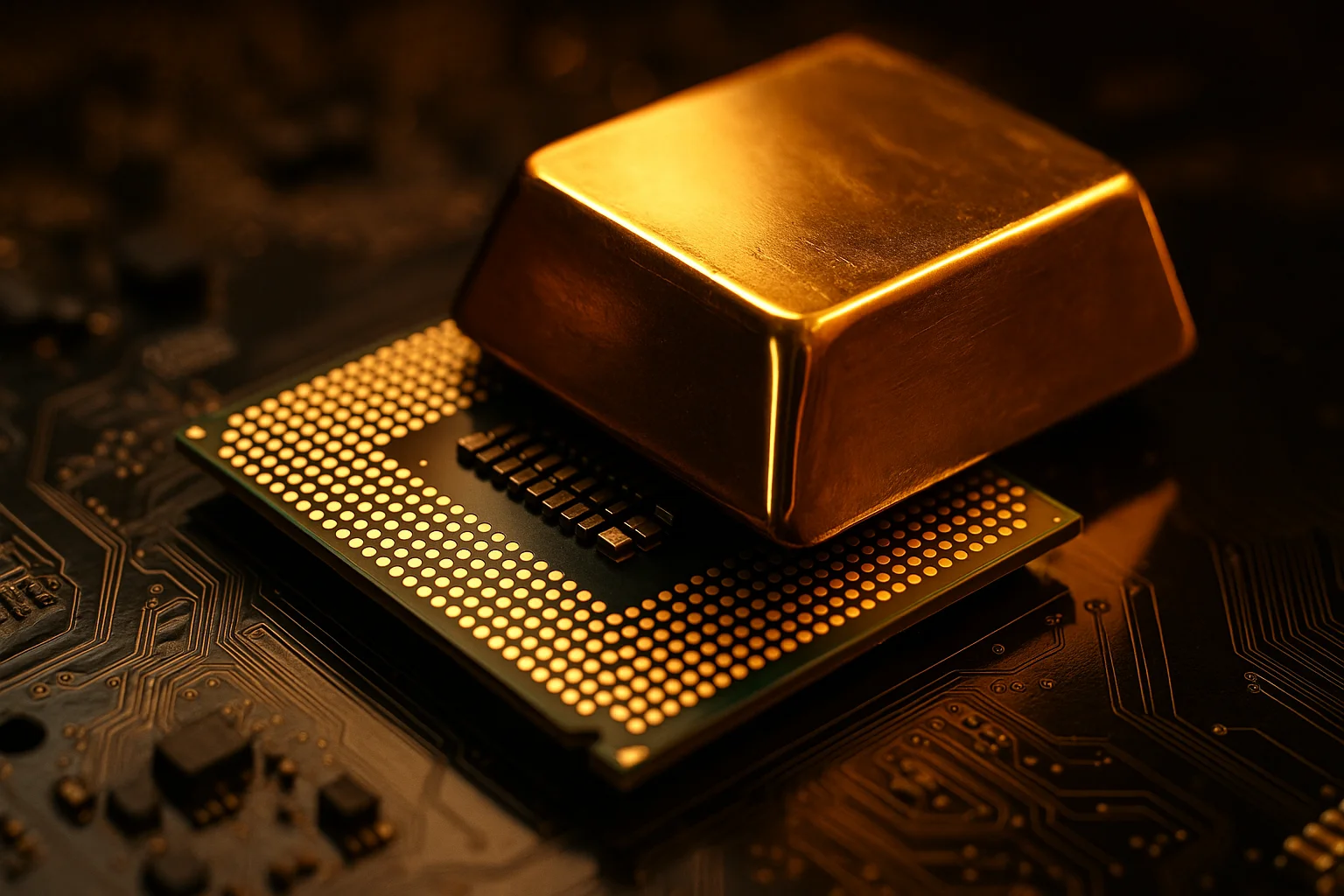
Gold can be deposited in very thin layers, which helps explain why small mass can still matter in high-value technical systems.
Gold is useful because of specific physical properties.
Technology use is not based on gold being glamorous. It is based on predictable material behavior in small, controlled applications.
| Property | Why it matters | Where it appears |
|---|---|---|
| Corrosion resistance | Gold does not oxidize easily, so contacts can remain stable over time. | Connectors, switches, circuit contacts |
| Electrical conductivity | Gold conducts electricity well and can support reliable signal transfer. | Electronics, sensors, advanced packaging |
| Malleability | Gold can be shaped into very thin wires, films, and coatings. | Bonding wires, coatings, specialized components |
| Reflectivity | Gold reflects infrared radiation effectively. | Thermal shielding, selected aerospace uses |
| Biocompatibility | Gold can be stable in some biological and medical contexts. | Dental alloys, diagnostics, biomedical research |
Gold’s role in technology is usually measured in precision, reliability, and performance rather than bulk weight.
The e-waste reality: gold is present, but recovery is not simple.
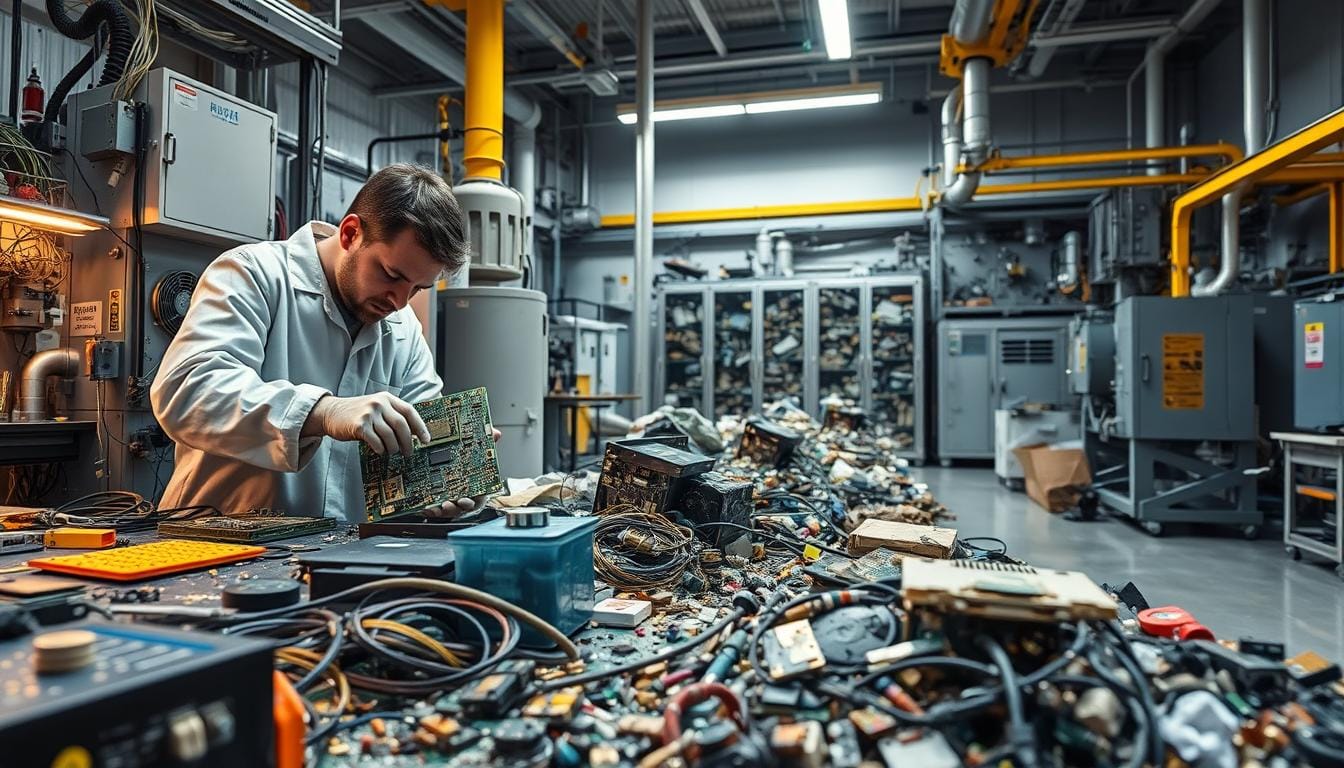
Phones, computers, and electronics can contain gold, but the quantity in one device is usually tiny. Real recovery depends on scale, sorting, chemistry, worker safety, environmental controls, and refining infrastructure.
If you are evaluating an online claim about gold hidden in old electronics, ask whether the claim accounts for labor, hazardous chemicals, yields, equipment, and legal disposal requirements. A device can contain gold and still be impractical for an individual to profitably recover.
| Claim | What to check |
|---|---|
| Old computers are full of gold | Check which parts contain recoverable metals, not the whole device. |
| Home extraction is easy | Check safety, chemical handling, local rules, and actual yield. |
| AI hardware needs huge amounts of gold | Check whether gold is essential in the specific package or just one of several materials. |
| Solar panels contain valuable gold | Check the specific panel type and material stack before assuming recoverable value. |
Technology myths vs practical facts.
Most technology claims about gold contain a useful clue and a missing caveat. Open each claim to see where it helps and where it breaks down.
Myth: Every old device is worth recovering for gold
Electronics can contain gold, but the recoverable value from one device is usually small. Industrial recovery works because it combines large volumes, controlled processes, and professional refining.
Myth: Gold is used only because it is expensive
Gold is used because it solves specific reliability problems. Cost matters, so manufacturers usually avoid gold unless its corrosion resistance or performance benefits are worth it.
Myth: AI and quantum computing will make gold scarce
Advanced computing can use gold in selected components, but broad scarcity claims need evidence about actual material intensity, production volumes, and substitution.
Myth: Recycling gold is always clean
Recycling can reduce mining pressure, but poor recovery practices can create chemical, labor, and environmental risks. Process quality matters.
Five checks before you trust a gold technology claim.
Use this checklist when a claim sounds impressive but does not explain the material, scale, or recovery limits.
What component?
Ask whether the claim refers to contacts, coatings, wires, chips, boards, or the entire device.
How much gold?
Look for mass, thickness, concentration, or yield rather than broad statements.
Why gold?
Identify whether gold is used for corrosion resistance, conductivity, reflectivity, or stability.
Can it be replaced?
Check whether silver, copper, palladium, nickel, or another material can perform the same role.
Is recovery realistic?
Separate industrial recycling from unsafe or uneconomic home extraction.

Check technology claims against stronger sources.
Use these references when a claim depends on gold’s physical properties, mineral supply, electronics recycling, or market demand. They help keep the page grounded in evidence instead of technology hype.
Royal Society of Chemistry
Physical and chemical properties of gold, including element data relevant to durability and conductivity.
Open reference Mineral supplyU.S. Geological Survey
Gold statistics, mining context, reserves, and mineral information from a primary government source.
Open reference Electronics recyclingU.S. EPA electronics management
Context for responsible electronics management, reuse, recycling, and environmental handling.
Open reference Gold demandWorld Gold Council
Market context for how gold demand is categorized across technology, investment, jewelry, and central banks.
Open referenceFAQ: Gold and technology.
Short answers to common questions about why technology uses gold and what those claims mean in practice.
Why is gold used in electronics?
Gold resists corrosion and conducts electricity well, which makes it useful in small contacts, connectors, and high-reliability components where signal stability matters.
How much gold is in a phone or computer?
Usually very little. The exact amount depends on the device, age, board design, and components. Industrial recyclers recover value by processing large volumes, not one device at a time.
Is gold essential for AI hardware?
Gold can be useful in selected high-performance hardware contexts, but broad claims need evidence about the specific component, package, material stack, and production scale.
Can gold in electronics be recycled?
Yes, but responsible recovery requires sorting, refining expertise, environmental controls, and safe chemical handling. Home extraction claims often ignore those limits.
Will technology demand make gold prices rise?
Technology demand is one part of the gold market, but price depends on many forces including investment demand, central banks, jewelry, rates, currency conditions, and supply.
See where gold's properties matter in modern technology.
Gold is useful when conductivity, chemical stability, biocompatibility, or reliability justify the cost. These guides show where that advantage is real.