
Learn how blockchain affects gold trade, tokenized gold, custody, traceability, settlement, and the checks still needed before trusting digital gold.
- Blockchain can improve traceability, settlement records, and tokenized ownership claims.
- It does not prove physical gold exists without custody, audits, assay, and redemption terms.
- Compare legal title, vault provider, fees, liquidity, and regulation before trusting digital gold.
Blockchain is changing gold trade by making some ownership, provenance, settlement, and token-transfer records easier to verify. It does not prove that physical gold exists, is pure, is legally yours, or can be redeemed unless the digital record is tied to vault audits, assay documents, custody terms, and enforceable redemption rules.
- Blockchain can improve recordkeeping for tokenized gold, custody events, provenance, and settlement workflows.
- The hardest part is still off-chain: allocated gold, vault custody, audits, insurance, legal title, and redemption.
- Gold-backed tokens such as PAXG or XAUt are not automatically the same as holding coins or bars yourself.
- Responsible sourcing still depends on refiners, due diligence, chain-of-custody controls, and recognized standards.
- Before trusting digital gold, verify the issuer, custodian, reserve reports, redemption terms, fees, and jurisdiction.
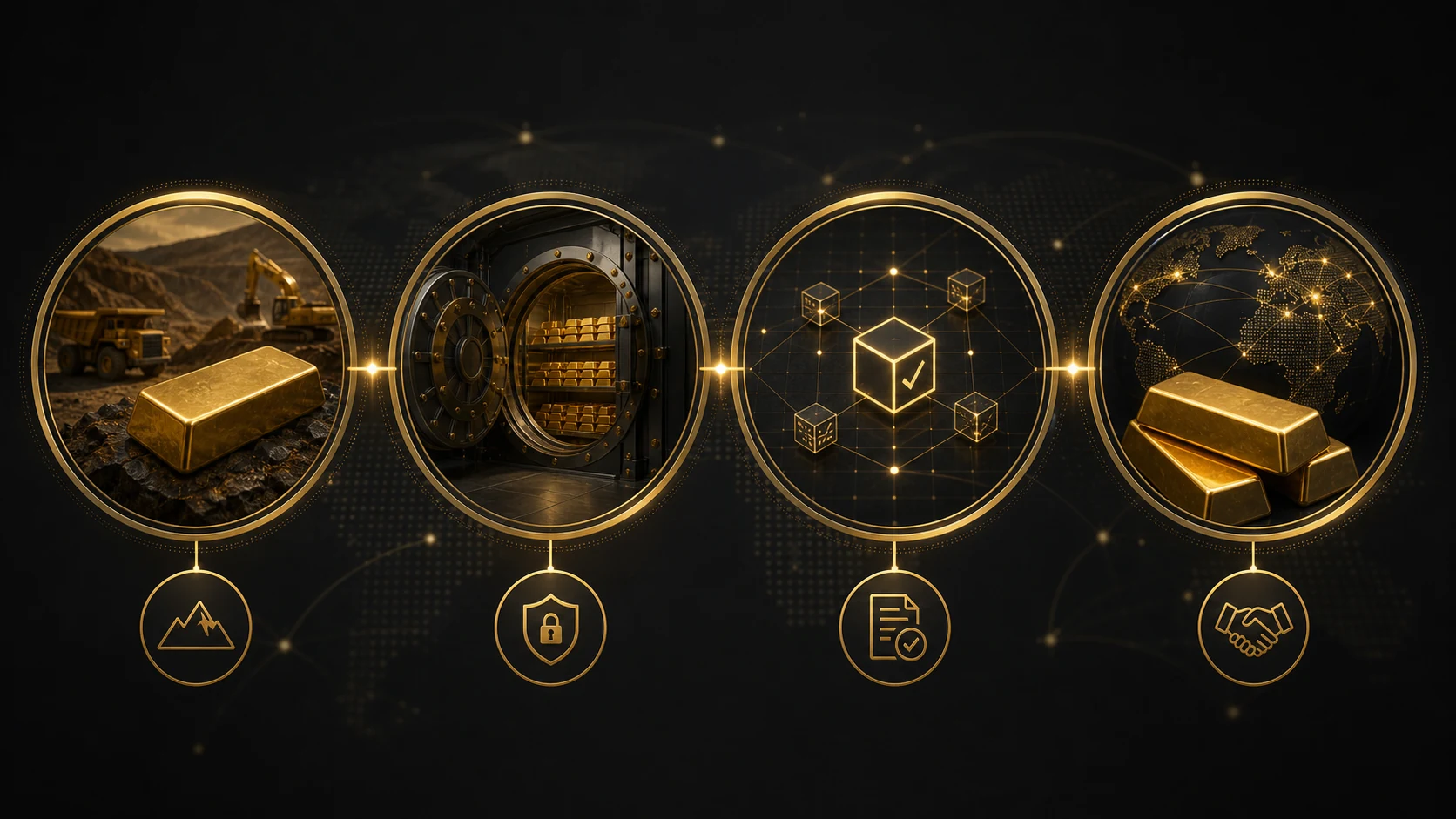
Gold trade has always depended on trust: trust in the refiner, the vault, the assay, the dealer, the transfer record, and the person claiming ownership. Blockchain does not remove that trust layer, but it can make parts of the record easier to share, timestamp, and reconcile. For the broader asset-allocation question, compare gold and crypto by measured risk, liquidity, custody, and portfolio role before focusing on the technology layer.
The practical question is not whether blockchain sounds innovative. The practical question is where the ledger improves a real gold transaction and where old-fashioned verification still matters more.
What blockchain actually changes in gold trade
Blockchain can create a shared record that multiple parties can inspect without relying on one private spreadsheet. In gold trade, that can help when ownership, chain of custody, or settlement events need to be checked across issuers, custodians, exchanges, and users.
The strongest use cases are narrow and practical:
- Tokenized gold: digital tokens that represent a claim linked to physical gold under an issuer’s rules.
- Custody records: logs that connect bars, vault locations, transfers, and ownership claims.
- Supply-chain traceability: provenance data that follows gold from mine, refiner, vault, or product stream.
- Settlement workflow: faster transfer of digital claims, especially where traditional paperwork is slow.
That is different from saying blockchain “authenticates gold.” Physical gold still needs assay, refinery documentation, chain-of-custody records, vault statements, and legal agreements.
Physical gold vs. tokenized gold
Tokenized gold is one of the most visible examples of blockchain in the gold market. A token may be designed to represent a claim on gold held by a custodian, but the quality of that claim depends on the issuer’s legal structure.
This is where readers need to separate three ideas:
- Physical possession: you hold coins or bars directly.
- Allocated custody: a custodian stores specific gold for you under a documented custody agreement.
- Tokenized exposure: you hold a digital token whose rights depend on an issuer, custodian, smart contract, and redemption process.
If your goal is direct physical ownership, start with GoldConsul’s guide to gold bars, buying gold online safely, and where to store gold. If your goal is digital transferability, tokenized gold may be relevant, but it needs a different risk checklist.
| Question | Physical coins or bars | Allocated vault gold | Tokenized gold |
|---|---|---|---|
| What do you rely on? | Dealer reputation, product documentation, testing, secure storage. | Custody contract, vault controls, insurance, audits, withdrawal rules. | Issuer terms, reserve evidence, custodian, smart contract, exchange liquidity. |
| Where can blockchain help? | Mostly provenance or product-record tracking. | Custody-event logging and transfer records. | Token issuance, transfer, redemption tracking, and holder records. |
| Main risk | Theft, counterfeits, storage, resale spread. | Custodian dependency, fees, legal access, audit quality. | Issuer, custodian, regulation, liquidity, redemption, smart-contract risk. |
| Best verification step | Check weight, dimensions, assay/refiner and documentation. | Review allocation, insurance, audits, withdrawal rights, and title language. | Read reserve reports, custody disclosure, redemption terms, and jurisdiction. |
PAXG, XAUt, and the platform details that matter
Gold-backed tokens are often grouped together, but details differ. For example, Paxos describes PAX Gold (PAXG) as a token tied to allocated gold, while Tether Gold (XAUt) describes its token as backed by physical gold held in Swiss vaults.
Those descriptions are a starting point, not a final verdict. Before using any gold-backed token, compare the issuer, custodian, reserve reporting, redemption process, fees, and legal jurisdiction.
| Check | PAX Gold example | Tether Gold example | Why it matters |
|---|---|---|---|
| Issuer | Paxos Trust Company | TG Commodities / Tether Gold structure | The issuer writes the rules that define your claim. |
| Reserve claim | Gold backing and allocation disclosures should be reviewed on the official issuer page. | Vault and reserve details should be checked on the official issuer page. | Do not rely on exchange descriptions alone. |
| Custody | Check vault, allocation, and bar-list language. | Check vault, allocation, and attestation language. | The blockchain token points to an off-chain metal arrangement. |
| Redemption | Review who can redeem, minimums, fees, and documentation. | Review who can redeem, minimums, fees, and documentation. | A token is more useful when exit rules are clear before purchase. |
| Regulatory context | Review the issuer’s stated regulatory status and user restrictions. | Review applicable jurisdiction, terms, and user restrictions. | Rules can differ sharply by country and user type. |
Supply-chain traceability and responsible sourcing
Blockchain can preserve a trail of custody events, but it cannot magically clean a supply chain. The record is only useful if the inputs are reliable and if the organizations entering the data are subject to meaningful controls.
For responsible sourcing, stronger checks still come from established frameworks and audits. The LBMA Responsible Sourcing Programme, the LBMA Responsible Gold Guidance, the Responsible Jewellery Council chain-of-custody standard, and the OECD due diligence guidance for minerals are more important than a digital ledger alone.
For readers, the practical takeaway is simple: a blockchain record can make provenance easier to inspect, but it should point back to recognized sourcing controls, refiner standards, audits, and documentation.
Where blockchain can mislead gold buyers
The biggest mistake is treating a transparent token transfer as proof of physical backing. Blockchain may show that a token moved from one wallet to another, but it does not automatically prove what sits in the vault.
Regulation, AML, and user restrictions
Gold-backed tokens can sit at the intersection of commodities, payment systems, securities analysis, virtual assets, custody rules, and anti-money-laundering controls. The exact treatment depends on the product and jurisdiction.
In the United States, FinCEN guidance on virtual currency activity is a useful reminder that administrators, exchangers, and users can face different obligations depending on their role. Readers outside the U.S. should check local rules before relying on token access, redemption rights, or exchange liquidity.
This article is educational, not financial, legal, or tax advice. If meaningful money is involved, check the issuer terms and ask a qualified professional about your jurisdiction.
Blockchain gold trade checklist
Use this sequence before treating any blockchain-based gold product as a serious ownership or investment option.
How this fits with the wider gold market
Digital infrastructure matters because gold is a global market with many handoffs. The World Gold Council’s Gold247 initiative and its research on shared digital infrastructure show why the industry is exploring ways to make gold records more transparent and easier to settle.
Still, blockchain is not the whole gold market. Price discovery, benchmark pricing, mine supply, central bank demand, bullion settlement, and investor flows remain part of the broader context. For that wider frame, see GoldConsul’s guides to the global gold market, gold price history, and why gold prices rise.
What to read next
Sources and stronger references
Use primary and high-authority references when a blockchain gold claim depends on custody, standards, sourcing, pricing, or virtual-asset rules.
FAQ: how blockchain is changing gold trade
How is blockchain changing gold trade?
Blockchain can improve records for ownership, provenance, custody events, token transfers, and settlement. It does not replace physical verification, vault audits, assay records, legal title, or redemption terms.
Is tokenized gold the same as owning physical gold?
No. Tokenized gold is a digital claim or representation tied to the issuer’s rules. Direct physical ownership, allocated custody, and tokenized exposure have different risks.
Can blockchain prove that gold is responsibly sourced?
Not by itself. It can store provenance records, but trustworthy sourcing still depends on refiners, audits, chain-of-custody controls, and recognized standards.
What should I check before using a gold-backed token?
Check the issuer, custodian, allocation language, reserve reports, redemption rules, fees, smart-contract risk, liquidity, and jurisdiction.
Does blockchain remove counterparty risk in gold trading?
No. Tokenized gold can still depend on issuers, custodians, exchanges, auditors, smart contracts, and legal enforceability.
 When you purchase a service or a product through our links, we sometimes earn a commission, at no extra cost to you.