
Gold essentials guide
Gold Facts and Myths
A practical guide to what gold is, why people value it, which claims deserve caution, and where to go next when you need to test, store, buy, or understand gold.
Start with the part of gold you want to understand.
Choose the part of gold you want to understand first, then use the deeper guides to check testing, investing, storage, history, and common claims with more confidence.
What gold physically is
Density, softness, conductivity, corrosion resistance, and purity basics.
MythsClaims that need context
Safe-haven narratives, magnet tests, tarnish claims, and rarity myths.
CultureWhy gold became symbolic
Ancient wealth, ritual objects, religion, trade, and mythology.
Next stepsUse a practical guide
Test gold, calculate purity, compare bullion, or choose storage.
Core facts about gold.
Gold’s value starts with unusual physical and chemical properties. These facts also explain why simple home tests can help, but rarely prove authenticity on their own.
| Fact | Why it matters |
|---|---|
| Chemical symbol: Au | From the Latin aurum, used in chemistry, assays, mint specifications, and technical references. |
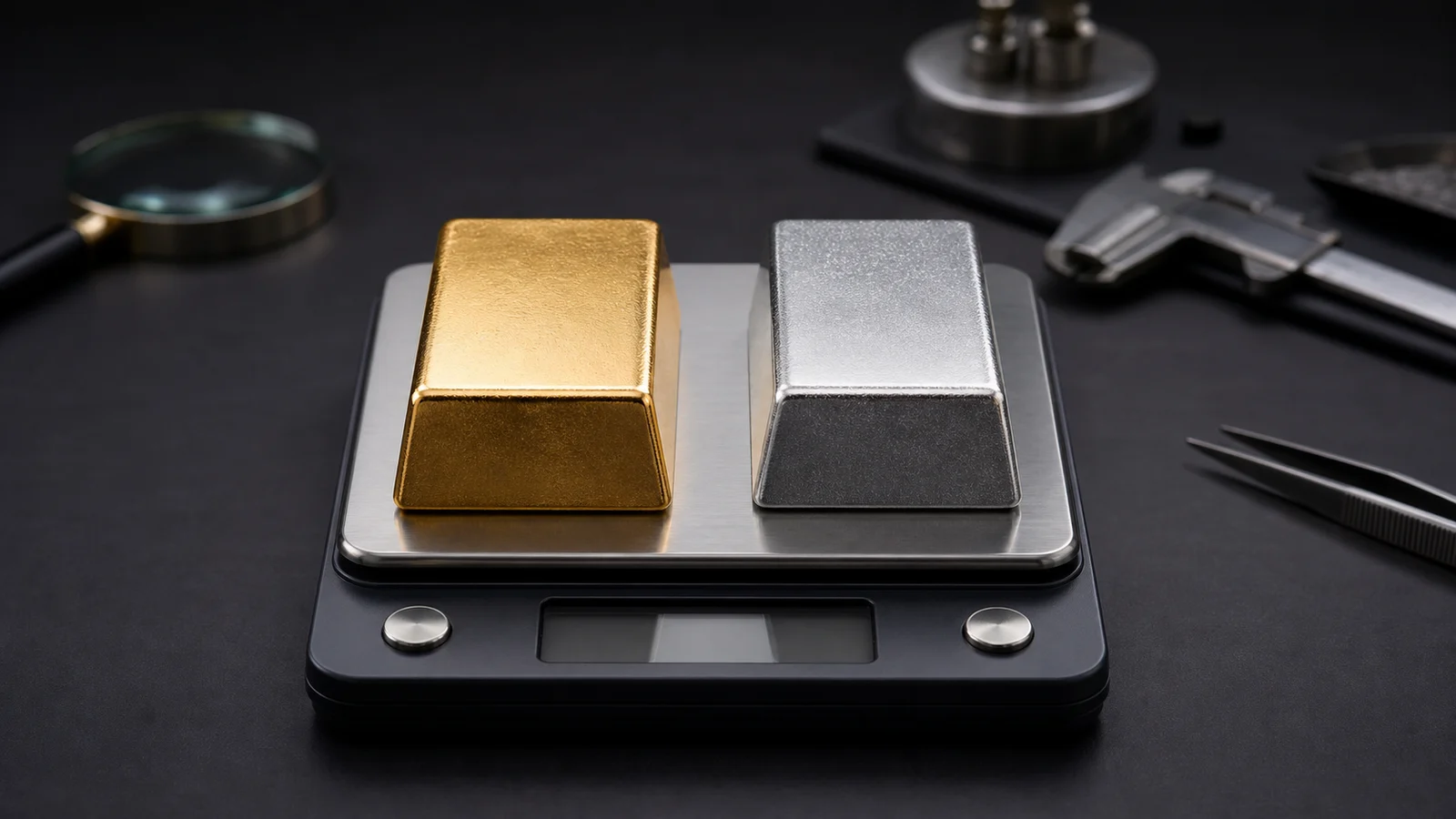
| High density | Gold feels heavy for its size. Density checks can help screen suspicious pieces, but dimensions and alloy composition matter. |
| Soft and malleable | Pure gold is too soft for many everyday jewelry uses, so alloys create 22K, 18K, 14K, and other practical forms. |
| Low reactivity | Gold resists corrosion, which is why it survives in artifacts and is valued for reliable electrical contacts. |
| Excellent conductor | Gold appears in electronics where reliability and corrosion resistance justify the cost. |
Gold myths vs facts.
Most gold myths contain a small piece of truth. The risk is treating that clue as proof. Open each claim to see where it helps and where it breaks down.
Myth: Gold is always a safe investment
Gold can reduce some portfolio risks, but it still moves in price, has spreads, and produces no income. Treat it as an asset with tradeoffs, not a guaranteed outcome.
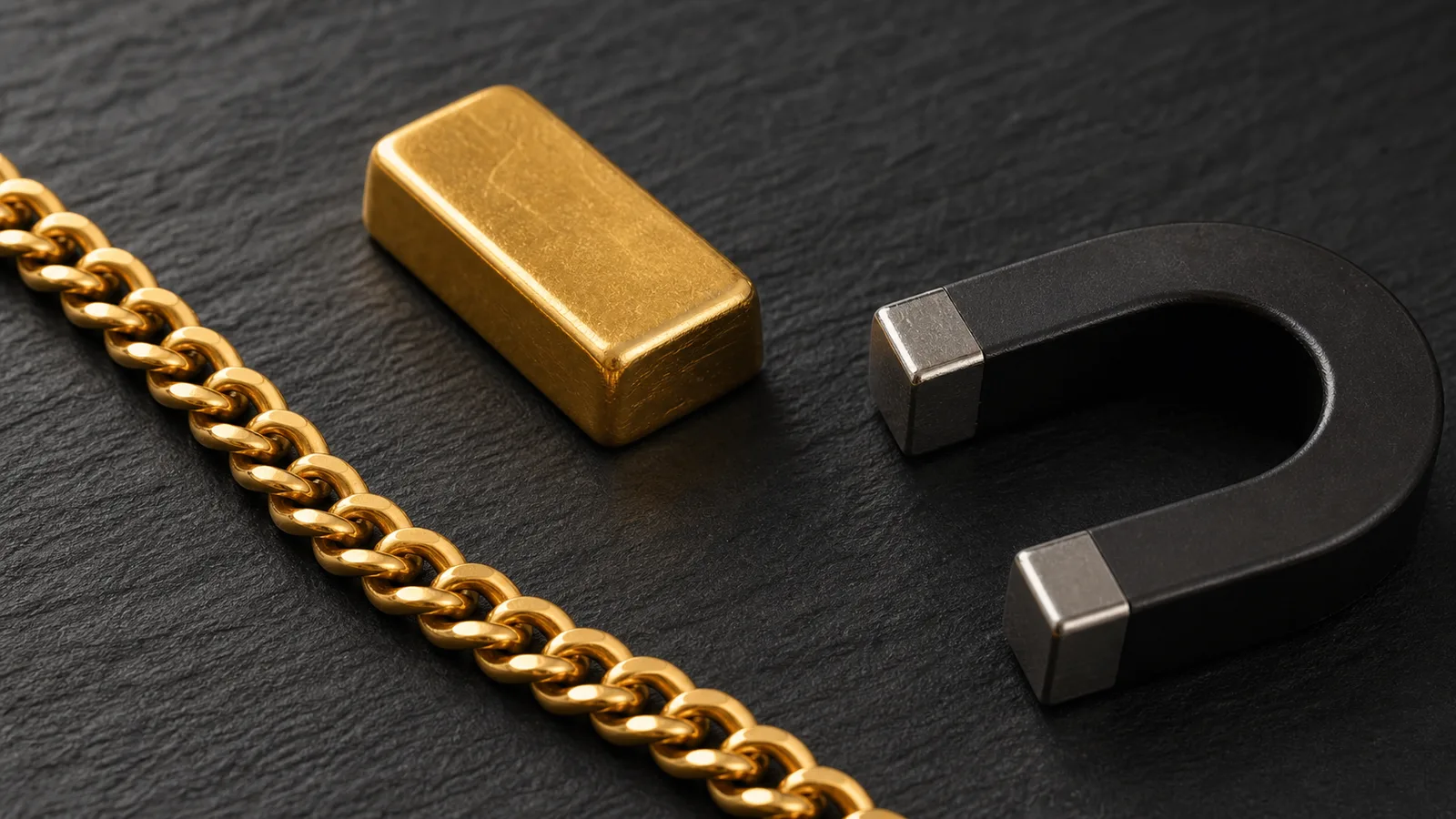
Myth: A magnet test proves gold is real
Gold itself is not magnetic, but many fake or mixed pieces can pass a magnet screen. Use magnet tests only as a first clue, then check weight, dimensions, documentation, and professional testing.
Myth: Pure gold never changes
Gold is highly resistant to corrosion, but jewelry is often alloyed. Tarnish, color changes, and surface damage usually involve alloy metals, plating, chemicals, or wear.
Myth: All gold is easy to sell
Liquidity depends on form, purity, documentation, recognizability, dealer demand, and spreads. A widely recognized bullion coin is not the same as scrap jewelry or an obscure bar.
Why gold became a cultural signal.
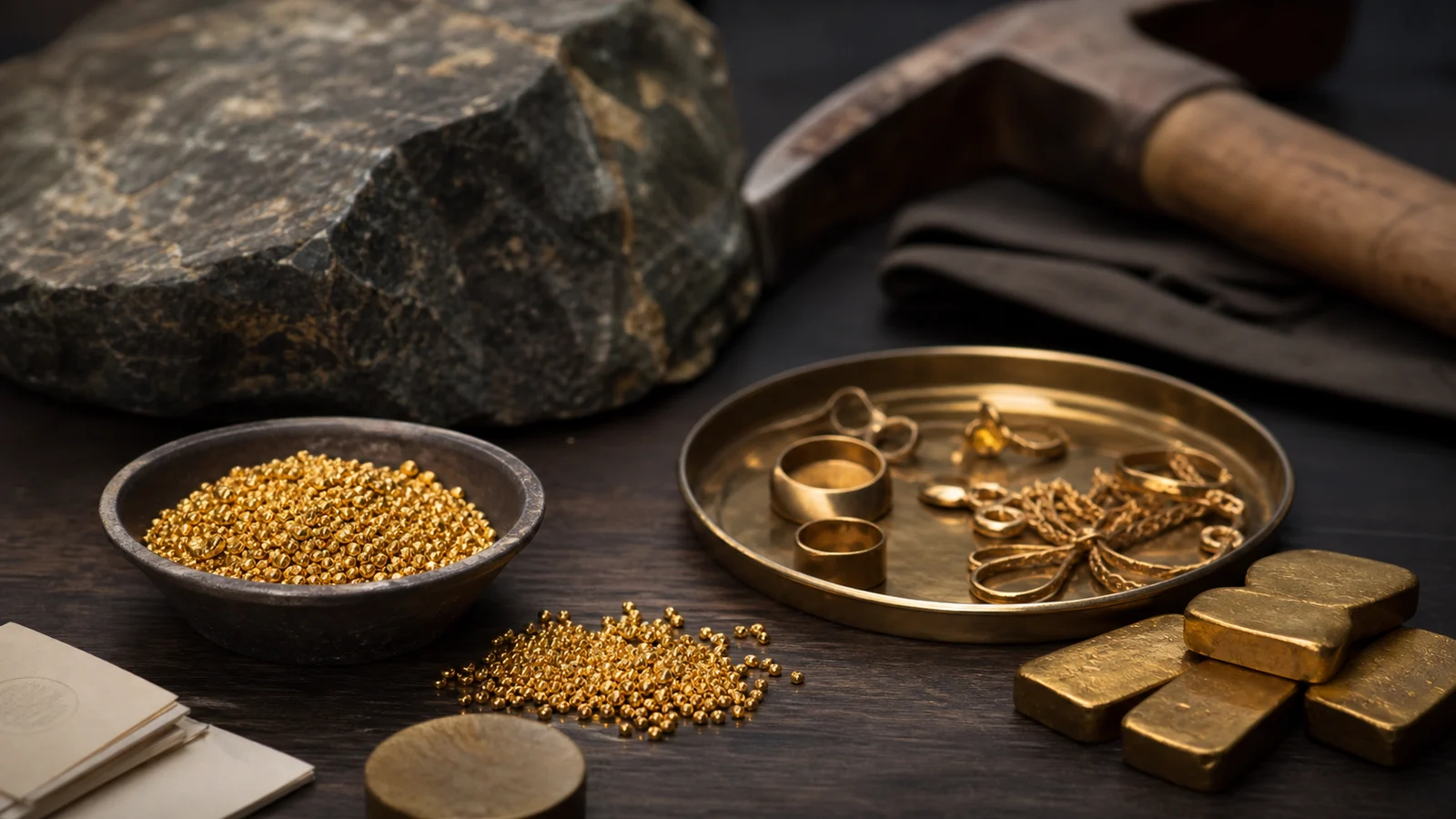
Gold’s durability, color, scarcity, and workability made it a natural material for status objects, religious artifacts, trade, and myth.
Ancient societies used gold because it could survive burial, be shaped into intricate objects, and visually signal permanence. That physical durability helped create symbolic durability: gold became associated with divinity, kingship, wealth, purity, and cosmic order.
The important distinction is evidence. Gold appears in archaeology, coins, trade records, religious art, and myth, but not every legendary gold story should be read as literal history.
A useful approach is to separate three layers: confirmed material evidence, written historical claims, and later symbolic interpretation. A gold object in a burial site is evidence of craft, status, and access to materials. A later legend about endless gold may tell us more about desire, power, or moral warning than about literal supply.
Gold in science and technology.
Gold is expensive, so industry uses it where performance matters enough to justify the cost.
Electronics use very small amounts of gold in contacts and connectors because reliability matters. Dentistry, medicine, aerospace applications, and nanotechnology also use gold in specialized contexts.
This does not mean every device contains a recoverable fortune. In consumer electronics, gold quantities are usually tiny, and recovery depends on scale, process, and environmental controls.
The useful context is practical. Gold is not only valuable because people agree it is beautiful. It has technical uses because it resists oxidation, conducts electricity, and can be applied in very thin layers. That same context also prevents exaggeration: a phone or computer may contain gold, but the recoverable amount is usually small compared with the labor, chemical handling, and recycling infrastructure required.
See gold in computersGold as money, bullion, and portfolio asset.
Gold’s investment role is real, but it is often oversimplified. The practical questions are form, premium, spread, custody, liquidity, and time horizon.
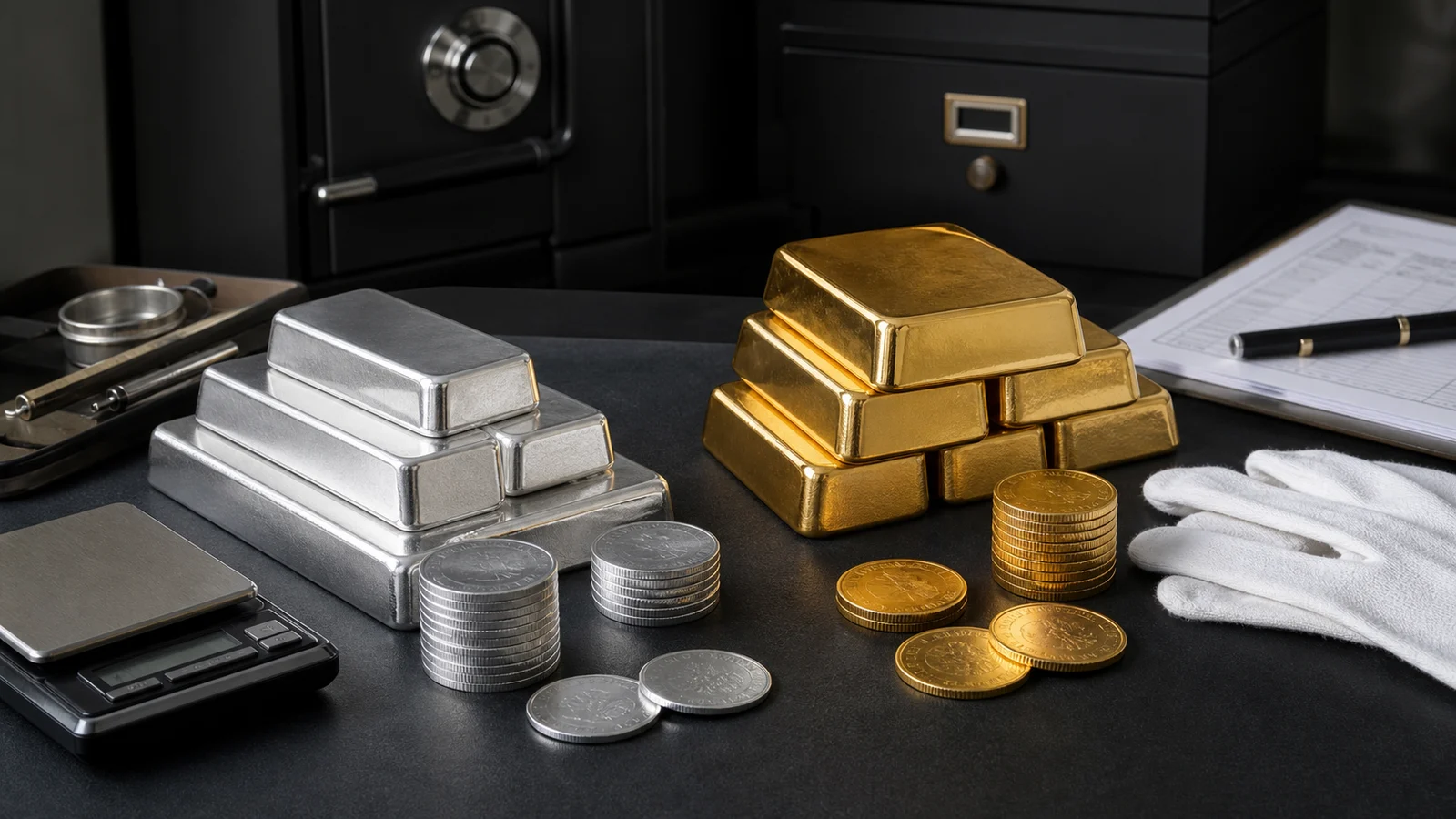
People hold gold as jewelry, bullion bars, coins, exchange-traded products, central bank reserves, and collectible items. Each form behaves differently. A bullion coin is easier to price than heirloom jewelry; allocated vault storage is different from a small home safe.
Gold also carries different costs depending on how it is owned. A coin may have a premium over spot price. A bar may need stronger documentation for resale. Jewelry includes craftsmanship and alloy value, not just melt value. Storage can add insurance, transport, and custody questions. Long-term gold price history helps put value claims into context, but these practical details matter more than broad slogans about gold being timeless.
What to do next.
If a fact or myth connects to a real purchase, sale, test, or storage decision, use a focused guide instead of relying on a general rule.
Check gold price context
Understand spot price before comparing premiums or offers.
PurityCalculate gold content
Convert karats and fineness into practical purity estimates.
TestingVerify gold responsibly
Compare home checks with professional assay limits.
StorageChoose safer storage
Compare home safes, deposit boxes, insured vaults, and documentation.
Five practical questions before you trust a gold claim.
Gold facts become useful when they help you decide what to check next. These questions turn broad claims into a practical review process.
What form of gold is this?
A coin, bar, chain, plated item, scrap lot, ETF, or ancient artifact all need different evidence.
What purity is being claimed?
24K, 22K, 18K, 14K, 10K, and fineness marks imply different gold content and different expectations.
What proof supports the claim?
Look for assay certificates, mint packaging, dealer invoices, hallmark context, grading records, or professional testing.
What would change the value?
Premium, spread, condition, liquidity, design, provenance, and storage can matter as much as the metal itself.
How to read gold claims without overreacting.
Gold claims often swing between two extremes: promotional certainty and dismissive skepticism. A better habit is to ask what kind of claim is being made.
If a claim is about physical properties, it should match chemistry and materials science. If it is about history, it should be tied to artifacts, inscriptions, coins, or credible scholarship. If it is about investment, it should distinguish between long-term portfolio role, short-term price movement, and the costs of buying or selling.
| Claim type | Best evidence to look for |
|---|---|
| Authenticity claim | Weight, dimensions, purity marks, trusted documentation, assay results, and dealer reputation. |
| Historical claim | Archaeological context, primary texts, mint records, museum documentation, and careful dating. |
| Investment claim | Spot price context, premium, spread, liquidity, storage, tax boundaries, and time horizon. |
| Technology claim | Industrial usage data, material specifications, recycling economics, and process constraints. |
| Mythological claim | Whether the story is being treated as literature, moral teaching, cultural memory, or literal event. |
Editorial perspective.
Use the sections above as a map, not as final proof. Gold is a topic where physical facts, cultural meaning, and financial narratives often get mixed together.
Where basic facts can mislead.
A gold fact becomes useful only when you know what decision it can support. Density can help screen a suspicious item, value depends on form and purity, history needs evidence, and safety depends on storage, liquidity, and documentation.
Gold is dense
True, but not enough. The useful question is how density helps screen suspicious bars, coins, and jewelry.
Gold is valuable
True, but vague. The practical issue is how value changes with purity, form, premium, spread, and resale demand.
Gold has history
True, but broad. The better question is whether a claim is archaeological, religious, literary, or commercial.
Gold is safe
Too simple. Gold can diversify some risks while adding others, including price volatility, storage, and liquidity costs.
Test your gold knowledge.
A short check for the basic ideas above.
Which clue is useful but not enough to prove a gold item is authentic?
FAQ: Gold facts and myths.
Short answers to common questions about gold facts, myths, testing, value, and history.
Is gold magnetic?
Pure gold is not magnetic. A magnet test can flag some problems, but passing a magnet test does not prove an item is genuine.
Why is gold valuable?
Gold combines scarcity, durability, workability, cultural history, liquidity, and financial demand. No single factor explains its value by itself.
Does gold tarnish?
Pure gold is highly resistant to tarnish. Jewelry can discolor because of alloy metals, plating, chemicals, dirt, or surface wear.
Is gold rare?
Gold is geologically scarce and expensive to mine, but rarity depends on context: ore grades, recoverability, refined stock, and above-ground holdings all matter.
Is gold always a safe investment?
No. Gold can play a role in diversification, but price, spreads, storage, tax treatment, and time horizon matter.
Check gold claims against stronger sources.
Use these references when a gold claim depends on geology, market structure, refinery standards, or physical properties. They are not a shortcut for assay or professional valuation, but they help separate useful facts from loose claims.
U.S. Geological Survey
Gold statistics, mine supply context, reserves, and mineral information from a primary government source.
Open reference Market contextWorld Gold Council
Global gold demand, investment context, market education, and research on how gold is used and owned.
Open reference Refinery standardsLBMA Good Delivery
Recognized refinery and bar standards that matter for institutional trust, documentation, and resale confidence.
Open reference Element propertiesRoyal Society of Chemistry
Physical and chemical properties of gold, including element data that explains durability and technical use.
Open referenceCheck the material details behind common gold claims.
Simple gold claims often hide alloy, plating, magnetism, or surface-chemistry details. These guides help you decide which clue matters and when it does not.