
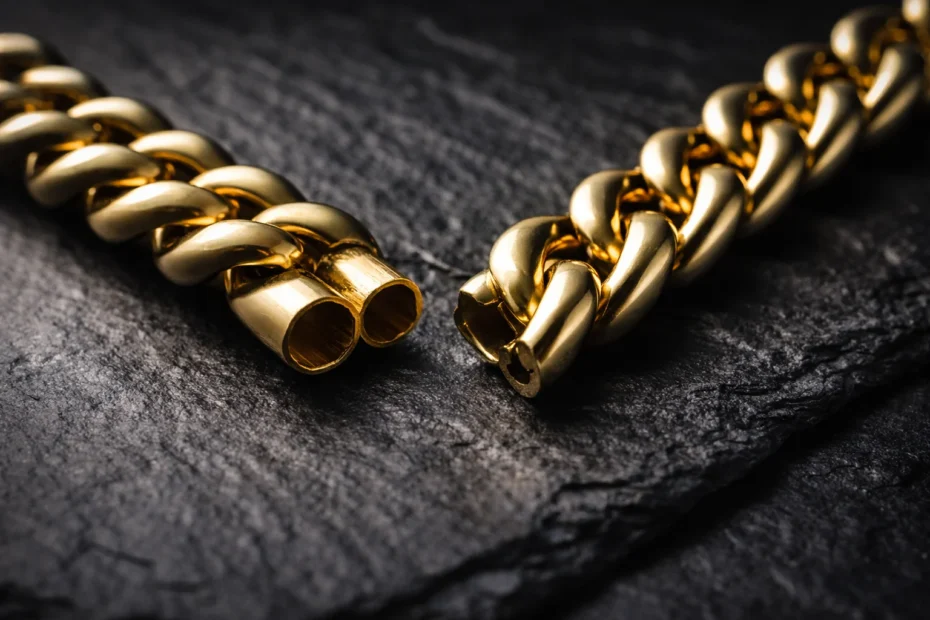
The scenario is familiar to any seasoned jeweler: a client’s eyes light up at a thick, shimmering Cuban link chain that seems too good to be true. It looks heavy, substantial, and undeniably expensive.
Then, they see the price tag. It is hundreds—sometimes thousands—of dollars less than they expected. Their pulse quickens. Have they found the deal of the century, or is something amiss? This is where the question “What is hollow gold?” usually enters the conversation.
As a historian and market analyst, I often see buyers torn between the allure of a “big look” and the fear of buying something “fake.” Let me be clear right from the start: hollow gold is not fake.
However, it is a distinct category of jewelry with its own set of rules, risks, and rewards. This guide will strip away the marketing jargon and give you the unvarnished truth—the kind usually reserved for industry insiders—about what you are actually buying when you choose hollow gold.
Key Takeaways: The “Too Long; Didn’t Read” Summary
- It Is Real Gold: Hollow gold is made from genuine gold alloys (10k, 14k, 18k), just like solid jewelry. The difference is purely structural.
- The Weight Difference: By removing the inner core, manufacturers reduce the weight (and cost) by up to 70%.
- The Durability Trade-Off: Hollow pieces are significantly more prone to denting and crushing than solid pieces.
- Repair Issues: Most hollow jewelry is difficult or impossible to repair because the thin metal melts under a jeweler’s torch.
- Best For: Earrings, pendants, and occasional-wear statement chains.
- Avoid For: Daily-wear bracelets, wedding rings, or active lifestyles.
📜 The Historian’s Log
I vividly remember a rainy Tuesday in the late 1990s when a young man walked into the shop where I was apprenticing. He was holding a tissue. Inside was a tangled, crushed lump of yellow metal—what used to be a thick 14k gold rope chain. He had bought it for a great price just a week earlier. The night before, he had fallen asleep wearing it. That was it. The weight of his own head against the pillow had flattened the delicate hollow links, turning a beautiful necklace into scrap metal overnight.
I had to deliver the bad news: we couldn’t fix it. The links were too thin to solder without melting them entirely. That moment stuck with me. It taught me that the true “cost” of gold isn’t just the price tag; it’s the suitability of the piece for the life you live. Since then, I’ve made it my mission to ensure every collector understands exactly what “hollow” means before they open their wallet.
What Is Hollow Gold, Exactly?
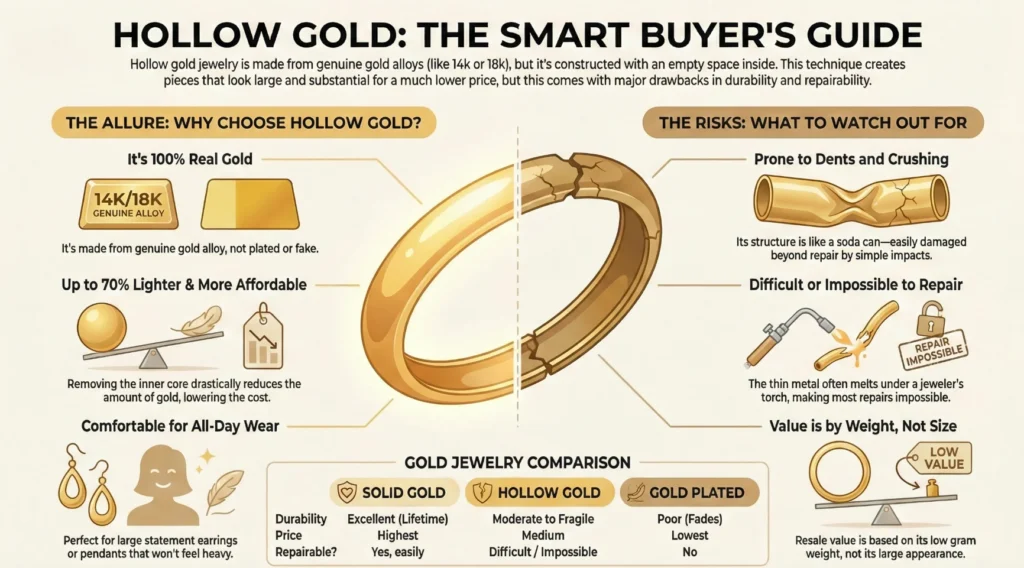
In the simplest terms, hollow gold is jewelry constructed with an empty space inside. Imagine a gold pipe versus a gold rod. Both are made of the exact same material—let’s say 14k gold—but the pipe uses significantly less metal to achieve the same outer diameter.
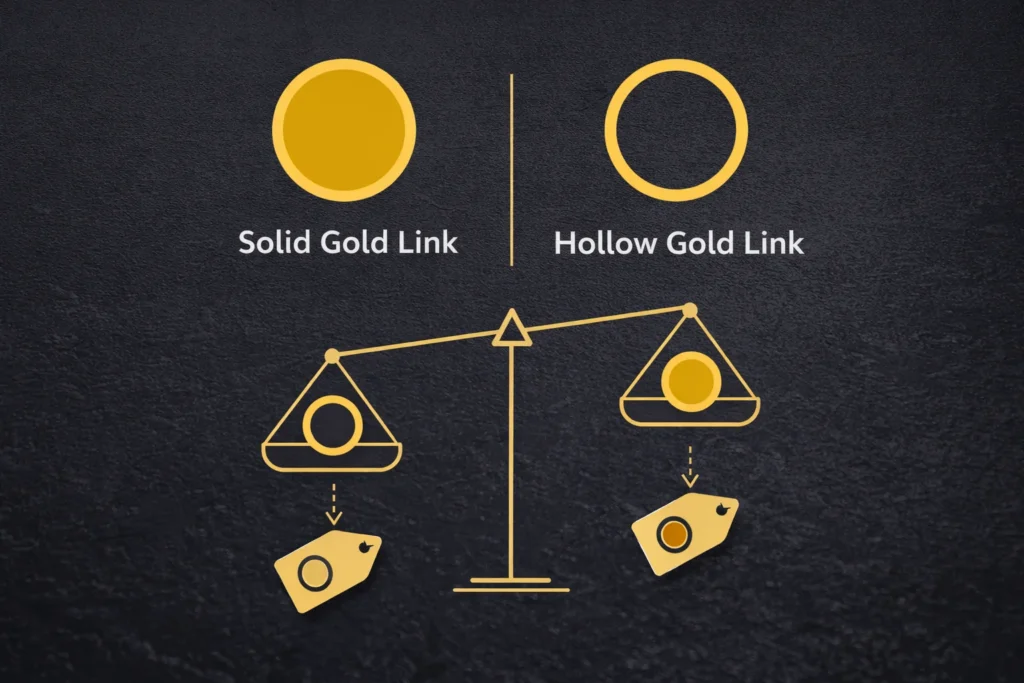
Jewelers use this technique to create pieces that look voluminous and bold but remain lightweight and affordable. If you were to cut a cross-section of a hollow gold chain link, you would see a tube-like structure. If you did the same to a solid gold link, you would see a continuous, dense mass of metal throughout.
This construction method allows you to wear a large pair of hoop earrings that don’t drag on your earlobes, or a wide bracelet that doesn’t weigh down your wrist. It is a triumph of engineering, balancing aesthetics with economics.
Is Hollow Gold “Real” Gold?
This is the most common fear buyers have. The short answer is yes.
Hollow gold jewelry is stamped with a karat mark (like 10k, 14k, or 18k), just like its solid counterparts. This stamp certifies the purity of the alloy used to create the outer walls of the piece according to FTC guidelines.
If you melt down a hollow 14k gold chain, the resulting puddle of metal is genuine 14k gold. It will pass any acid test and verify if your gold is real.
However, the distinction lies in the quantity of gold you are purchasing.
- Solid Gold Chain: Might contain 50 grams of pure gold alloy.
- Hollow Gold Chain: The exact same size might contain only 15 grams of gold alloy.
You are paying for less raw material, which is why the price is lower. You are not buying “fake” gold; you are simply buying less gold, shaped to look like more.
💎 Myth vs. Reality
Myth: Hollow gold is the same thing as gold-plated jewelry.Reality: This is false. Gold-plated jewelry is made of a non-gold base metal (like copper or brass) dipped in a microscopic layer of gold. It has almost no intrinsic value. Hollow gold is made entirely of gold alloy through and through—it just happens to be a tube rather than a solid rod. It has real scrap value, whereas plated jewelry does not.
The Engineering: How Hollow Gold Is Made
To understand the durability of these pieces, you have to understand how they are built. There are two primary methods used in modern manufacturing, largely centered in jewelry hubs like Italy, Turkey, and Peru.
1. Electroforming
This is a sophisticated high-tech process. A wax or resin mandrel (a core in the shape of the jewelry) is placed into an electrolytic bath containing gold particles. Through an electrical current, gold is deposited onto the wax core layer by layer.
The Gemological Institute of America (GIA) notes that once the desired thickness is reached, the wax is melted or chemically dissolved out through tiny holes, leaving behind a seamless, hollow gold shell. Electroformed pieces are often very lightweight and intricate, but they can be fragile.
2. Stamping and Seaming
This is the traditional method for making chains like Rope chains or Cuban links. Thin sheets of gold are stamped into “half-shapes”—imagine a hot dog bun split in two. These two halves are then soldered or fused together to create the hollow link.
If you look closely at some lower-quality hollow chains, you might even see the faint seam line running along the inner or outer edge. This seam can be a weak point, especially if the chain is subsequently ‘diamond cut’ to add sparkle—a process that shaves off even more metal from the already thin walls.
The Great Debate: Hollow vs. Solid vs. Plated vs. Filled
When you are shopping on a budget, you are likely comparing hollow gold not just to solid gold, but also to gold-filled alternatives. Here is how they stack up in a direct comparison.
| Feature | Solid Gold | Hollow Gold | Gold Filled | Gold Plated |
| Material | 100% Gold Alloy | 100% Gold Alloy (Empty Center) | Brass core w/ thick gold sheet | Base metal w/ microscopic gold dip |
| Durability | Excellent (Lifetime) | Moderate (Fragile to dents) | Good (10-30 years) | Poor (Fades in months/years) |
| Price | $$$$ | $$ | $ | ¢ |
| Weight | Heavy | Light | Medium | Variable |
| Resale Value | High | Moderate (Scrap value) | Low | None |
| Repairable? | Yes, easily | Difficult to Impossible | Difficult | No |
The Unspoken Risks: Durability and Repair
This is the section most jewelers gloss over, but as your historian and analyst, I must be blunt. The biggest drawback of hollow gold is its structural vulnerability.
The “Soda Can” Effect
Think of a solid gold ring as a steel bar. You can drop it, step on it, or bang it against a table, and it remains intact. Now, think of a hollow gold bracelet as an aluminum soda can.
It is rigid enough to hold its shape under normal tension, but a single well-placed impact—like catching it on a doorframe or stepping on it—causes a catastrophic structural collapse rather than a simple dent.
Once hollow gold is dented, the structure is compromised. You cannot simply “buff out” a dent in a hollow tube; the metal is stretched and deformed.
The Repair Nightmare
Solid gold is easy to fix. If a link breaks, a jeweler applies heat, adds solder, and fuses it back together. The metal can handle the heat.
Hollow gold is different. The walls of the gold tubing are often paper-thin. When a jeweler applies a torch, the intense heat often causes the thin gold walls to retreat and pull apart, turning a hairline fracture into a gaping hole before the solder can even bond.
Many repair shops will refuse to work on hollow rope chains or lightweight bangles for this reason. They know that trying to fix it often makes it worse.
If you own hollow jewelry, you must treat it with a level of care that solid gold does not require. It is not “put it on and forget it” jewelry.
Understanding the Value: Price vs. Resale
One of the most attractive features of hollow gold is the price. You can get a chain that looks like it costs $5,000 for only $1,500. This is a legitimate bargain if your goal is purely visual impact.
However, you must understand the math behind the value. Gold is a commodity. Its intrinsic value is determined by weight.
- A 20-gram hollow chain and a 20-gram solid chain (which would look much smaller) contain the exact same amount of gold.
- If you ever decide to sell your jewelry, a gold buyer will calculate the scrap value based purely on the weight. They do not care that the hollow chain looks huge. They will put it on the scale, see that it is light, and pay you accordingly.
Pro Tip: Don’t be fooled by the visual size. When comparing prices, always look at the price per gram. Sometimes, retailers mark up hollow jewelry significantly because it looks expensive, even though it contains very little gold.
⚖️ The Gold Standard Summary
- Fact 1: Hollow gold is best for earrings and pendants where weight is a disadvantage and impact risk is low.
- Fact 2: Never sleep in hollow gold chains. The pressure of your neck against the pillow is the #1 cause of crushed links.
- Fact 3: Always check the gram weight. If a massive chain feels like plastic in your hand, it has extremely thin walls and will be very fragile.
Who Should Buy Hollow Gold? (A Lifestyle Guide)
Hollow gold isn’t “bad.” It is simply specialized. Whether it is right for you depends entirely on your lifestyle and expectations.
It Is Perfect For You If:
- You Love Large Earrings: Solid gold hoop earrings can be heavy and uncomfortable, pulling on the earlobe. Hollow hoops give you the bold look with featherlight comfort.
- You Want a Statement Piece for Events: If you want a thick chain to wear out to dinner or parties but plan to take it off when you get home, hollow is a smart financial choice.
- You Are Budget Conscious: You want the prestige and color of real gold but cannot justify the price of a solid piece.
You Should Avoid It If:
- You Have an Active Job: If you work in construction, healthcare, or any field where you use your hands, hollow bracelets and rings will get destroyed.
- You Want “24/7” Wear: If you never take your jewelry off (shower, sleep, gym), hollow gold will not last. Stick to solid, even if you have to buy a thinner gauge.
- You Are Buying an Heirloom: If you want to pass this piece down to your grandchildren, buy solid. Hollow gold rarely survives decades of wear intact. Consider gold softness and durability when choosing heirloms; lower karat solid gold is often the most durable choice.
Expert Buying Tips: How to Spot Quality
Not all hollow gold is created equal. Some manufacturing is robust, while some is paper-thin. Here is how to spot the difference:
- The Squeeze Test: Gently (very gently!) squeeze the link or earring. If it feels like it has absolutely no resistance, it is likely too thin.
- Check the End Caps: On chains, look at where the clasp attaches. This is a high-stress point. Quality hollow chains will have solid end caps soldered on for strength.
- Listen to It: Drop the chain gently into your palm. Hollow gold has a tinny, higher-pitched “clink” sound compared to the dull, heavy thud of solid gold.
- Ask for the Weight: Always ask the jeweler for the gram weight. Compare it to other pieces. If a 24-inch, 8mm chain weighs only 12 grams, it is extremely fragile. A more durable hollow version of that size might weigh 25 grams.
Caring for Your Hollow Treasures
Because it is delicate, hollow gold requires a gentle touch.
- Storage: Store pieces separately in soft pouches. Throwing a hollow chain into a jewelry box with other heavy items can lead to dents.
- Cleaning: Be careful with ultrasonic cleaners. The vibrations can sometimes cause thin hollow seams to split. Stick to warm water, mild soap, and a soft cloth. For more detailed steps, read our guide on cleaning your gold chains.
- Wear: I cannot stress this enough—last on, first off. Put your jewelry on after you are dressed and take it off the moment you get home.
Conclusion
The question “What is hollow gold?” ultimately leads to a question of priorities. Are you prioritizing the look or the longevity?
There is no shame in buying hollow gold. It allows millions of people to enjoy the warmth and luxury of real precious metal at a fraction of the cost.
I have seen stunning hollow pieces that have been cherished for years because their owners understood their delicate nature. But if you treat a hollow chain like a solid one, you are destined for heartbreak.
By respecting the engineering limits of the metal, you can build a collection that looks like a king’s ransom without costing a fortune. Just remember the historian’s rule: Heavy is durable, light is delicate, and gold is only as valuable as the condition you keep it in.
Frequently Asked Questions (FAQ)
Can you shower with hollow gold jewelry?
Technically, yes, because it is real gold and water won’t rust it. However, it is not recommended. The risk isn’t the water; it’s the towel. Catching a hollow link on a towel loop is one of the easiest ways to snap or stretch the chain.
Does hollow gold tarnish?
Real hollow gold (10k, 14k, 18k) does not tarnish in the way silver does. However, lower karat gold (like 10k) can darken slightly over time due to the other metals in the alloy. This can easily be cleaned. If your jewelry turns black or green rapidly, it is likely plated, not hollow.
How can I tell if my chain is solid or hollow?
The most reliable test is weight. A solid gold chain will feel surprisingly heavy for its size. A hollow chain will feel “airy” or light. You can also look for a karat stamp; if it says “1/20 14k” or “GF,” it is gold filled, not hollow. If it just says “14k” but feels light, it is likely hollow.
Is hollow gold worth anything at a pawn shop?
Yes. Because it is made of real gold alloy, it has value. However, you will be paid based on the weight of the gold, which will be significantly less than a solid piece of the same visual size.
Can a jeweler fix a dented hollow bangle?
Unfortunately, usually not. Once the thin metal wall of a hollow tube is dented, there is no way to push the metal back out from the inside. Filling the dent with solder often looks messy and obvious. Dented hollow jewelry is usually considered a total loss aesthetically.
 When you purchase a service or a product through our links, we sometimes earn a commission, at no extra cost to you.