
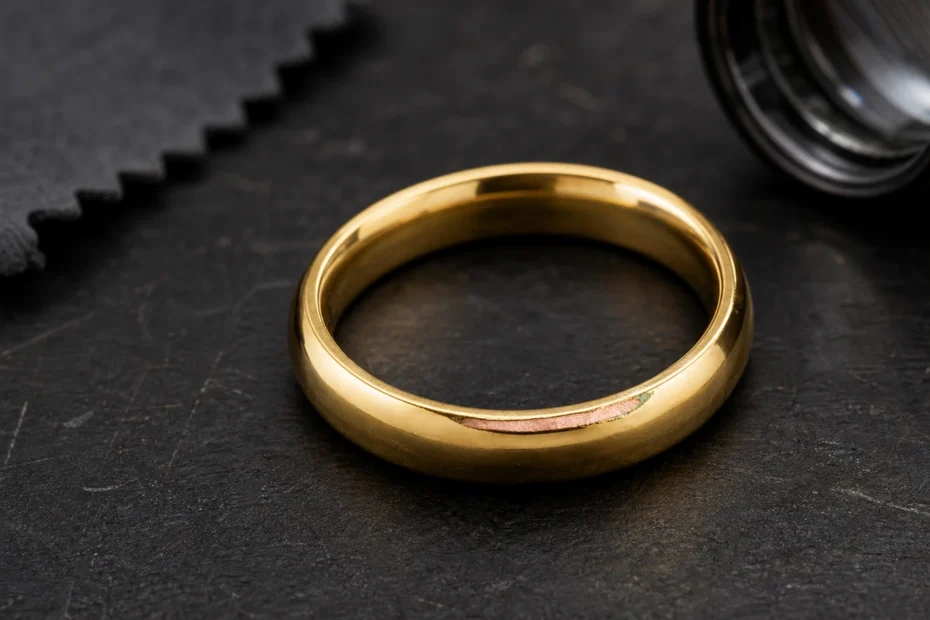
Gold-plated jewelry can leave green marks when worn plating exposes copper or brass. Learn the cause, how to prevent it, and when a rash needs attention.
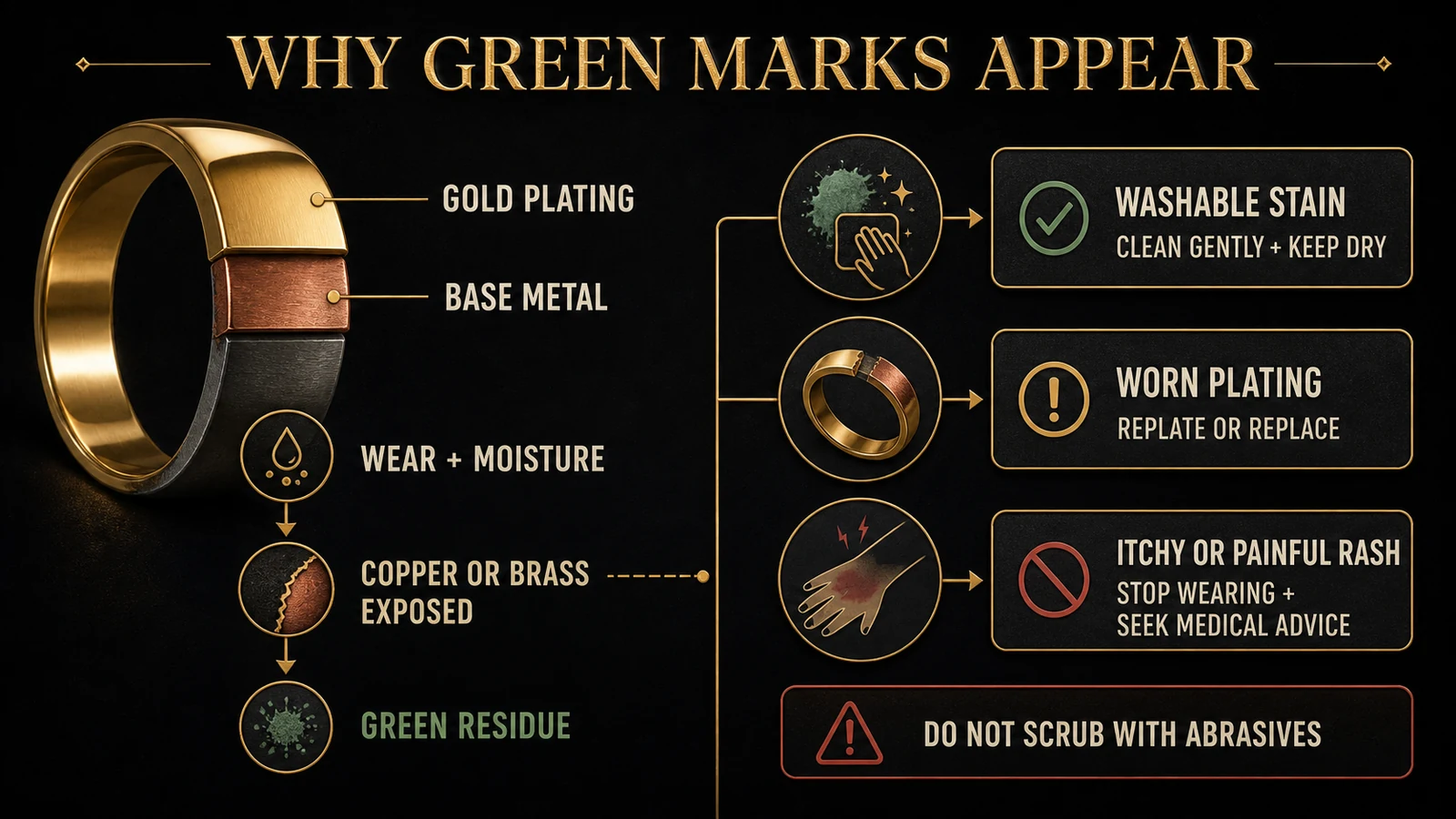
- The gold surface is usually not the green culprit; exposed copper or brass underneath reacts with moisture, salts and skin products.
- A washable green mark is different from an itchy, painful or blistering rash, which may indicate irritation or metal allergy.
- Keep plating dry, avoid abrasives and chlorine, check the base metal, and replate or replace a worn piece instead of scrubbing harder.
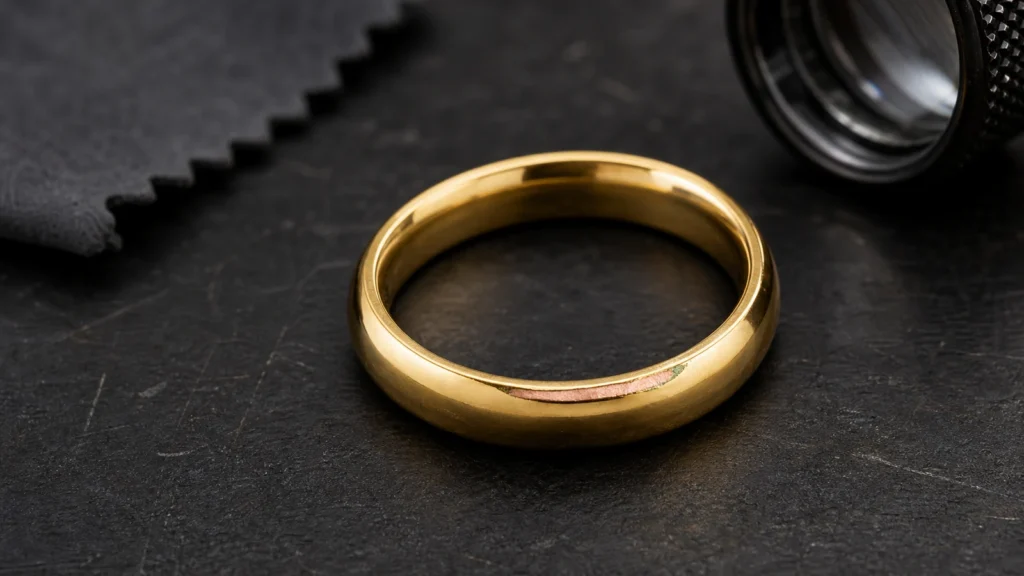
- Green color usually comes from copper compounds formed where base metal contacts moisture and skin.
- Sweat, water, lotions, cleaners and abrasion accelerate plating wear.
- A stain wipes or fades without inflammation; a rash can itch, burn, swell or blister.
- Clean gently with a soft damp cloth—never toothpaste, abrasive powder or harsh chemicals.
- Replate sentimental pieces; replace heavily worn everyday items with more durable construction.
Separate metal transfer from skin inflammation
“Turning green” can describe the jewelry surface, a mark on skin, or an irritated patch. Those are not the same event. The first two are often material chemistry; the third may be a medical reaction. Good care starts by identifying which one you see.
Why the green mark appears
Gold is highly resistant to ordinary corrosion. But gold plating is a thin surface finish, not a thick gold object. Friction at edges, chain links, ring shanks and clasps can wear it. Microscopic pores can also let moisture reach the substrate before the coating looks visibly gone.
If copper or copper-rich brass is exposed, it can react with sweat, salts, acids, oxygen, cosmetics or cleaners. Copper compounds can transfer as green or blue-green residue. The exact color and rate depend on alloy, skin chemistry, environment and product construction, so a green mark alone does not prove how thick the original plating was.
| What you observe | Likely interpretation | Next step |
|---|---|---|
| Flat green/gray mark; no itch or swelling | Surface residue or base-metal reaction is plausible. | Remove jewelry, wash skin gently, dry the piece and inspect coating wear. |
| Itch, burning, redness, swelling or blisters | Contact dermatitis or another skin problem is possible. | Stop wearing it; seek medical advice if symptoms persist, spread or are severe. |
| Dark or green discoloration on the item | Tarnish or exposed substrate may be present. | Do not scrub aggressively; ask a jeweler whether cleaning or replating is appropriate. |
| Rough edge, flaking or sharp spot | Finish or structure has failed. | Stop wearing it until a jeweler inspects the piece. |
Stain versus allergic contact dermatitis
A stain is pigment or corrosion product on the skin. It may wash off or fade and usually does not create a raised, itchy lesion. Allergic contact dermatitis is an immune reaction; nickel is a common jewelry trigger. The American Academy of Dermatology lists itching, rash and blistering among possible nickel-allergy signs.
Gold plating can delay contact with an allergenic substrate, but it cannot guarantee lifetime isolation. If symptoms return at the same contact point, do not keep testing the item on your skin. A dermatologist can evaluate persistent reactions; a jeweler can discuss substrate testing or replacement.
Plated, vermeil, gold-filled and solid gold
| Construction | What it means | Green-mark risk |
|---|---|---|
| Gold-plated | A gold coating over another metal; thickness and process vary. | Can increase as coating wears or pores expose copper-rich metal. |
| Gold vermeil | Gold plating over sterling silver under defined market terminology. | Usually no brass core, but silver can tarnish and alloy sensitivity remains possible. |
| Gold-filled | A mechanically bonded gold-alloy layer that is generally much more substantial than ordinary flash plating. | Often more durable, but worn edges or damaged surfaces can eventually expose the core. |
| Solid karat gold | Gold alloy throughout, such as 14K or 18K. | Lower coating-wear issue, though alloy metals and personal sensitivity still matter. |
The FTC Jewelry Guides provide U.S. disclosure context, but terminology and minimum standards can differ by country. A listing should identify the base material, gold fineness and coating or bonded-layer construction—not merely say “gold.”
What makes plating wear faster?
- Abrasion: rings, bracelets and clasps rub against skin, desks, tools and other jewelry.
- Water and sweat: repeated wetting leaves salts and chemicals at pores and edges.
- Cosmetics: perfume, sunscreen, lotion and hair products can attack or soil the finish.
- Pool and cleaning chemicals: chlorine and strong cleaners can damage finishes and underlying alloys.
- Storage contact: tangled pieces scratch each other and trap moisture.
Safe cleaning and prevention
- Remove plated jewelry before showering, swimming, exercise, cleaning and sleep.
- Apply perfume and lotion first; let them dry before putting jewelry on.
- After wear, wipe gently with a clean, soft, barely damp cloth.
- Dry completely and store pieces separately in a low-humidity pouch or box.
- Avoid toothpaste, baking soda, polishing compounds, stiff brushes and chlorine.
- Ask a jeweler before using dips, ultrasonic cleaning or steam on plated or stone-set pieces.
Can a home test identify the base metal?
Not reliably from a green mark alone. Magnets only screen for some ferromagnetic components, while acid testing can damage plating and expose the user to chemicals. Electronic or X-ray fluorescence testing by a qualified jeweler can provide better composition evidence, but thin layers and mixed components still require careful interpretation.
Hallmarks and product records remain useful. Photograph the mark, save the listing and receipt, and ask the seller what lies beneath the coating. If the answer is unknown, make wear and health decisions as though the substrate could contain copper or nickel rather than assuming the surface color tells the whole story.
Compare gold-filled construction, water exposure, green skin from gold alloys, gold authenticity checks, vermeil tarnish and 14K tarnish.
This article cannot diagnose a skin condition. Remove the item and seek appropriate medical care for severe, spreading or persistent symptoms, swelling near the face, broken skin or breathing difficulty.
Knowledge Gap and Editorial Perspective
Most listings do not disclose coating thickness, porosity, exact substrate or wear testing. That makes lifespan promises unreliable. Care can slow wear, but it cannot make a thin coating permanent.
A green stain is a material clue, not a complete authenticity test. The best decision combines symptoms, visible wear, disclosed construction and how often the piece must withstand water and friction.
Video walkthrough: This professional plating demonstration gives useful visual context for how a gold coating is applied over another surface.
Bottom Line
Gold-plated jewelry can leave green marks when the finish no longer isolates a copper-rich base. Treat painless residue with gentle cleaning and a construction check; treat itching, burning, swelling or blisters as a reason to stop wearing the piece and assess possible dermatitis.
FAQ: Gold-Plated Jewelry and Green Marks
Does real gold plating turn skin green?
The gold is not usually the green source, but a real gold coating can wear or be porous enough for copper-rich base metal to react.
Is a green mark dangerous?
A painless stain is usually not an emergency. Itching, burning, swelling or blisters may indicate dermatitis and deserve medical attention if persistent or severe.
Can clear nail polish prevent green skin?
It is temporary, can peel and may itself irritate skin. Professional replating or a better-specified material is a more reliable option.
Can I clean gold plating with toothpaste?
No. Toothpaste is abrasive and can remove or scratch the thin coating.
Will 18K gold plating last longer than 14K plating?
Karat changes the coating alloy, but service life also depends heavily on thickness, adhesion, porosity, wear and care.
Sources and verification
Physical values, safety boundaries and market examples were checked against the following primary or specialist sources.
- Federal Trade Commission — Revised Jewelry Guides — Official U.S. terminology and safe-harbor context for plating, vermeil and gold-filled products.
- American Academy of Dermatology — Contact Dermatitis Clues — How an itchy or painful jewelry-site rash differs from simple surface staining.
- American Academy of Dermatology — Nickel Allergy — Nickel-allergy symptoms, exposure and avoidance guidance.
- Royal Society of Chemistry — Gold — Authoritative chemical context for gold as a relatively unreactive noble metal.
- GoldConsul — What Does Gold Filled Mean? — Internal construction comparison with bonded-layer terminology.
- GoldConsul — Is Gold-Plated Jewelry Waterproof? — Related moisture and coating-wear guidance.
- Gold Plating Services — Brush Plating Demo — Visual context for how a thin gold surface is applied over a different substrate.
 When you purchase a service or a product through our links, we sometimes earn a commission, at no extra cost to you.