
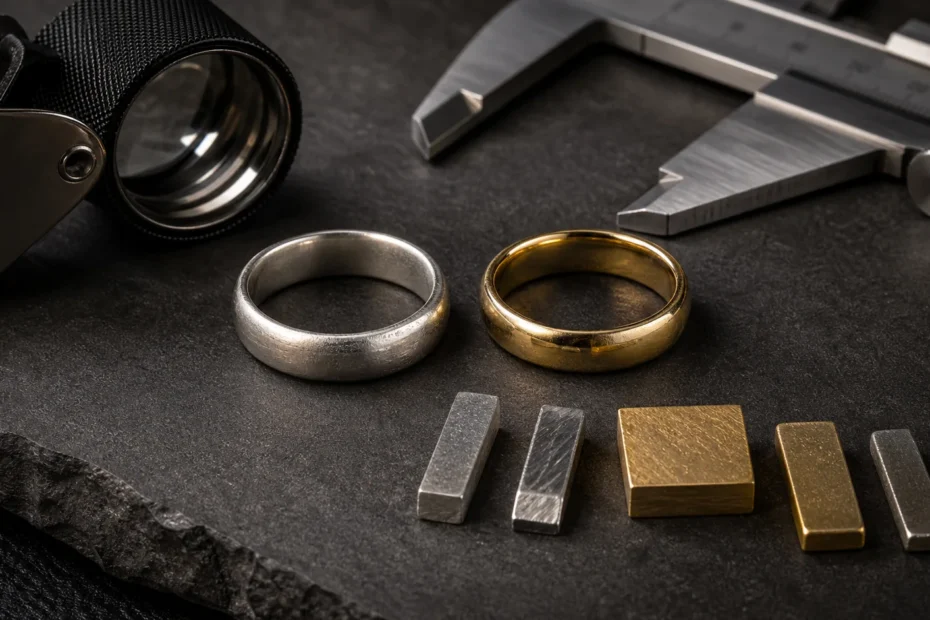
Compare silver and gold strength by alloy, hardness, bending, tarnish, construction, and daily wear instead of relying on a simple metal ranking.
- Pure silver and pure gold are both soft; jewelry strength depends on the specific alloy.
- Hardness, bending resistance, toughness, tarnish, and wear answer different questions.
- Construction, thickness, heat treatment, and repair history can matter more than the metal name.
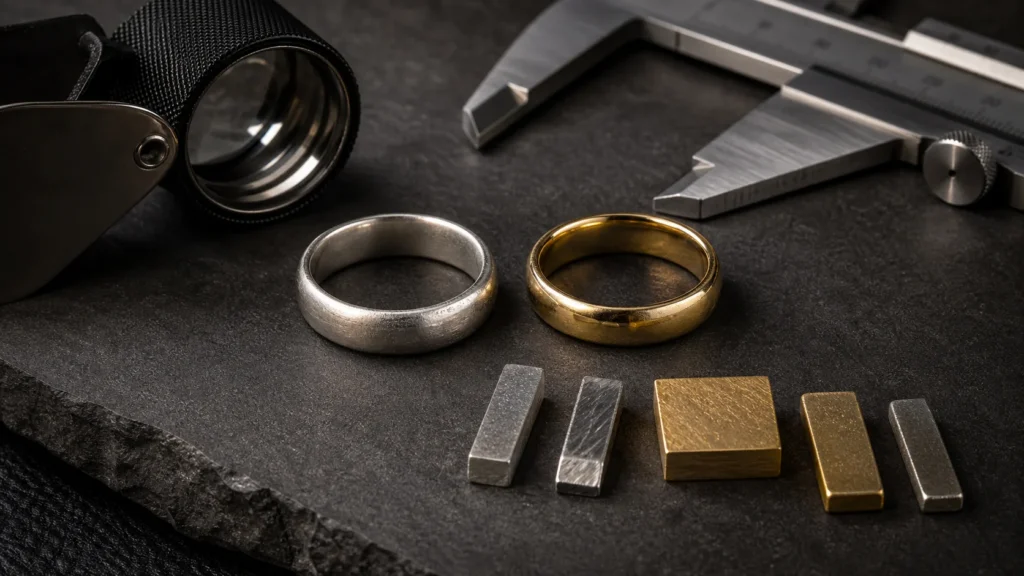
Silver is not simply “stronger” than gold. Pure silver and pure gold are both soft, workable precious metals. Jewelry is normally made from alloys, so sterling silver must be compared with a specific gold karat and alloy, not with the word “gold” in general. A 14K gold ring may resist deformation better than a delicate sterling-silver ring, while construction, thickness, heat treatment, solder joints, and wear can reverse a simplistic material ranking.
“Strength” can mean resistance to scratching, bending, breaking, denting, or wearing away. These are different properties. A metal can be hard at the surface yet brittle, or easy to scratch yet tough enough to bend instead of fracture. Jewelry buyers need a use-case comparison, not one winner.
- Pure gold and pure silver are both too soft for many thin daily-wear designs.
- Sterling silver is 92.5% silver; 14K gold is about 58.5% gold and 18K gold is 75% gold.
- More alloy metal often changes hardness and strength, but the result depends on which metals and how the piece was made.
- Silver tarnishes more readily; gold alloys usually offer better corrosion resistance.
- Design thickness, stone setting, and repair history can matter more than metal name.
Why the Question Has No One-Word Answer
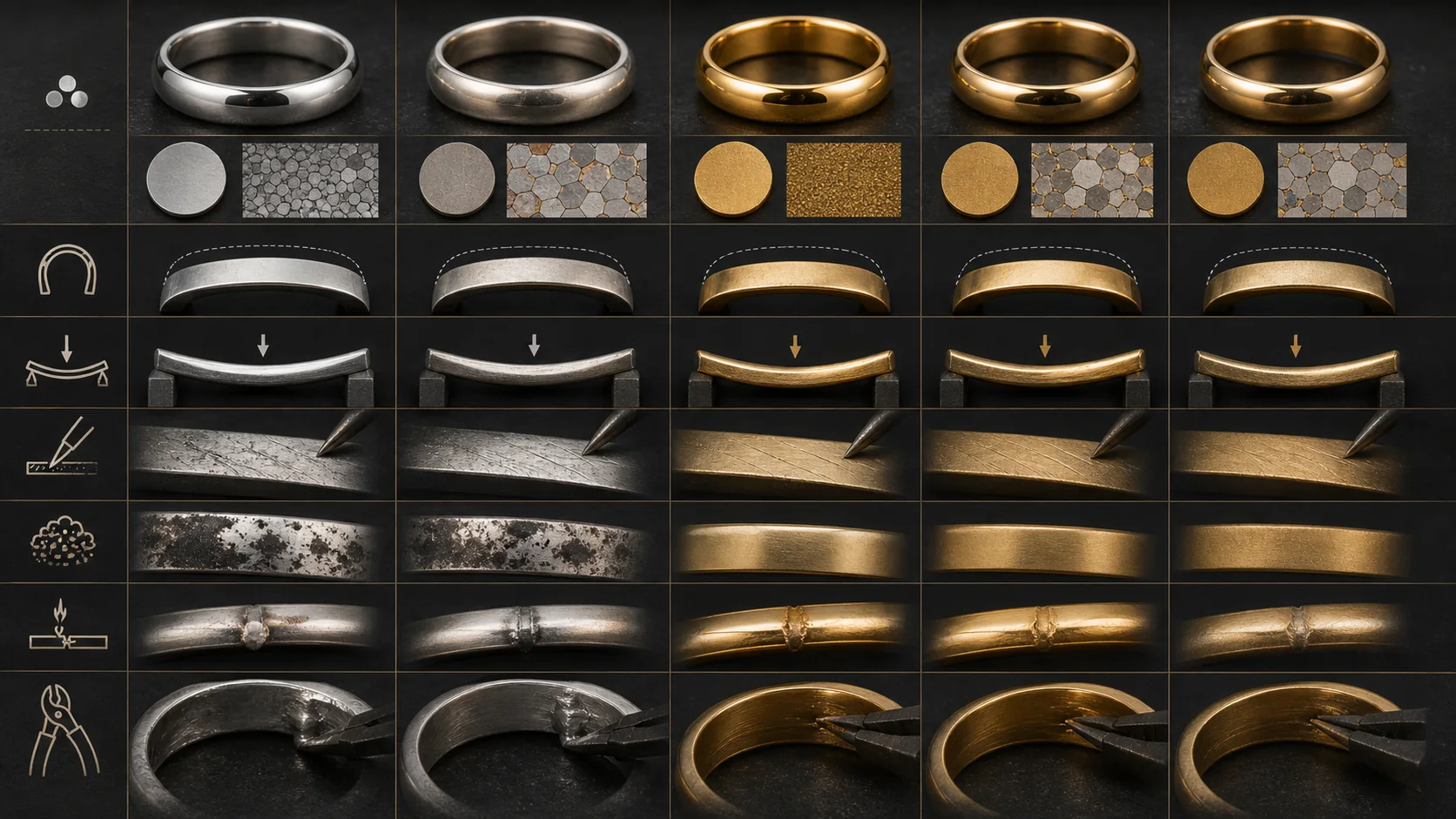
Jewelry listings rarely provide these values because a named category such as “14K gold” can contain different alloy recipes. Casting, rolling, annealing, cold working, soldering, and heat treatment also change behavior. Even published test values may not describe your ring.
How Manufacturing Changes the Result
Cold working can make a metal harder and stronger by deforming its internal structure. Annealing with heat can restore softness and workability. Cast pieces may contain porosity that rolled or forged material does not. Soldered zones have their own composition and thermal history. These differences explain why two pieces with the same hallmark can age differently.
Geometry amplifies those material differences. A wide solid band distributes load, while a thin open ring concentrates it. A short heavy prong behaves differently from a long decorative claw. Hollow links can appear substantial but dent under a load that a smaller solid link survives. Ask about dimensions and construction, not only grams and karat.
Pure Gold Versus Pure Silver
The Royal Society of Chemistry describes gold as soft and chemically unreactive and notes that alloys are used for greater durability. Its silver reference also describes silver as relatively soft and identifies sterling silver as 92.5% silver. At the pure-metal level, neither is the obvious structural winner for a thin, heavily loaded setting.
The companion RSC gold reference explains why 24-karat gold is commonly alloyed for greater durability. This is the key transition from chemistry to jewelry: the element sets a baseline, while alloy design and manufacturing determine the wearable object.
Gold is much denser: about 19.3 g/cm³ compared with silver at about 10.5 g/cm³. A same-volume gold object therefore feels substantially heavier, but weight is not strength. GoldConsul’s gold-versus-silver density guide explains that distinction.
The Comparison Buyers Actually Need
| Jewelry form | Typical precious-metal content | Practical behavior | Common maintenance issue |
|---|---|---|---|
| Fine silver | Usually 99.9% silver | Very workable and relatively easy to deform | Scratches, dents, tarnish |
| Sterling silver | 92.5% silver | Stronger than fine silver; useful for many designs | Tarnish, surface wear, bending in thin sections |
| 24K gold | Near-pure gold | Very malleable; substantial designs can still be durable | Denting, scratching, shape change |
| 18K gold | 75% gold | Balance of rich color and alloy-dependent durability | Scratches; prong and shank wear over time |
| 14K gold | About 58.5% gold | Often chosen for demanding daily wear | Alloy-specific color, skin response, and repair behavior |
Precious-Metal Share Is Not a Strength Score
The chart shows composition standards. It explains why “silver versus gold” is the wrong level of comparison, but it does not claim that lower precious-metal content automatically means stronger jewelry.
Nominal composition: fine silver 99.9%, sterling silver 92.5%, 24K gold represented as 99.9%, 18K gold 75%, and 14K gold 58.5%.
Scratch Resistance, Bending, and Breakage
Scratches
Both metals scratch. Sterling silver often develops fine surface marks and tarnish that change its appearance, while gold alloys acquire wear patterns that depend on karat and composition. A rhodium-plated white-gold surface may initially feel bright and resistant but the coating can wear. GIA’s white gold versus silver comparison notes that alloy composition and rhodium contribute to white gold’s scratch resistance relative to silver.
Bending
A thin silver band can bend easily, but so can a thin high-karat gold band. Cross-sectional thickness is critical: doubling a dimension can change stiffness far more than shoppers expect. Hollow construction, open designs, and long unsupported prongs increase vulnerability in any metal.
Breaking
Ductile metals often bend before breaking. Solder seams, porosity, previous resizing, sharp corners, and work-hardened areas can become the failure point. That is why a jeweler inspects the piece rather than diagnosing strength from a hallmark alone.
Alloy Names Hide Multiple Recipes
Two 14K gold pieces can have the same gold percentage but different copper, silver, zinc, nickel, or palladium content. Two sterling-silver pieces can differ in deoxidizing additions and manufacturing history. A karat or fineness stamp answers composition class, not every mechanical property.
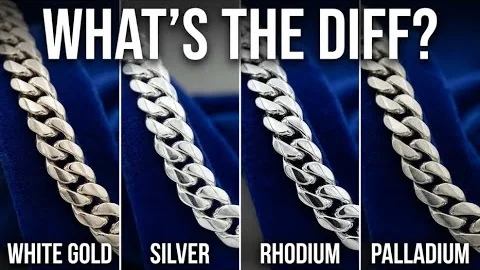
Watch: Use this practical white-metal comparison alongside the alloy and construction distinctions in this guide.
Corrosion and Surface Maintenance
Mechanical durability is only part of service life. Silver reacts with sulfur compounds in the environment and develops silver sulfide tarnish. Tarnish is usually a surface issue, but repeated aggressive polishing removes material and can blur detail over decades. Gold is less reactive, although lower-karat alloys can discolor or react because of their non-gold metals.
White gold adds another layer: many pieces are rhodium-plated. The coating changes surface color and wear behavior without replacing the underlying alloy. GIA’s white-gold comparison and GoldConsul’s white-gold wear guide help separate coating maintenance from structural strength.
- For exposed stones, prioritize setting integrity and inspection intervals.
- For chains, compare link construction, solder quality, clasp design, and repair access.
- For broad decorative pieces, consider weight, tarnish care, and dent resistance.
- For sentimental jewelry, choose a metal local jewelers can repair without destroying the design.
- For skin sensitivity, ask for the alloy constituents rather than assuming color identifies them.
Which Metal Fits Which Use?
For a focused look at gold karat and softness, read Is 22K Gold Too Soft for Jewelry? For a comparison with a much lighter engineering metal, see Is Titanium Softer Than Gold?
Care and Inspection
Store silver dry and separately to reduce tarnish and abrasion. Use a suitable polishing cloth without erasing intentional oxidation. For gold, avoid abrasive household tests and inspect prongs, clasps, and thin shanks periodically. Remove either metal before work that can crush, catch, or chemically attack the piece.
When comparing white metals, remember that white gold, sterling silver, platinum, and rhodium are distinct materials. GoldConsul’s white gold guide explains alloy and coating choices, while the cleaning guide covers plated surfaces.
Frequently Asked Questions
Is sterling silver harder than 24K gold?
Sterling silver is generally more suitable than pure silver for structure, and 24K gold is very malleable. But exact hardness depends on alloy condition and test method.
Is 14K gold stronger than sterling silver?
Many 14K jewelry alloys perform well in daily wear, but a universal ranking ignores recipe, heat treatment, dimensions, and construction.
Why does silver bend more easily in some rings?
Silver rings are often made in larger decorative but locally thin forms. Section thickness and unsupported spans can dominate the result.
Does tarnish make silver weak?
Normal surface tarnish is mainly a chemical appearance change. Severe corrosion, repeated aggressive polishing, or thin worn sections are different concerns.
Which lasts longer, silver or gold jewelry?
Either can last generations when well designed and maintained. Gold alloys generally resist tarnish better; silver may need more surface care.
Compare sterling silver with a named gold alloy in a specific design. For daily wear, construction and repairability usually matter more than declaring one element stronger.
 When you purchase a service or a product through our links, we sometimes earn a commission, at no extra cost to you.