
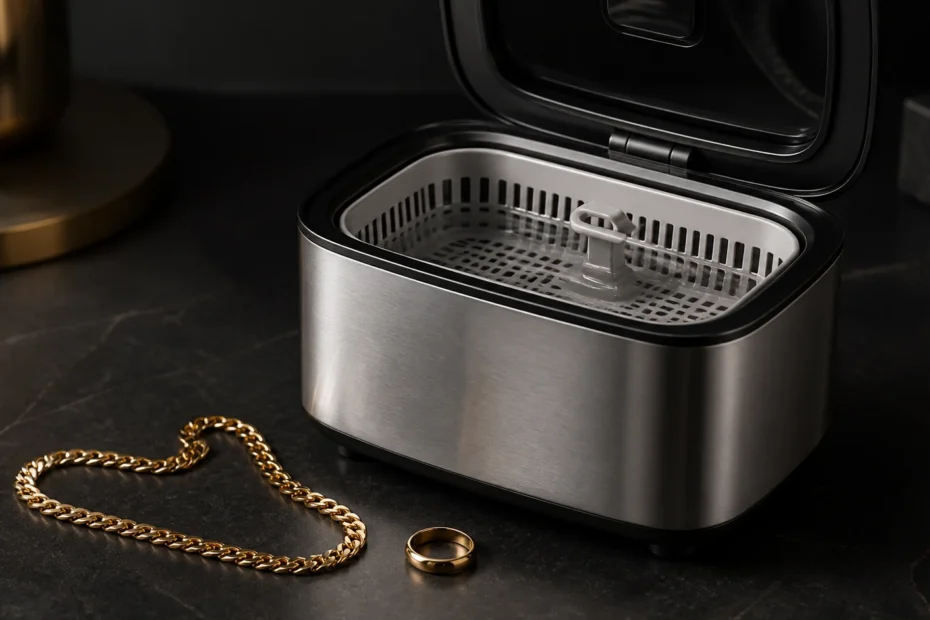
Compare ultrasonic cleaners for gold jewelry, understand material limits, and choose a machine by tank, timer, frequency, and use case.
- Use ultrasound only after checking stones, settings, and finishes.
- A timer and practical basket matter more than flashy modes.
- When treatment history is unknown, use gentle hand cleaning.
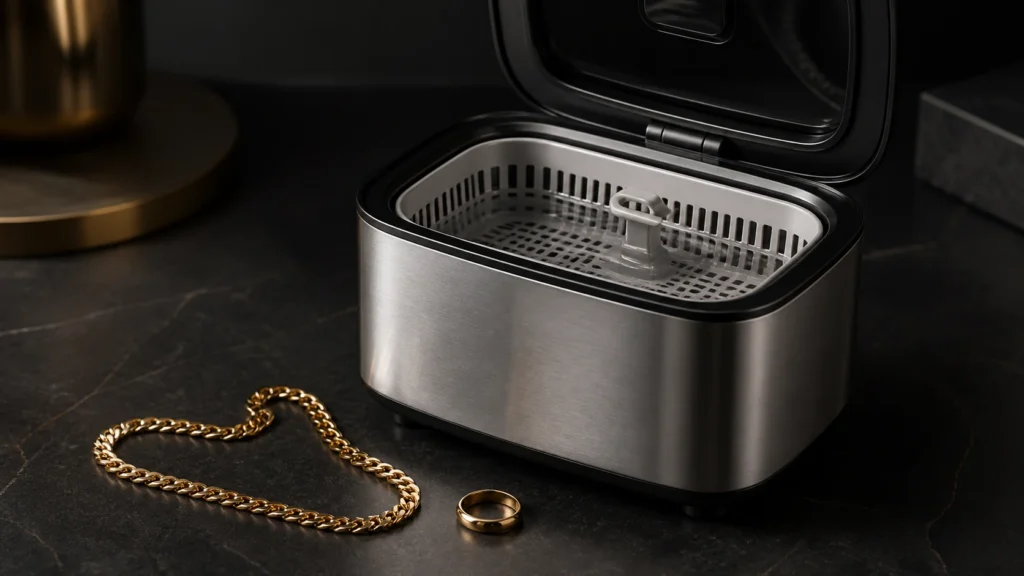
The best ultrasonic jewelry cleaner for gold is one you can control and use only after checking the entire piece. A practical timer, removable basket, stainless tank, and clear instructions matter more than extra modes. Solid gold may tolerate ultrasound, but gemstones, treatments, glue, loose settings, plating, and antique finishes can make the same machine unsafe.
See the leading home option on Amazon →Magnasonic MGUC500 listing
- Use ultrasound only when the metal, stones, treatments, and setting condition are known.
- A 40–48 kHz consumer machine is common, but frequency alone does not make jewelry safe.
- Never let jewelry rest directly on the metal tank; use the supplied basket or holder.
- Plain hand cleaning is the safer default for plated, glued, antique, porous, treated, or damaged pieces.
- These are listing-based selections, not hands-on GoldConsul tests.
Recommended options
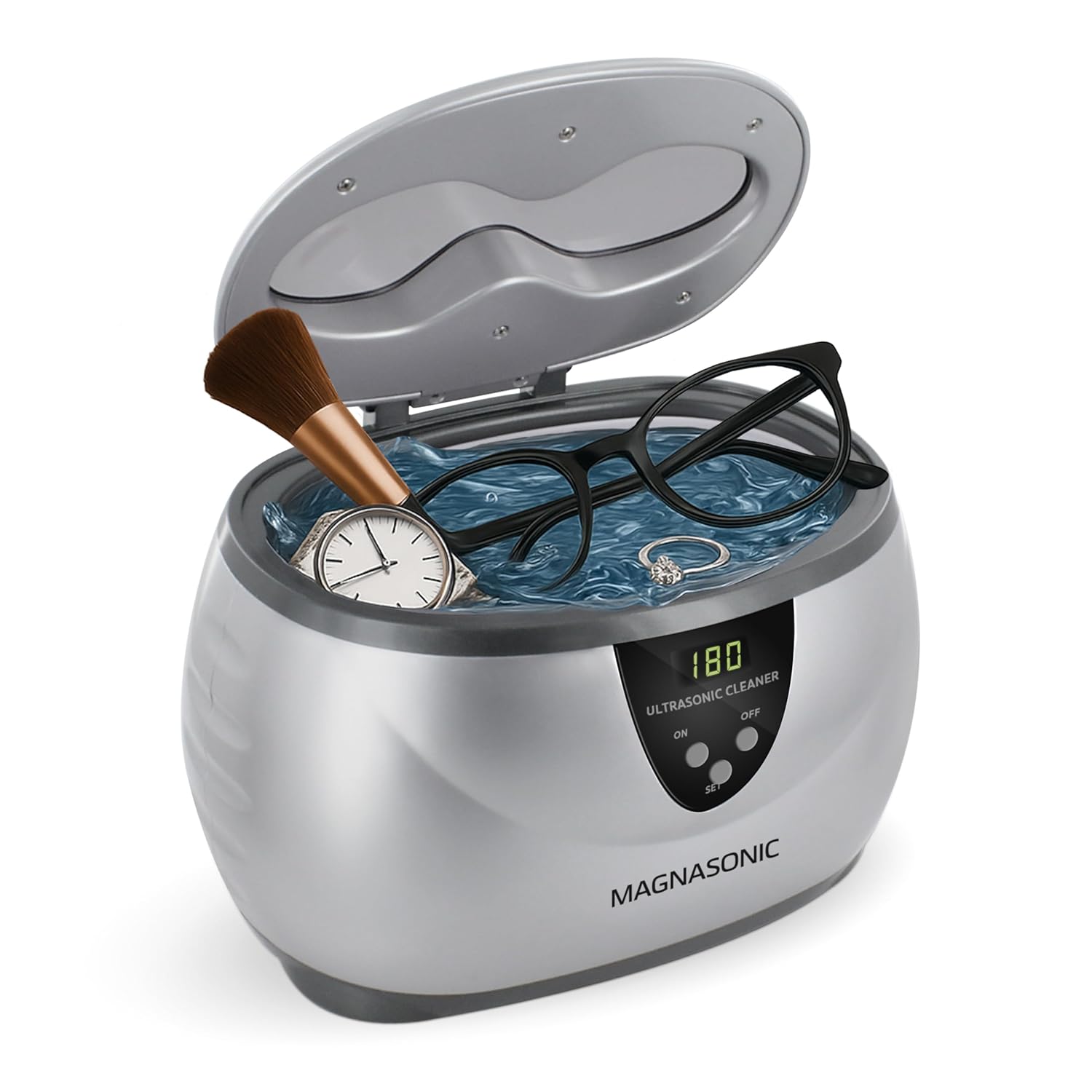
Magnasonic MGUC500 Ultrasonic Cleaner
Best for: Readers who want a compact stainless tank, digital timer, five preset cycles, and a widely available consumer format.
Avoid if: You need temperature control, a large professional tank, or you are unsure whether your jewelry can safely enter an ultrasonic bath.
Verify before buying: Confirm the current tank capacity, basket, timer modes, voltage, warranty, and seller. Jewelry safety still depends on the item, not the product listing.

VisiClean Professional Ultrasonic Cleaner
Best for: A larger home setup for users who routinely clean several suitable metal items and want a more substantial basket and control panel.
Avoid if: You only clean one ring occasionally or need a jeweler to identify stones, treatments, solder, or setting damage first.
Verify before buying: Check the current dimensions, cycle controls, basket configuration, electrical standard, return policy, and exact included accessories.
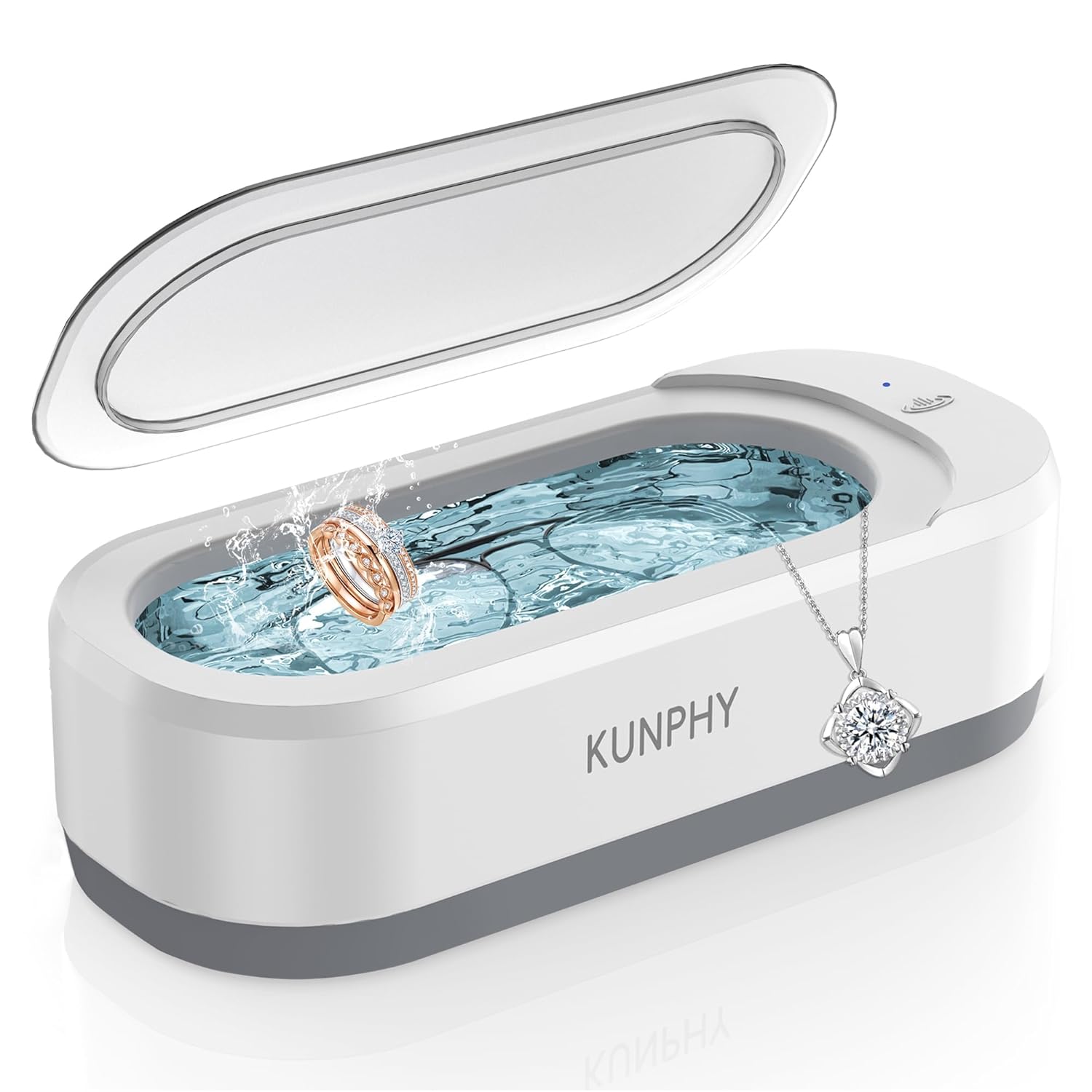
KUNPHY 46 kHz Ultrasonic Cleaner
Best for: Simple occasional cleaning of small, known-safe items when you prefer a compact one-button unit.
Avoid if: You want precise cycle selection, a large basket, or professional-duty control and serviceability.
Verify before buying: Confirm frequency, tank material, capacity, cycle length, included holder, current seller, and whether the listing has changed variants.
Ultrasonic cleaning works through cavitation: rapidly forming and collapsing bubbles disturb grime in crevices that a cloth or brush cannot easily reach. That makes the method useful around links, prongs, galleries, and textured metal, but the same vibration, heat, and solution can expose a weak setting or sensitive treatment.
Gold itself is only one part of the object. If you are cleaning a chain, start with the construction and clasp checks in How to Clean Gold Chains Safely. White gold, vermeil, plated jewelry, soldered repairs, enamel, pearls, and unknown stones require separate judgment.
Which ultrasonic cleaner should you choose?
Knowledge Gap: “gold safe” is not the same as “jewelry safe”
A plain 14K band and a 14K ring with an oil-treated emerald share the same gold alloy but not the same cleaning risk. Product listings that say “for gold” cannot identify a filled fracture, loose prong, glued component, enamel detail, or worn plated surface.
What to compare before buying
| Feature | Why it matters | Useful baseline | What it cannot solve |
|---|---|---|---|
| Frequency | Shapes bubble size and cleaning action | Many consumer jewelry units operate around 40–48 kHz | Does not make a sensitive gem or loose setting safe |
| Timer | Helps avoid uncontrolled long cycles | Short selectable cycles with a clear stop | Cannot replace inspection before and after cleaning |
| Basket or holder | Keeps jewelry off the vibrating tank floor | Removable, non-scratching support sized to the tank | Does not prevent pieces from colliding if overcrowded |
| Tank capacity | Determines whether items fit without contact | Enough space for the largest suitable item you actually own | A larger tank is not automatically stronger or safer |
| Solution guidance | Controls chemistry as well as vibration | Manufacturer-approved dilution and material compatibility | Unknown coatings and treatments remain unknown |
The Gemological Institute of America warns against ultrasonic cleaning for fracture-filled gems, organic materials such as pearls and coral, many coated or impregnated gems, and several heat-sensitive stones. GIA also recommends checking that stones are secure before and after a cycle.
Professional guidance from L&R Ultrasonics likewise treats rack placement, correct solution, dilution, rinse, and drying as parts of one process. A machine is not a substitute for the process.
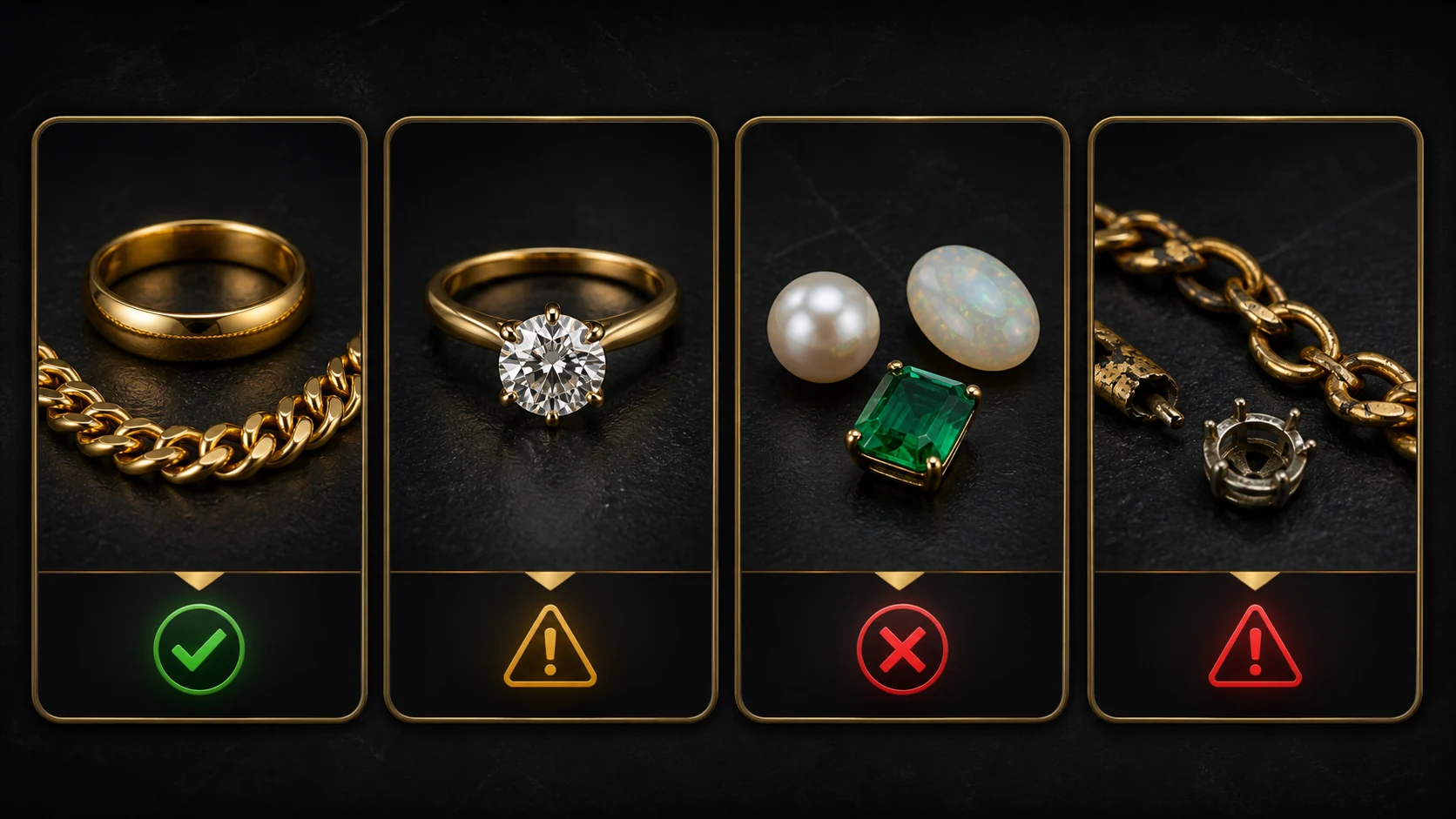
What can go into an ultrasonic cleaner?
| Item | Default decision | Reason |
|---|---|---|
| Plain solid yellow-gold band | Often suitable after inspection | No stones, glue, plating, or delicate surface treatment |
| Secure untreated diamond in sound setting | Potentially suitable with caution | Check treatment history, fractures, prongs, and stone contact |
| White gold ring | Inspect first | Rhodium finish, solder, settings, and wear condition matter; see How to Clean White Gold |
| Gold-plated, vermeil, or gold-filled piece | Prefer gentle hand cleaning | Thin surfaces and exposed base metal can be vulnerable; compare construction in the Gold Jewelry Markings guide |
| Pearl, opal, emerald, turquoise, amber, coral | Do not use by default | Porosity, treatments, heat sensitivity, or fracture filling may create damage risk |
| Loose, cracked, glued, antique, or enameled jewelry | Do not use without professional clearance | Vibration and solution can worsen an existing weakness |
A safe first-cycle checklist
- Identify every material. Check metal construction, stones, treatments, glue, enamel, and prior repairs.
- Inspect the condition. Look for moving stones, bent prongs, worn links, cracks, lifted plating, and weak clasps.
- Read both manuals. Follow the machine instructions and any care guidance from the jewelry maker or gem report.
- Use the basket. Keep the item off the tank floor and separate pieces so they cannot strike each other.
- Start short. Use the shortest reasonable cycle, observe the item, then rinse and dry as instructed.
- Inspect again. Stop using the machine if a setting moves, finish changes, or any new damage appears.
Editorial Perspective
If you cannot confidently name the stones, treatments, construction, and condition, the best ultrasonic cleaner is no cleaner at all. Warm water, mild soap, and a soft tool—or a professional cleaning—cost less than repairing a loosened stone or worn finish.
For jewelry whose gold content or construction is uncertain, first read Testing Gold Purity and Does Gold Vermeil Tarnish?. Cleaning should never be used as an authenticity test.
Video: ultrasonic jewelry-cleaning best practices
This demonstration shows the setup and handling principles behind ultrasonic cleaning. Apply the material safety checks above before copying any procedure.
Bottom line
The best ultrasonic jewelry cleaner for gold is a controllable machine paired with a strict material check. Choose the tank and timer for your actual workload, then exclude any item whose stones, treatments, finish, settings, or repair history are uncertain.
Continue with the Gold Jewelry Guide for buying, construction, wear, cleaning, and verification decisions.
FAQ: best ultrasonic jewelry cleaner for gold
Can solid gold go in an ultrasonic cleaner?
Plain solid gold often tolerates ultrasonic cleaning, but the whole item must be checked. Stones, glue, enamel, plating, solder, loose settings, and prior repairs can change the answer.
Can gold-plated jewelry go in an ultrasonic cleaner?
Gentle hand cleaning is the safer default. A thin or worn coating can be vulnerable, and the machine cannot assess plating thickness or exposed base metal.
What liquid should I use in an ultrasonic jewelry cleaner?
Use only a solution and dilution approved by the machine manufacturer and compatible with every material in the piece. Never improvise flammable or harsh chemicals.
Is a higher frequency always better for gold jewelry?
No. Frequency affects cleaning action, but it does not determine whether a gemstone, treatment, setting, coating, or repair is safe.
How long should gold jewelry stay in an ultrasonic cleaner?
Follow the machine and jewelry guidance, start with the shortest reasonable cycle, and inspect before and after. Longer is not automatically cleaner or safer.
 When you purchase a service or a product through our links, we sometimes earn a commission, at no extra cost to you.