
Gold Jewelry Guide: Choose, Verify, Wear and Care
Learn what a jewelry label really promises, how karat differs from construction, what evidence matters online and which deeper guide answers your next question.
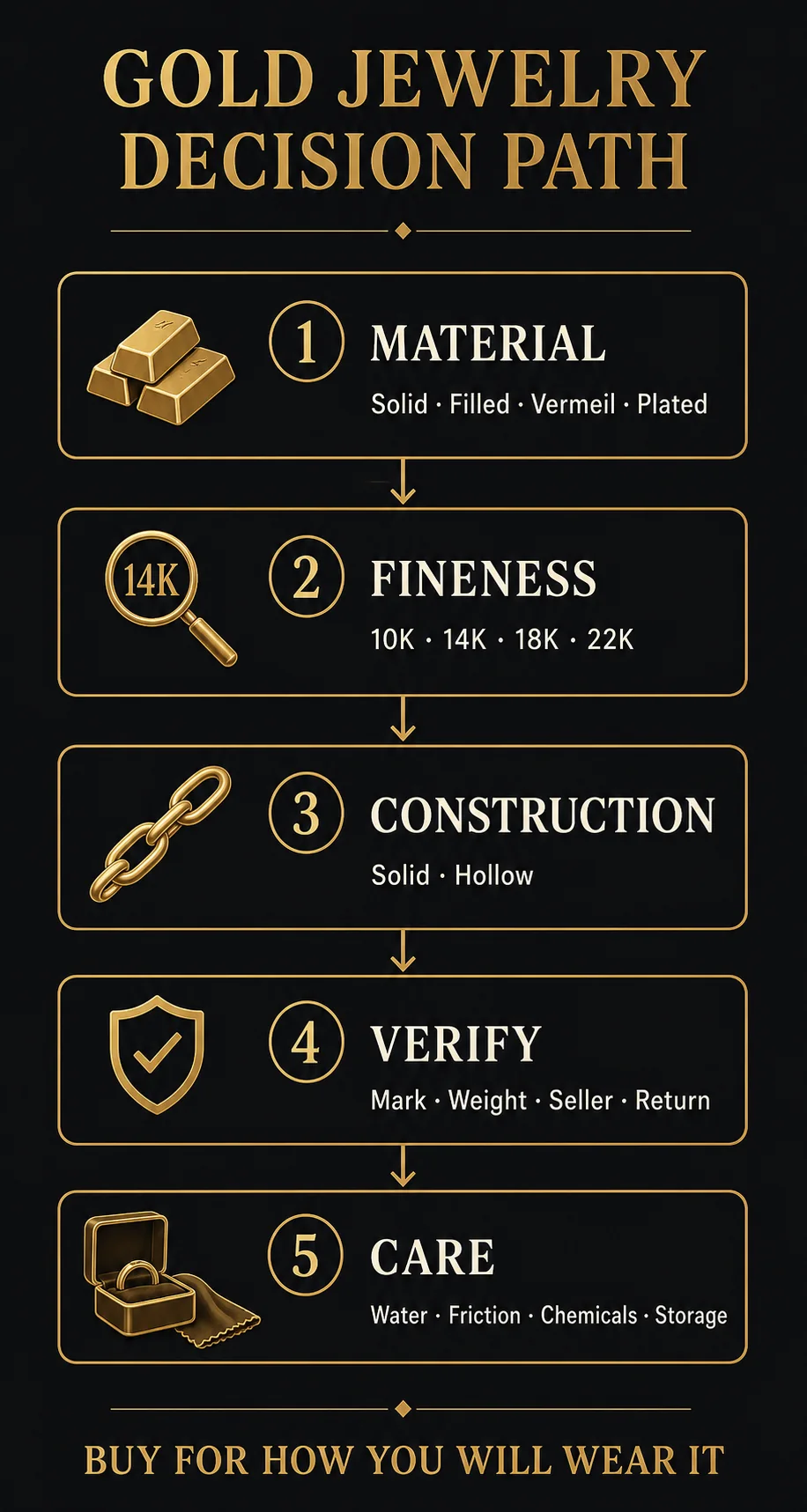
Choose gold jewelry in this order: identify whether it is solid karat gold, gold-filled, vermeil or plated; check the karat or fineness; separate metal composition from solid-or-hollow construction; verify the exact weight, dimensions, seller and return terms; then match durability and care to how often you will wear it. A hallmark helps, but no single stamp, photo or household test proves the entire claim.
- “Gold” is not one material claim.
- Karat and construction answer different questions.
- Compare weight only within the same karat and build.
- Buy for your wearing pattern, not the product photo.
Four decisions prevent most expensive misunderstandings
The goal is not to memorize every jewelry term. It is to ask the questions in the right order so one attractive label cannot stand in for the facts that matter.
Material
Is the gold alloy present throughout, mechanically bonded as a substantial layer, applied over sterling silver, or only plated onto a base metal?
Fineness
Is the gold portion 10K, 14K, 18K or 22K? Higher karat means more gold, but usually less resistance to dents and scratches.
Construction
A genuine karat-gold chain can still be hollow. Weight, wall thickness, clasp and link design affect strength and repairability.
Evidence
Match the mark with the exact variation, weight, dimensions, responsible seller, receipt and a return window that allows inspection.
Move from the broad claim to the wearing reality
Each step narrows a different uncertainty. Skipping one is how buyers end up comparing a hollow 14K chain with a plated chain as though width alone made them equivalent.
Solid gold, gold-filled, vermeil and plated are not interchangeable
These terms describe how gold is used in the piece. They do not guarantee identical layer thicknesses, base metals, lifespans or care requirements across every manufacturer.
| Term | What it generally means | Best fit | Main trade-off | Verify next |
|---|---|---|---|---|
| Solid karat gold | A karat-gold alloy throughout the metal body, rather than only a gold surface. | Frequent wear, repairability and long-term ownership when construction is suitable. | Higher price; softer at high karat; can still be hollow. | Karat, weight, construction, maker and clasp. |
| Gold-filled | A comparatively substantial gold-alloy layer mechanically bonded to a base-metal core under regulated terminology. | Durable gold appearance at lower cost when the product is properly made and described. | The core is not gold; exposed edges and heavy wear can still matter. | Marking, layer claim, base metal, seller and care. |
| Vermeil | Gold plating over a sterling-silver base, subject to applicable fineness and thickness definitions. | Gold color over a precious-metal base for occasional or moderate wear. | The gold surface can wear; water, friction and chemicals accelerate change. | Sterling mark, gold fineness, thickness claim and finish. |
| Gold-plated | A thin gold layer applied over another metal. | Fashion, short-term styles and low-entry-cost pieces. | Surface wear exposes the base metal; “waterproof” claims deserve scrutiny. | Base metal, plating details, skin compatibility and care. |
| Gold tone | Gold color without a dependable statement of gold content. | Purely decorative use. | Color should not be treated as proof of precious-metal value. | Assume no measurable gold value unless documentation says otherwise. |
“Solid gold” describes the metal category, not whether a piece is physically solid inside. Read our hollow gold guide before comparing chains or large hoops.
More gold is not automatically the better everyday choice
Karat expresses the gold fraction in an alloy. The remaining metals influence color, strength, workability and sometimes skin response. Real-world durability also depends on thickness, shape, joints and how the piece is worn.
Lower gold fraction and often strong wear resistance; color and alloy sensitivity vary.
A common balance between gold content, color and everyday practicality.
Richer gold color and higher material value, with generally greater softness.
Deep gold color; works well in suitable designs but is easier to dent or deform.
Use the gold purity calculator to convert karat and gram weight. For a practical high-karat example, see whether 22K is too soft for jewelry.
Solid karat gold
The chain, ring or earring body is made from the stated gold alloy instead of carrying only a surface layer. The object can still contain an intentional hollow space.
Solid versus hollow
Construction tells you how much metal supports the shape. A hollow piece can look substantial at a lower weight but may dent more easily and require specialized repair.
No single check proves the whole piece
Good verification combines independent signals. Move up the ladder as the price, uncertainty or resale consequence increases.
- Save the exact claim. Record the chosen variation, seller, metal description, dimensions, weight, construction and return terms.
- Inspect the marks. Look for a fineness mark such as 14K or 585 and a responsible maker or seller identity. A mark alone can be false or incomplete.
- Compare measurements. Check delivered length, width and gram weight against the saved listing. Large differences require an explanation.
- Inspect construction. Test the clasp over a protected surface and examine posts, hinges, jump rings, solder points and stone settings.
- Escalate the test. Magnet, density and acid tests have limitations. For a meaningful purchase, use an independent jeweler or qualified tester.
Do not use toothpaste, biting or color alone as proof. These shortcuts can damage jewelry or produce false reassurance. Start with our gold purity testing guide and understand what each method can and cannot establish.
The right piece depends on what happens after checkout
A label cannot tell you whether a piece suits showers, workouts, sleeping, frequent clasp use, a heavy pendant or sensitive skin. Match the construction to the actual routine.
Everyday wear
Prioritize practical karat, sufficient thickness, serviceable construction and a closure you can inspect and operate reliably.
Occasional style
Vermeil or plated jewelry may deliver the look at lower cost if you accept surface wear and use careful storage.
Gift
Confirm size, closure, metal sensitivity, return terms and packaging without sacrificing verifiable specifications.
Value retention
Favor documented karat, real gram weight and repairable construction, while recognizing that retail jewelry is not bullion.
Use the marketplace as a shortlist, not as proof
Product photography can make light pieces look substantial. A title can also apply to several variations with different weights, sellers or constructions. Compare the exact selected option, then inspect the delivered piece while the return window is open.
GoldConsul’s Amazon guides keep direct product links and affiliate disclosures on focused buying pages. This hub stays educational and sends you to the guide that matches your purchase.
Testing kits, precision scales, prospecting equipment and bullion guides are organized in the Gold Buyer Guides & Tools hub →.
Go deeper without starting over
Each guide below answers one decision that the hub can only summarize. The cards are grouped by the question you are most likely to have next.
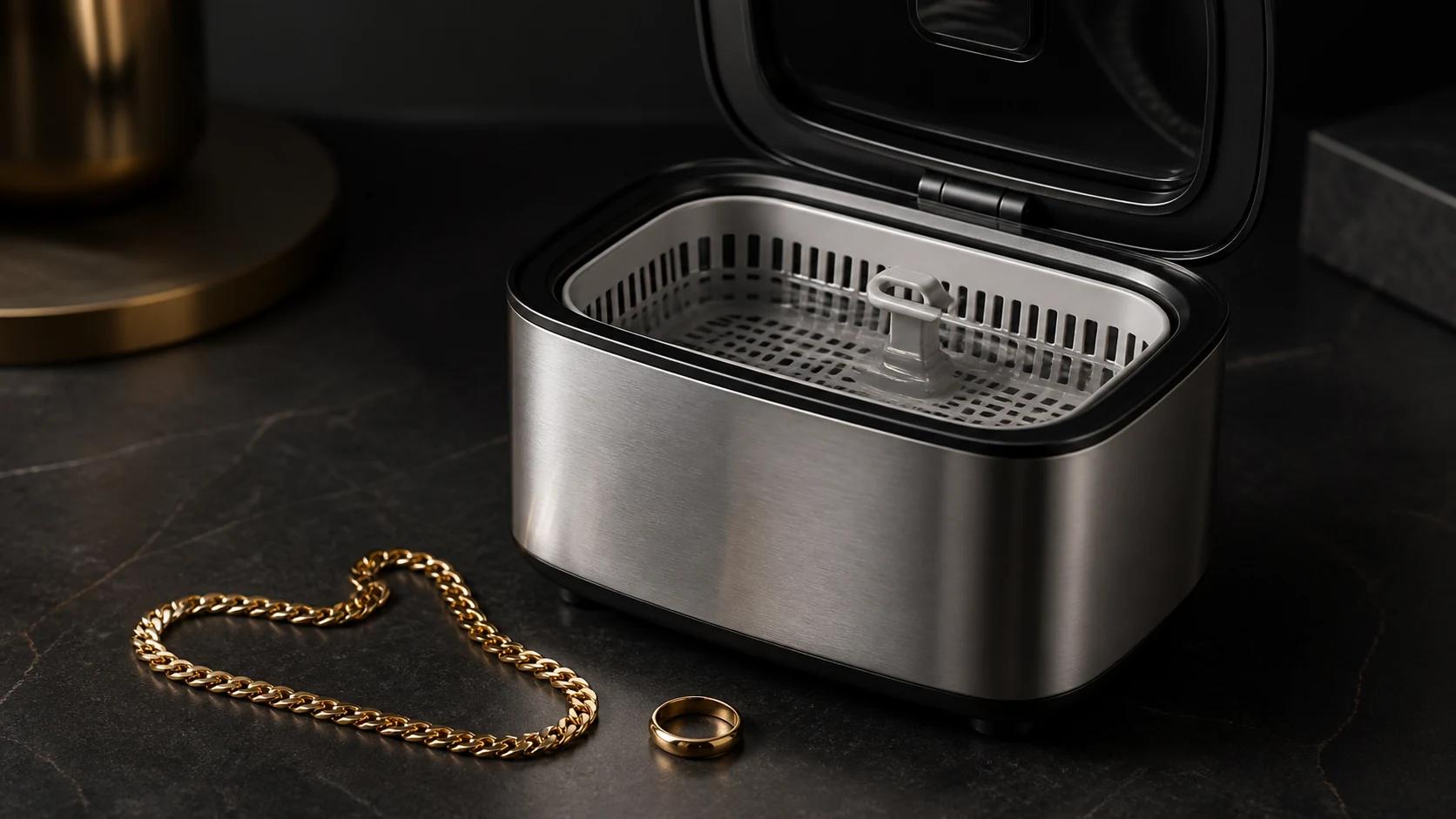
Best Ultrasonic Jewelry Cleaners for Gold
Choose a controllable machine and identify stones, treatments, settings, and finishes that make ultrasound unsafe.
Read the guide →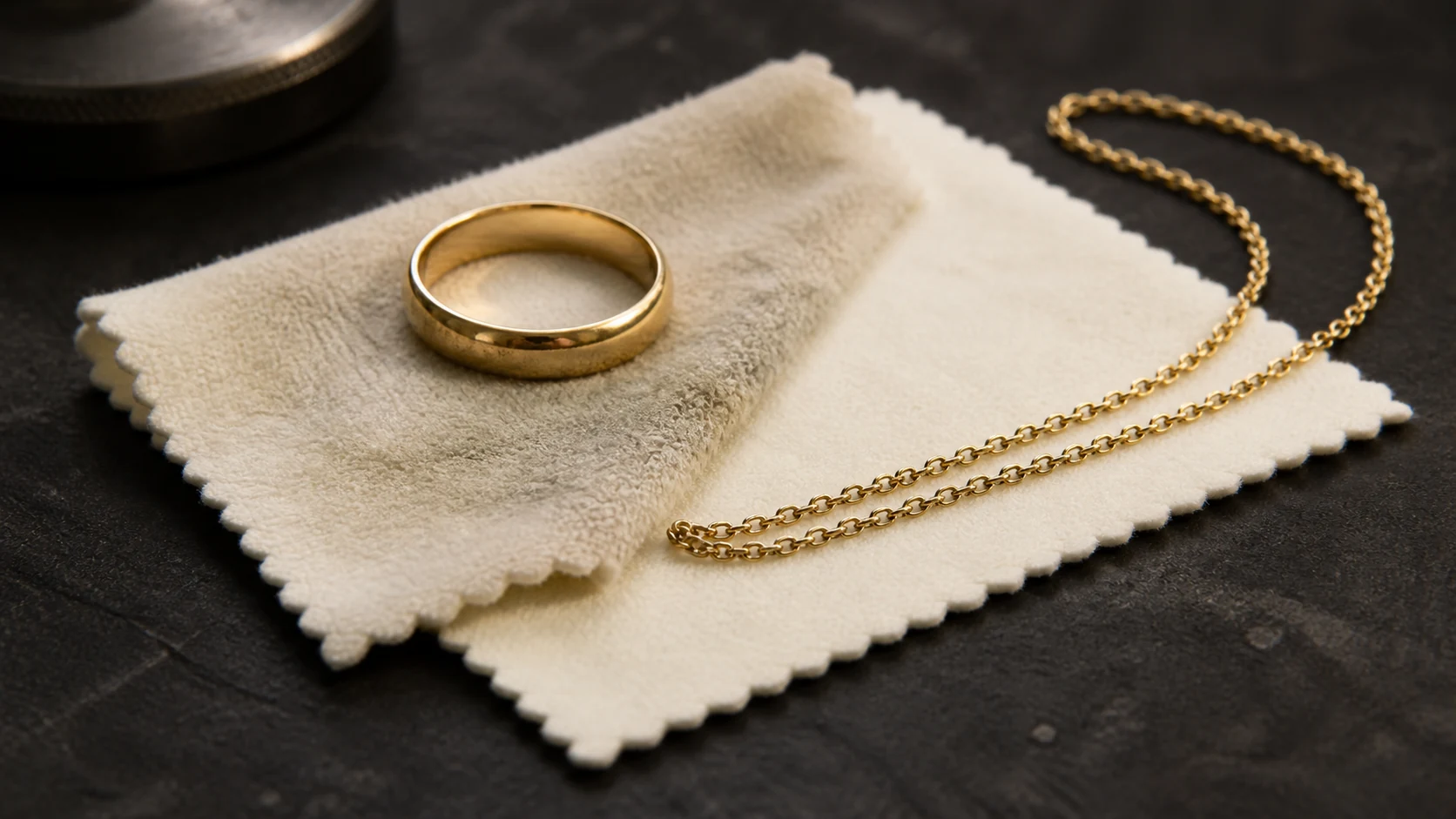
Best Gold Polishing Cloths
Match the cloth to solid yellow gold, white-gold finishes, vermeil, gold-filled, or plated jewelry.
Read the guide →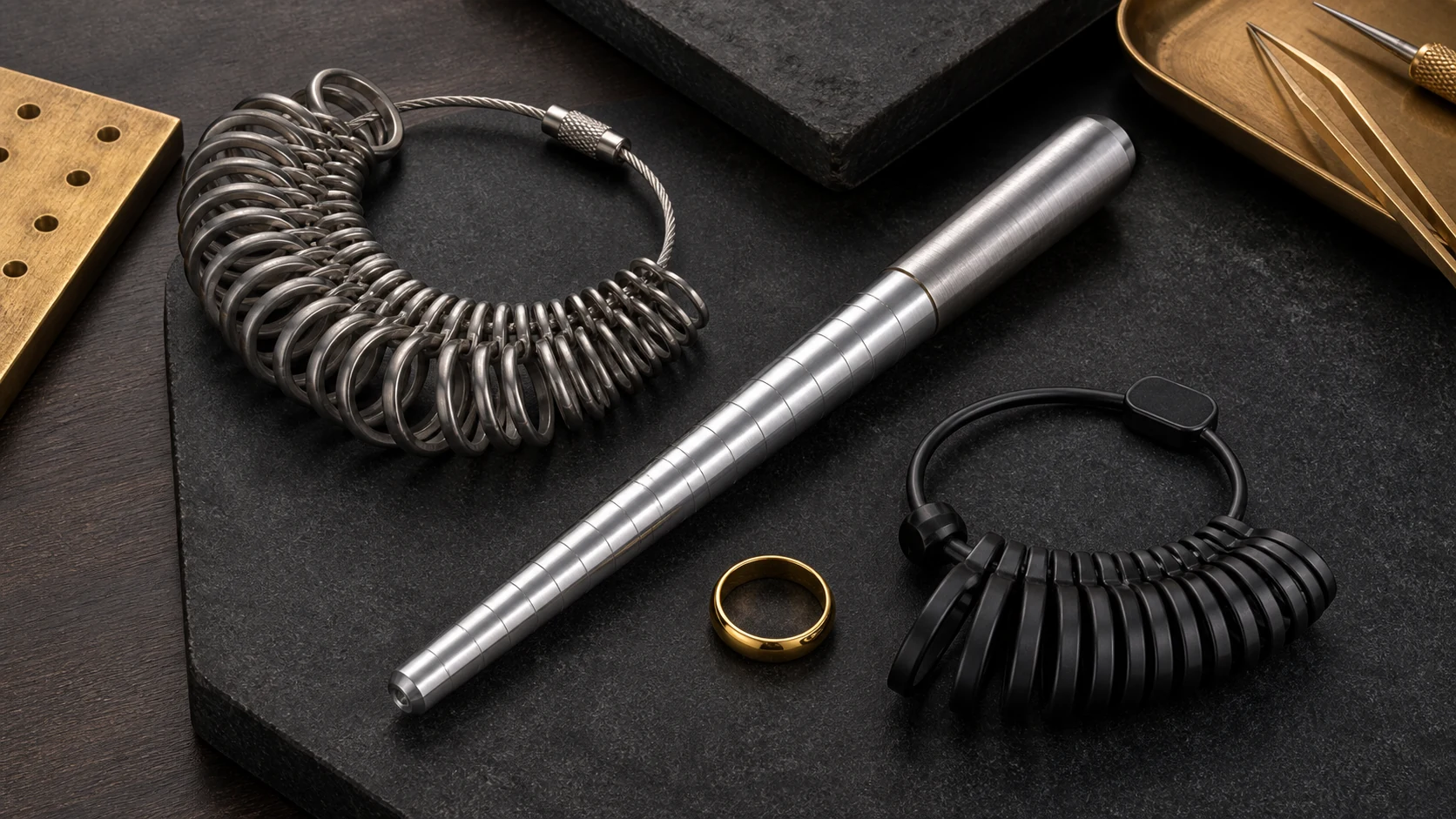
Best Ring Sizers for Gold Rings
Compare finger gauges, mandrels, reusable belt sizers, and temporary adjusters before ordering or resizing.
Read the guide →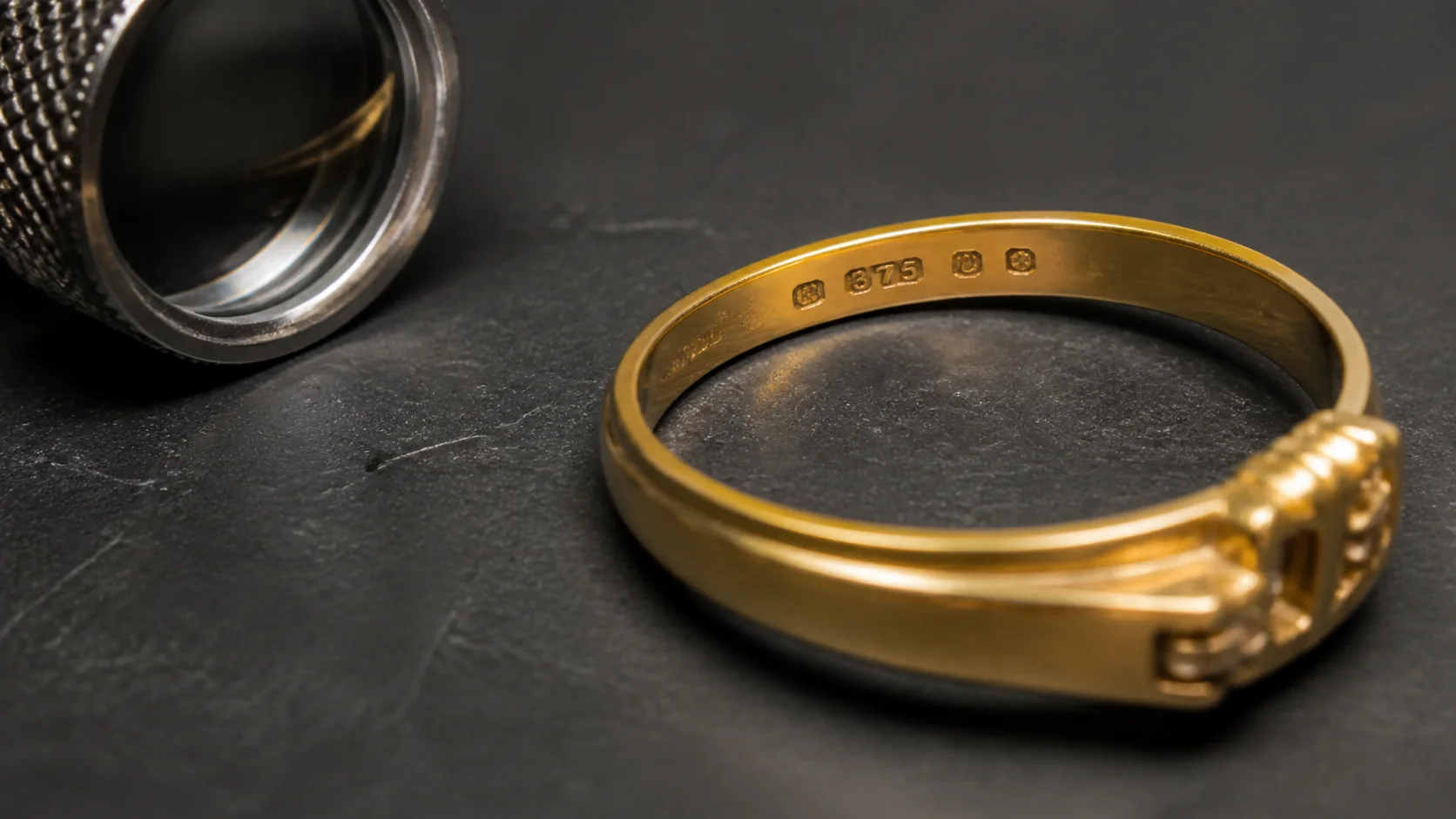
Gold Jewelry Markings | Decode 10K, 14K, 18K, 925, GP, and GF
Read purity, plating, gold-filled, silver and maker marks without treating a stamp as final proof.
Read the guide →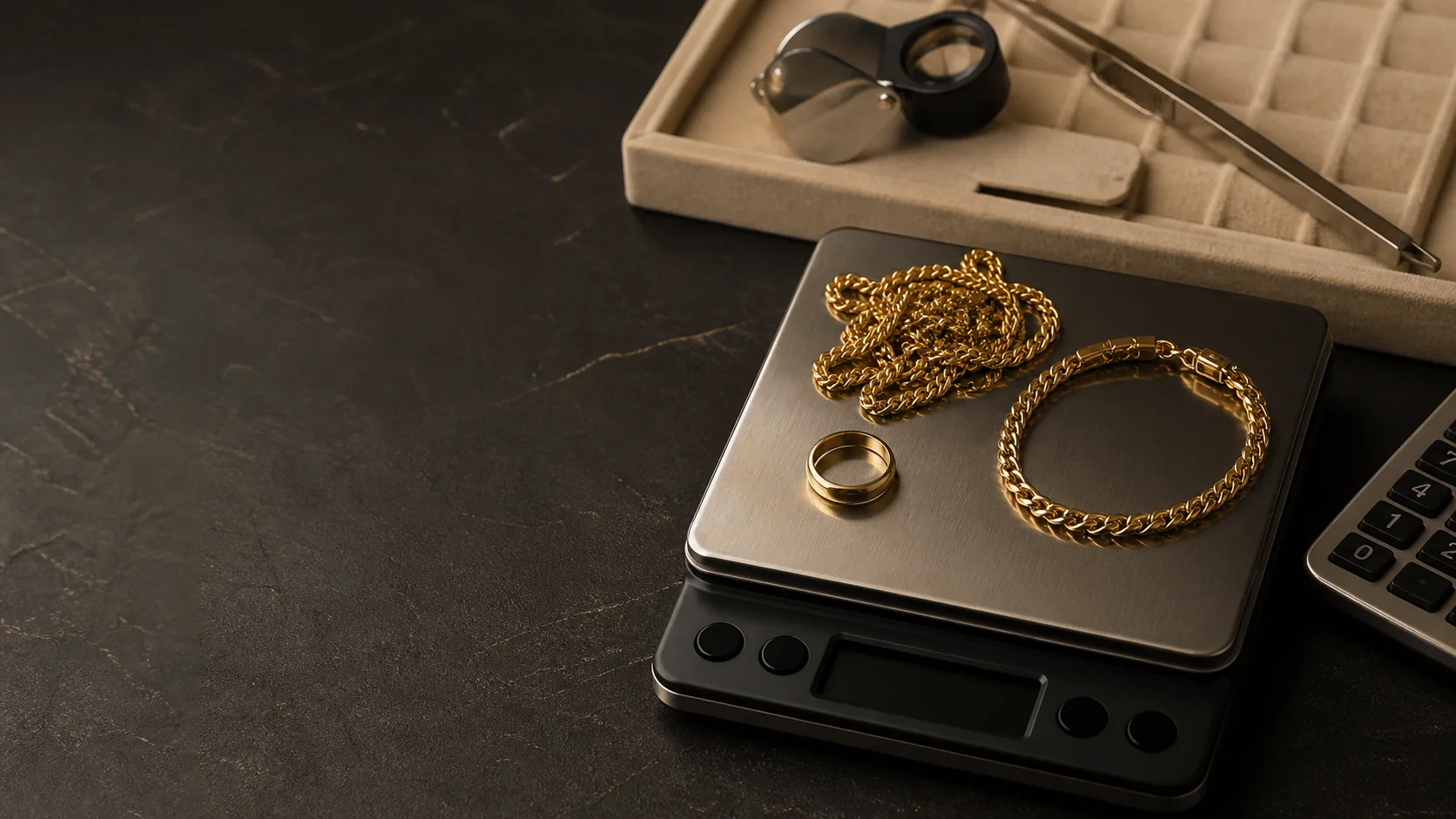
How to Sell Gold Jewelry | Calculate Value and Compare Offers
Separate collectible pieces from scrap, calculate melt value and compare written buyer offers.
Read the guide →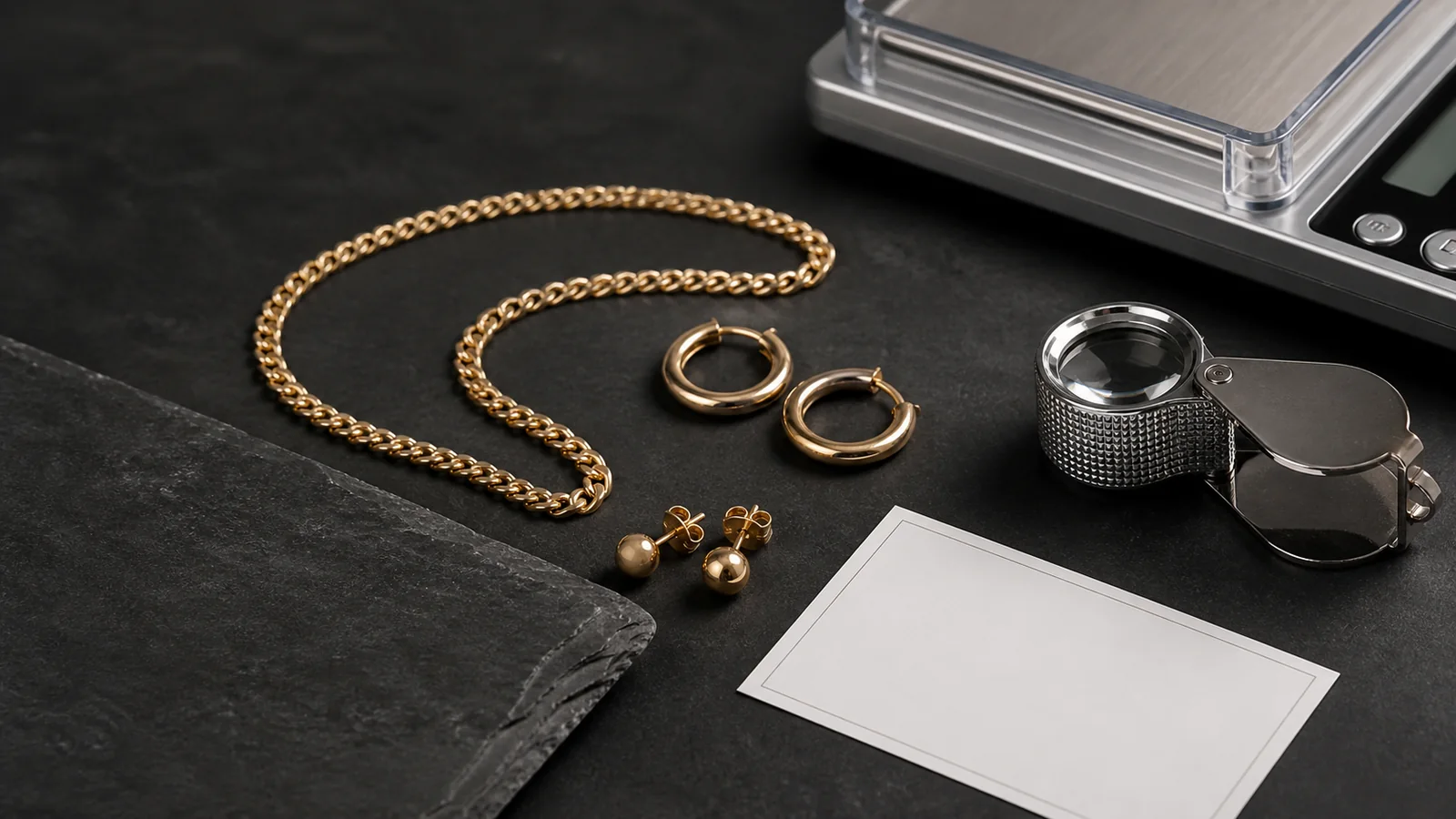
How to Buy Real Gold Jewelry on Amazon Without Overpaying
A step-by-step screen for metal claims, weight, construction, seller evidence and delivery checks.
Read the guide →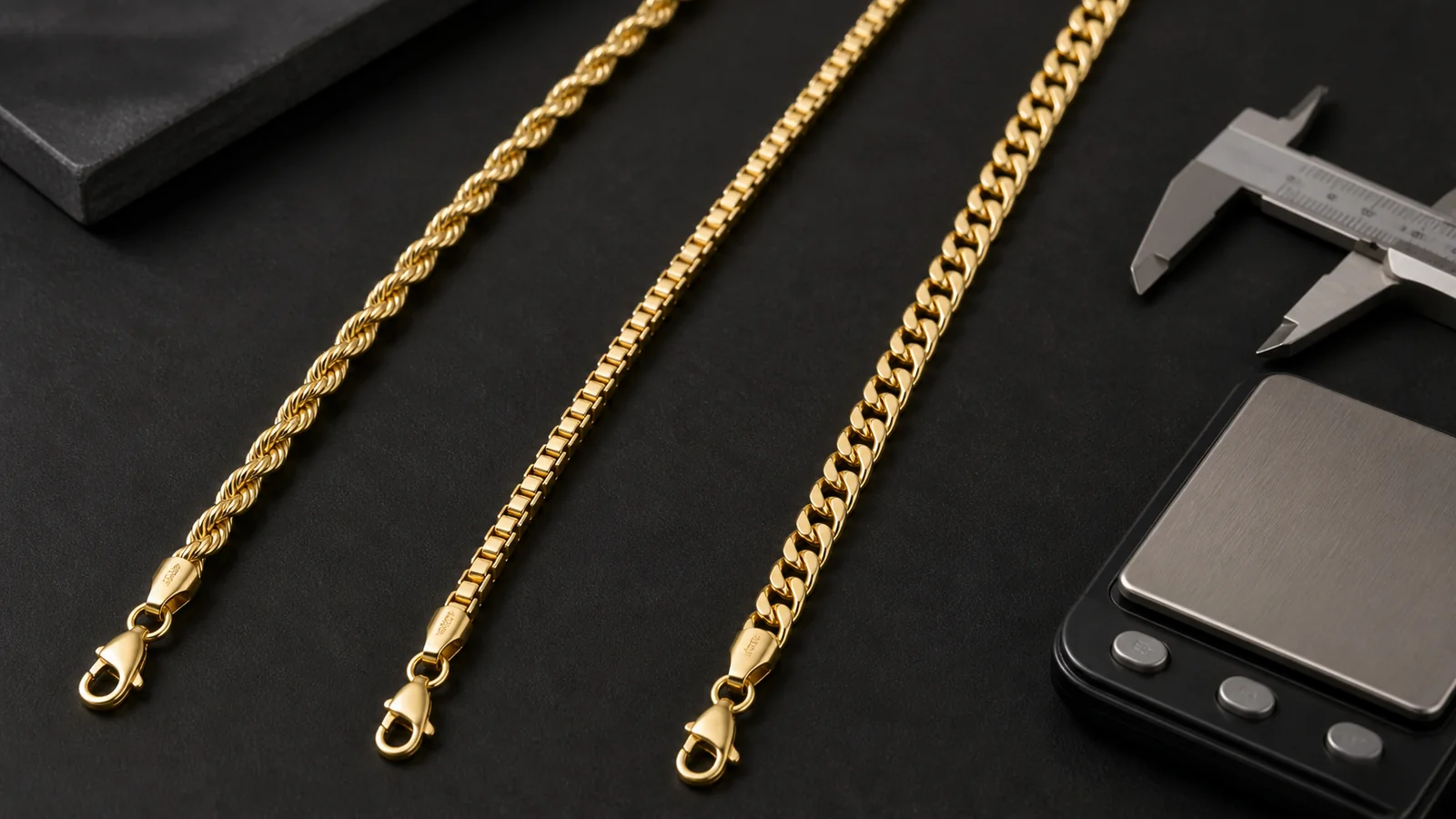
14K Gold Chains on Amazon | Three Listings and Buyer Checks
Compare current 14K chain listings by exact variation, weight, clasp and construction evidence.
Read the guide →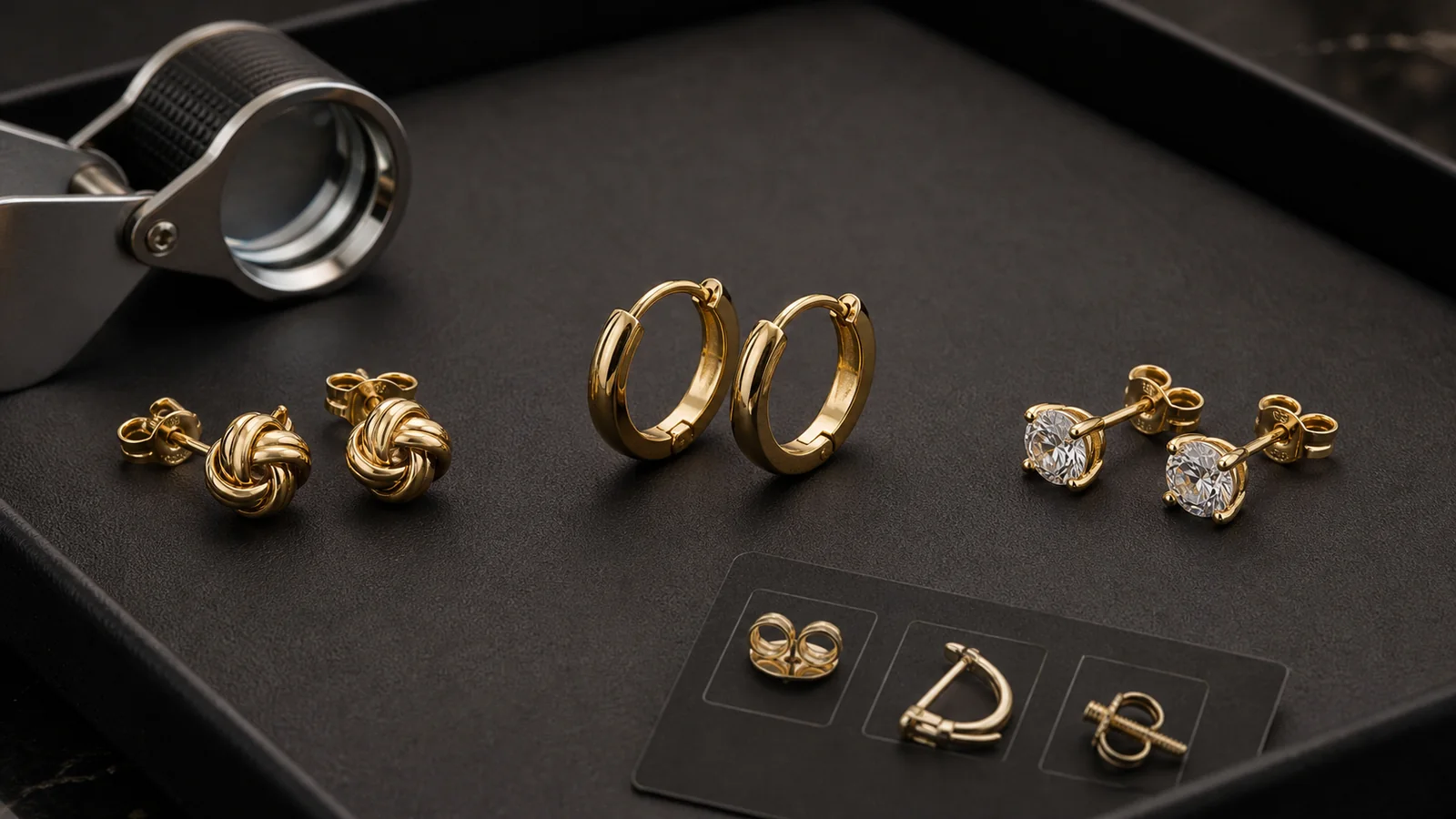
14K Gold Earrings on Amazon | Studs and Hoops Compared
Separate the gold claim from closure, comfort and any gemstone documentation.
Read the guide →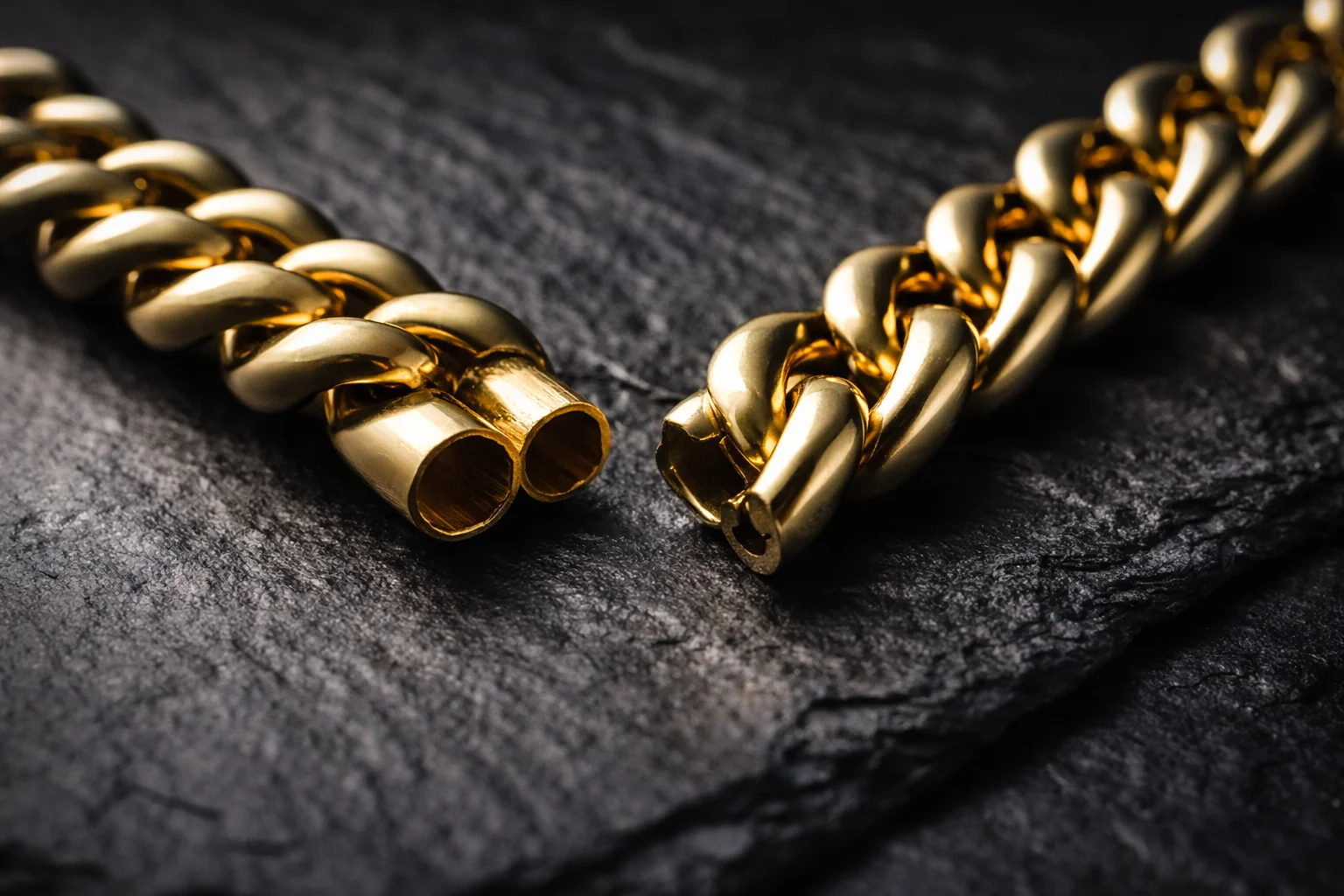
The Expert Jeweler’s Guide to Hollow Gold: What You Must Know Before Buying
Understand why genuine karat gold can still be hollow and what that changes in wear and repair.
Read the guide →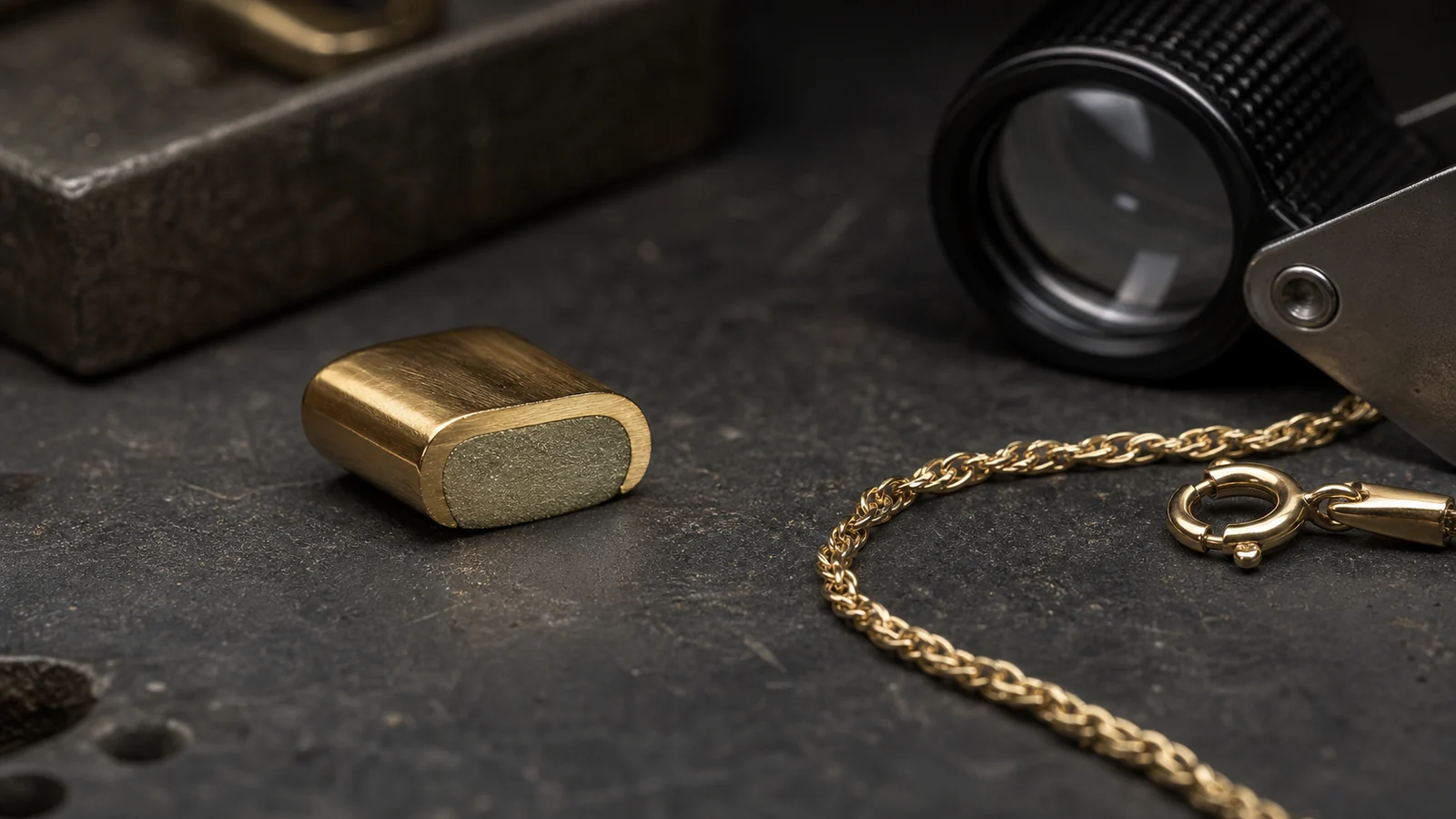
What Does Gold Filled Mean? Markings, Value, and Care
Decode gold-filled terminology, common markings, expected wear and care.
Read the guide →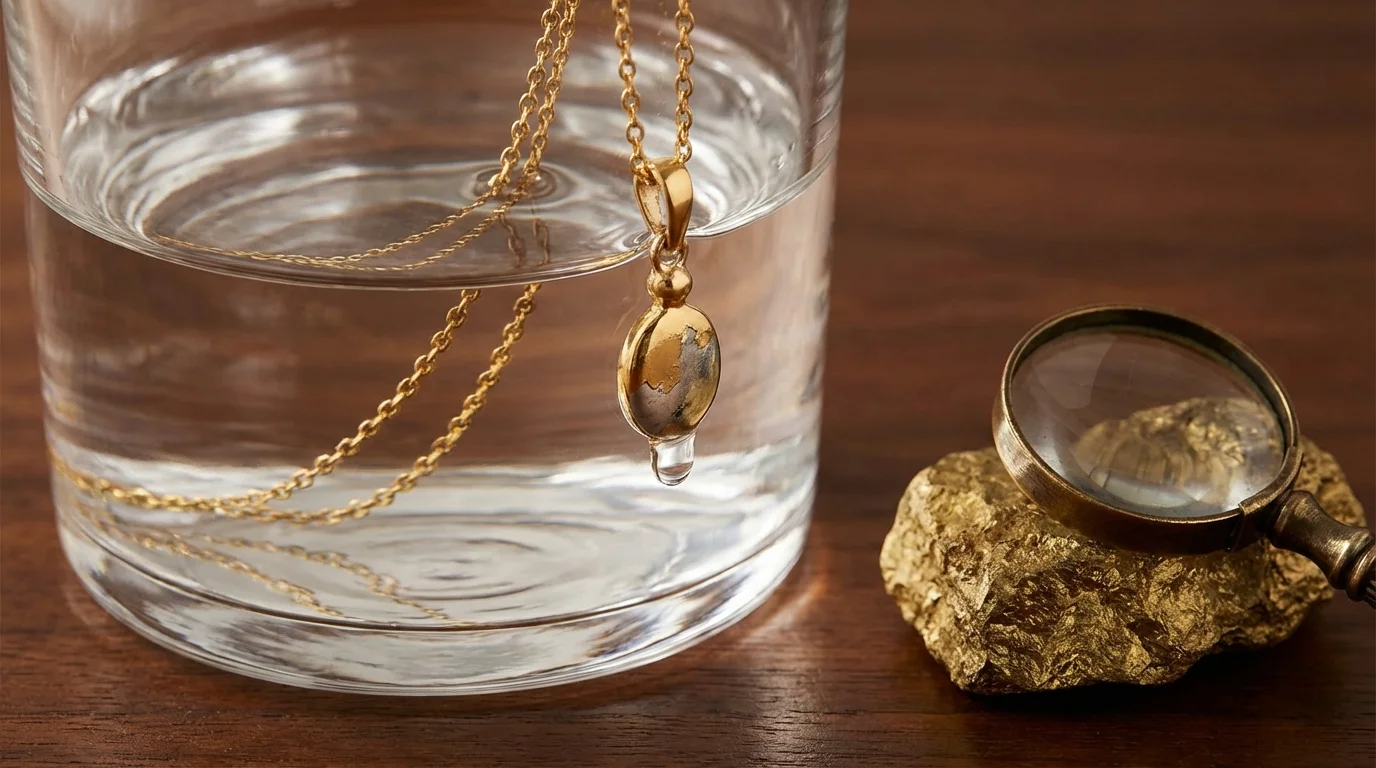
Is Gold-Plated Jewelry Waterproof? | What Water Really Does, What Counts as Damage, and the Better Rule
Learn why “waterproof” is the wrong shortcut for predicting plating life.
Read the guide →
Can You Wear Gold Vermeil in the Shower? | What Happens, How Fast It Wears, and the Better Habit
See what repeated water, soap and friction do to gold over sterling silver.
Read the guide →
Is 22K Gold Too Soft for Jewelry? | Practical Durability Guide
Choose high-karat jewelry by design, thickness and wearing pattern, not karat alone.
Read the guide →
Does Gold Make Your Skin Green? | What Causes It, What It Means, and How to Stop It
Separate copper reactions, residue and plating wear from claims about pure gold.
Read the guide →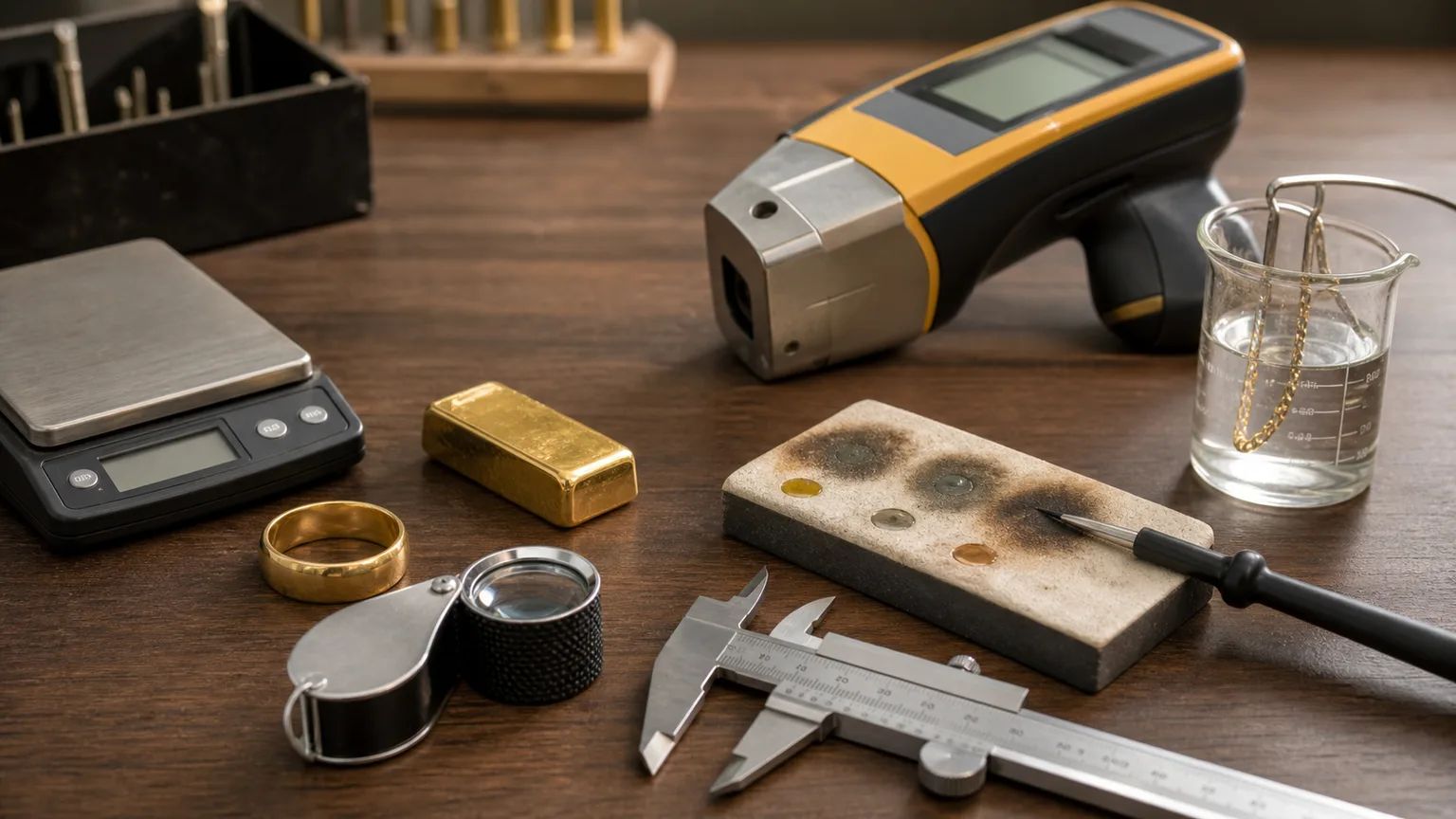
Testing Gold Purity | Practical Home and Professional Test Guide
Compare home and professional test methods, including their failure modes.
Read the guide →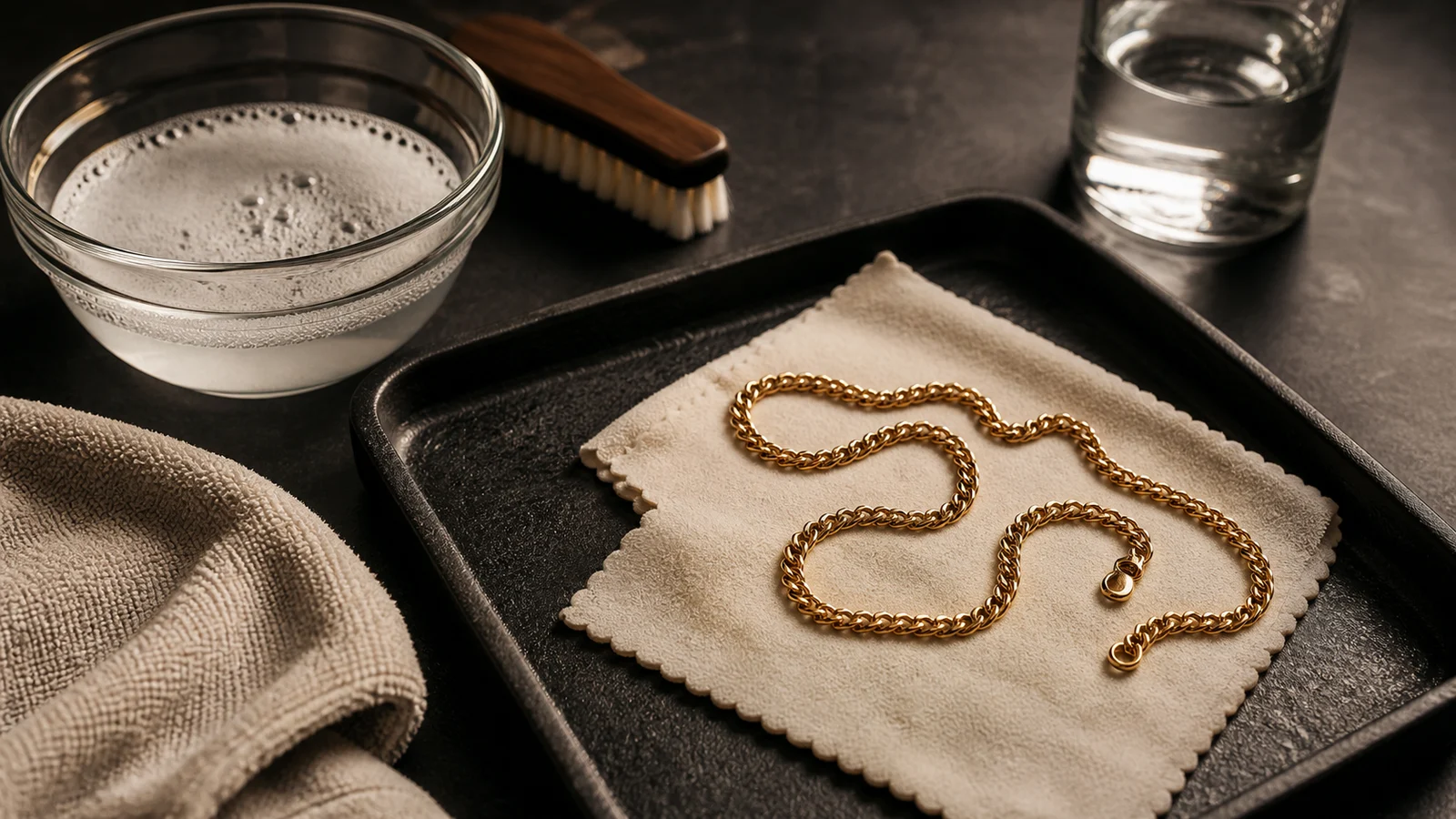
How to Clean Gold Chains Safely: At-Home Method, What to Avoid, and When to Use a Jeweler
Use a conservative cleaning method and know when a jeweler should take over.
Read the guide →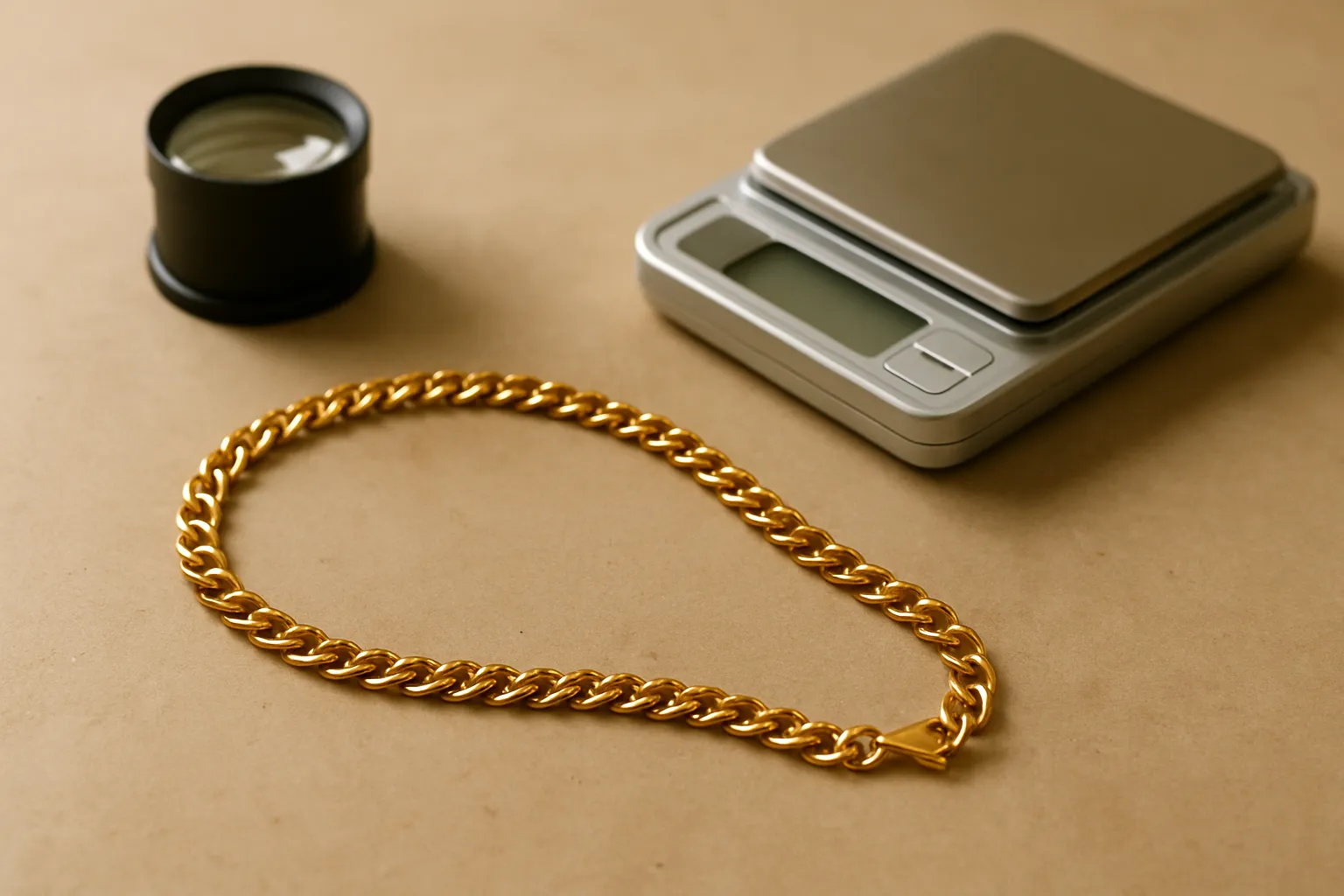
Is NuraGold Real Gold? | Verify the Listing, Seller, Weight, and Construction
Turn one branded listing into a repeatable verification workflow.
Read the guide →Protect the weakest component, not just the gold
Karat gold resists corrosion, but jewelry is a system of links, clasps, solder, finishes, stones and sometimes surface layers. Most care mistakes affect one of those components before they affect the gold itself.
- Remove jewelry before pools, hot tubs and harsh cleaning chemicals.
- Reduce repeated friction on vermeil and plated surfaces.
- Store chains closed, straight and separated to prevent knots and abrasion.
- Clean with mild soap and water only when the full piece is compatible.
- Dry thoroughly around clasps, hinges and settings.
- Inspect high-stress points before wearing expensive or sentimental pieces.
- Stop wearing a damaged clasp, bent post or loose stone setting.
- Use a jeweler for complex stones, antique pieces or uncertain construction.
For the practical method, use our safe gold-chain cleaning guide. If discoloration appears on skin, start with the causes in our skin-reaction guide.
Gold jewelry questions beginners ask first
Is solid gold the same as solid construction?
No. “Solid gold” usually means a karat-gold alloy throughout rather than a surface layer. A piece made from that alloy can still be hollow inside. Ask separately about metal composition and physical construction.
Is 14K or 18K better for everyday jewelry?
Neither is automatically better. 14K contains less gold but is often more resistant to everyday dents and scratches; 18K has a richer gold color and higher gold fraction but is generally softer. Design, thickness, construction and wearing habits also matter.
Can real gold jewelry get wet?
Karat gold does not wash away, but water exposure can affect finishes, solder, clasps, gemstones and residues. Repeated shower, pool and cleaning-chemical exposure is especially risky for plated, vermeil and filled pieces.
Does a 14K or 585 stamp prove jewelry is real?
No. A hallmark is useful evidence, not conclusive proof. Match it with a responsible maker or seller, documented specifications, weight, return rights and—when the value justifies it—professional testing.
Is gold jewelry a good investment?
Jewelry can retain some recoverable gold value, but its retail price also includes design, labor, distribution and margin. Unless a piece has collectible or brand value, resale offers may be much closer to recoverable metal value than the original purchase price.
Sources behind the terminology
- U.S. Federal Trade Commission: Buying platinum, gold and silver jewelry
- Jewelers of America: Gold jewelry buying guide
- Jewelers Mutual: Vermeil, gold-filled and gold-plated distinctions
- Royal Society of Chemistry: Gold properties and element data