
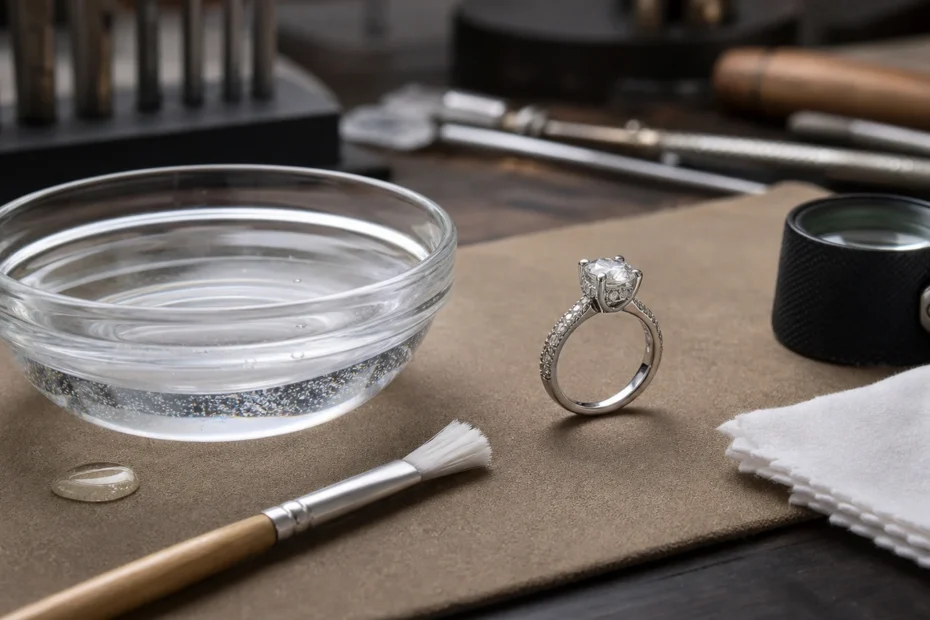
Clean white gold safely with mild soap, lukewarm water, a soft brush, and careful drying. Check stones, rhodium wear, and stop signs first.
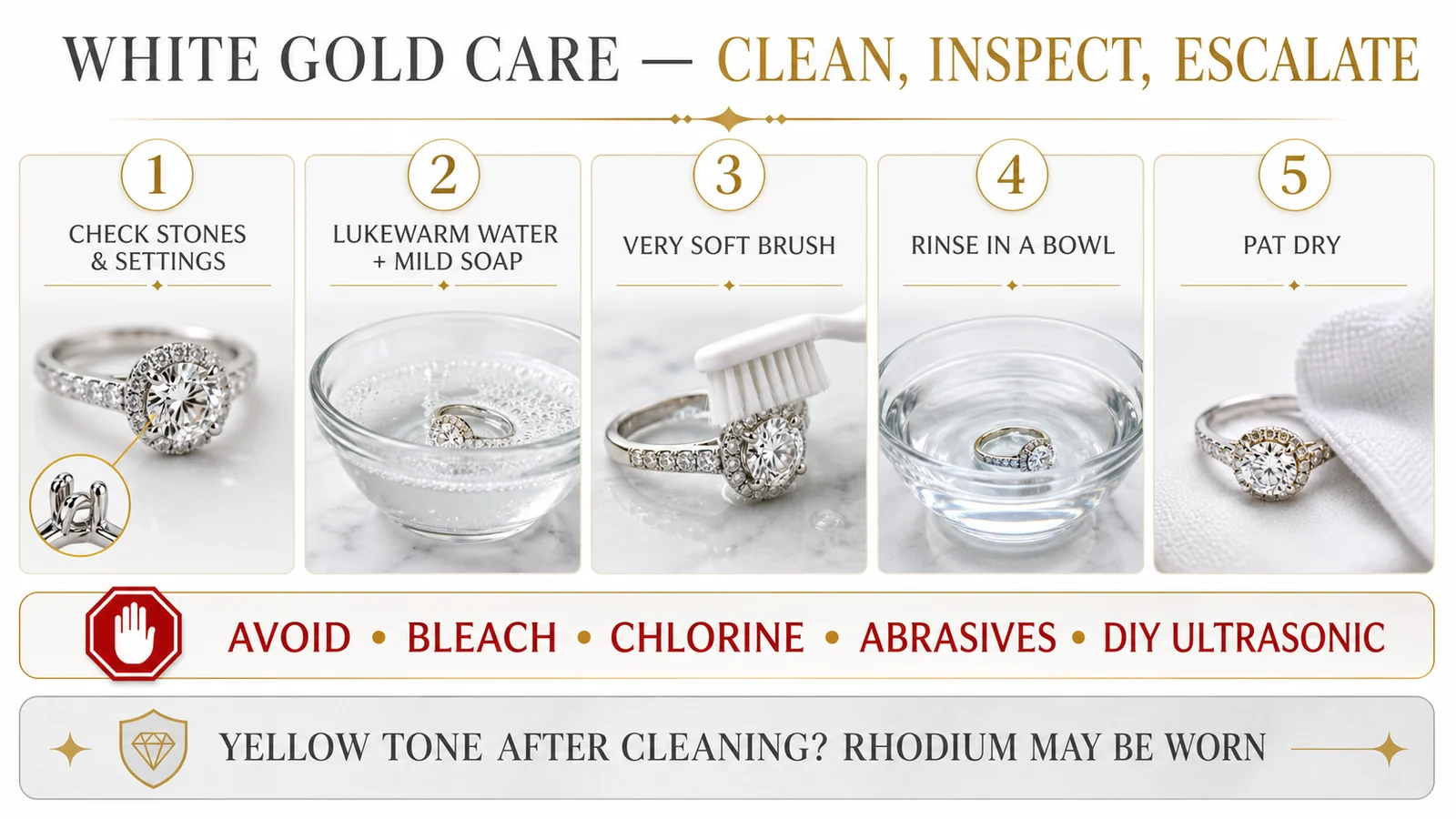
- Inspect loose stones, damaged prongs, glued settings and unknown gems before putting the piece in water.
- For a suitable piece, use lukewarm water, a small amount of mild dish soap and a very soft brush, then rinse in a bowl and pat dry.
- Cleaning removes residue; it cannot restore worn rhodium plating or repair scratches, yellow tone, loose stones or damaged settings.
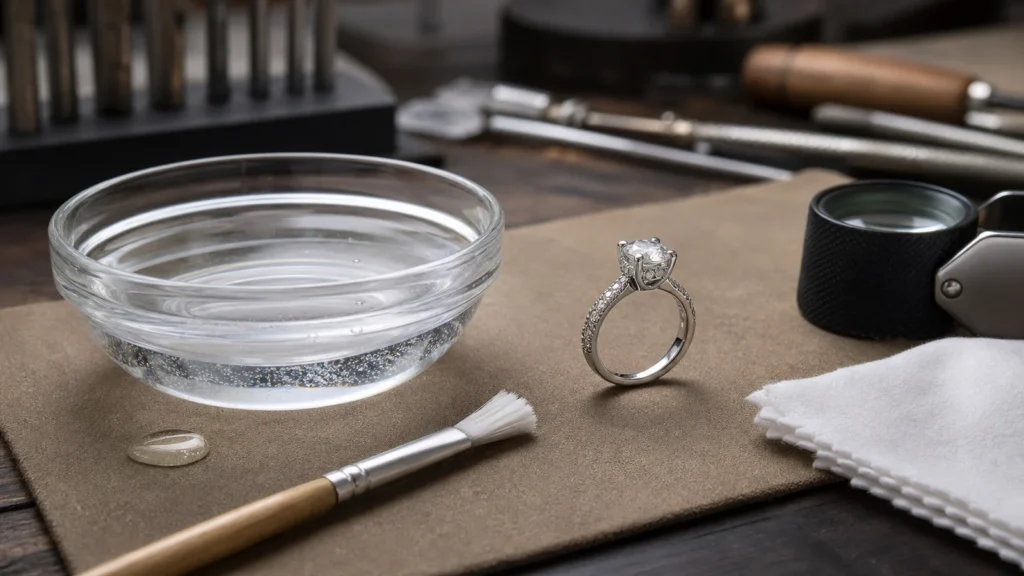
- Inspect stones, prongs, joints and surface condition before adding water.
- Use lukewarm—not hot—water, mild soap and an ultra-soft brush.
- Rinse in a bowl, not over an open drain.
- Avoid bleach, chlorine, abrasives, toothpaste and unapproved ultrasonic cleaning.
- Cleaning removes residue; it does not restore worn rhodium plating.
First identify the problem: residue, damage or finish wear
White gold is a gold alloy chosen for a pale appearance; many pieces receive a bright rhodium surface. The underlying alloy and finish are separate layers, as explained in what white gold is. Safe cleaning preserves both the setting and the surface instead of chasing maximum shine.
Before cleaning: decide whether the piece is water-safe
- Read the hallmark and identify the piece if possible.
- Check whether any stone moves, clicks or catches fabric.
- Look for bent or missing prongs, open jump rings and cracked solder joints.
- Identify gemstones and ask whether they are porous, fracture-filled, dyed, coated or glued.
- Note whether the surface is dirty, scratched, yellowing or flaking.
- When provenance or treatment is unknown, choose professional inspection.
GIA care guidance warns that heat, chemicals and ultrasonic vibration can harm particular gems or treatments. A method safe for a plain wedding band is not automatically safe for a pearl-set ring or an antique with repaired settings.
How to clean white gold safely, step by step
- Prepare a bowl.Use lukewarm water and a few drops of mild, lotion-free dish soap. Avoid a sink with an open drain.
- Soak briefly.Five to ten minutes is usually enough to soften normal residue on a suitable piece. Do not soak watches or unknown constructions.
- Brush gently.Use an ultra-soft brush around the underside of a setting and crevices. Support the piece; do not scrub hard.
- Rinse in a second bowl.Move the piece through clean lukewarm water. A bowl catches a loose stone and avoids drain loss.
- Pat dry.Use a lint-free cloth and allow crevices to air-dry. Do not use high heat.
- Inspect again.Compare appearance under neutral light and check settings before wearing.
Bowl A contains about two cups of lukewarm water and two or three drops of mild soap. Bowl B contains plain lukewarm rinse water. A folded towel under both bowls protects the piece if it slips.
The point is process control, not an exact soap concentration. More detergent and harder brushing do not create a safer result.
What not to use on white gold
| Method or product | Why it is risky | Better choice |
|---|---|---|
| Bleach or chlorine | Can attack alloy components and weaken jewelry, especially with repeated exposure. | Remove jewelry before pools and household bleach. |
| Toothpaste or baking soda | Abrasives can scratch polished metal and accelerate visible finish wear. | Mild soap and a very soft brush. |
| Boiling or very hot water | Thermal shock can harm stones; heat may affect glue or treatments. | Lukewarm water only when the piece is suitable. |
| Household ammonia recipes | Compatibility depends on metal, stones, concentration and exposure. | Use only a product and procedure approved for the complete piece. |
| DIY ultrasonic cleaner | Vibration can dislodge stones or worsen hidden damage; many gems are unsuitable. | Professional inspection and gem-specific decision. |
| Paper towel | Can drag particles across a polished surface. | Clean lint-free microfiber or jewelry cloth. |
Chlorine exposure matters outside cleaning. Remove white-gold jewelry before swimming, hot tubs and bleach-based housework. The guidance from Jewelers of America emphasizes keeping gold away from harsh chemicals.
Yellow after cleaning: dirt versus rhodium wear
A clean white-gold piece can still look warm or yellow. Many white-gold alloys are not naturally mirror-white; rhodium provides the brighter surface. Wear is often most visible on the underside of a ring and other high-contact areas. Cleaning cannot replace metal that has worn away.
| Observation | Likely explanation | Next step |
|---|---|---|
| Cloudy film improves with soap | Oil, lotion or soap residue | Continue gentle routine care. |
| Even warm/yellow tone at contact points | Rhodium has thinned and underlying alloy shows | Ask a jeweler about polishing and replating. |
| Dark line at a joint | Residue, solder difference or damage | Professional inspection. |
| Stone still looks dull | Residue beneath setting, abrasion or stone-specific issue | Do not escalate chemicals; identify the gem and setting. |
| Surface looks hazy after scrubbing | Micro-scratching or finish damage | Stop home polishing. |
Read why white gold turns yellow and why a white-gold ring changes color before paying for repeated cleaning. Replating is a finish service, not proof that the metal was fake.
Does 14K or 18K change the cleaning method?
Both can be cleaned with the same mild routine when construction and stones are suitable. Karat alone does not reveal the full alloy recipe or finish. Eighteen-karat white gold contains more gold; 14K has a larger proportion of other metals and may be mechanically harder depending on the recipe. Rhodium condition, solder, stones and setting quality are more useful care variables than karat in isolation.
A hallmark supports identification but is not a complete condition report. The FTC jewelry guide explains gold fineness markings. For a broader comparison of care and appearance, see white-gold properties.
How often should white gold be cleaned?
Clean when residue is visible or the piece feels greasy, not by an aggressive fixed schedule. A ring worn daily may need gentle home cleaning every few weeks; an occasional pendant may need much less. Daily habits reduce the need for scrubbing: apply lotion and fragrance before putting jewelry on, remove it for chemical work and store pieces separately.
Professional inspection frequency depends on wear, setting and value. A high-set daily-wear ring deserves more attention than a plain pendant. If a prong catches, a stone moves or the ring receives a hard impact, do not wait for the next calendar service.
Professional cleaning, polishing and replating are different
| Service | Purpose | Material effect |
|---|---|---|
| Cleaning | Remove oils and residue | Should remove contamination, not reshape metal. |
| Inspection | Find loose stones, worn prongs or damaged joints | No removal when done visually and with suitable tools. |
| Polishing | Reduce surface scratches and restore gloss | Removes a small amount of material. |
| Rhodium replating | Restore bright white surface | Adds a new thin surface after preparation. |
| Repair | Restore structure or setting security | May involve soldering, laser work or replacement parts. |
Do not request “a polish” when the real concern is a loose setting. Repeated polishing is not a neutral cleaning step because it removes material and can soften details. A jeweler should diagnose structure before refinishing.
Storage and daily-care rules that prevent damage
- Store pieces separately in soft compartments to reduce scratching.
- Remove rings before cleaning, chlorine exposure, heavy lifting and abrasive work.
- Keep chains closed and laid flat to reduce knots.
- Do not mix jewelry in a chemical dip unless every metal, stone and treatment is approved.
- Photograph valuable pieces and retain purchase, repair and appraisal records.
If you are cleaning a chain rather than a ring, review how to clean gold chains; hollow links and clasps add construction-specific concerns. If a magnet changes your confidence, remember that some white-gold alloys can respond differently, so magnetism is not a cleaning or authenticity verdict.
Most cleaning guides treat dullness as one problem. In practice, residue, micro-scratches, loose settings and worn rhodium require four different responses. The safest improvement comes from identifying which layer failed before choosing a product.
White-gold care is conservative maintenance. A five-minute mild clean is useful; escalating chemicals until the piece looks “new” can hide the need for inspection or remove more finish.
This is general care information. Do not immerse watches, damaged jewelry, antiques, glued settings or unknown, porous, fracture-filled, dyed or coated gemstones. A qualified jeweler or gemologist should identify the complete piece before machine cleaning, polishing or replating.
Watch: This practical demonstration shows the mild soap-and-soft-brush method described above.
Bottom Line
Inspect first, then use lukewarm water, mild soap, a very soft brush, a bowl rinse and a lint-free cloth only on suitable white-gold jewelry. If yellowing remains, the likely solution is diagnosis and possibly rhodium replating—not stronger cleaner.
FAQ: Cleaning White Gold
Can I clean white gold with dish soap?
Yes, a small amount of mild, lotion-free dish soap in lukewarm water is appropriate for sturdy white-gold jewelry with secure settings and water-safe stones.
Can toothpaste clean white gold?
Do not use it. Toothpaste is abrasive and can scratch polished metal or make rhodium wear more visible.
Why is my white gold still yellow after cleaning?
The rhodium surface may have worn thin, revealing the warmer underlying alloy. Cleaning removes residue but cannot replace plating.
Can white gold go in an ultrasonic cleaner?
Only when a professional has confirmed that the stones, treatments, settings and condition are suitable. Vibration can dislodge stones or damage some gems.
How often should I replate white gold?
There is no universal interval. It depends on contact, body chemistry, original plating and preferred appearance; replate when wear is visible and a jeweler confirms the structure is sound.
Sources and verification
This article separates documented evidence from inference and links the primary or specialist sources used. Dates, access rules, care advice and industrial controls should be rechecked when a decision depends on them.
- GIA — Tips on Caring for Jewelry — Gem-specific cleaning limits, chemical exposure and professional ultrasonic guidance.
- GIA — White Gold vs. Silver — White-gold alloy, rhodium plating and maintenance context.
- GIA — White Metal Options — Rhodium-plating wear and white-metal comparison.
- Jewelers of America — Gold Jewelry — White-gold alloy color, rhodium layer and replating guidance.
- Jewelers Mutual — Clean White Gold Jewelry — Conservative mild-soap method and chemical cautions.
- FTC — Buying Platinum, Gold, and Silver Jewelry — Karat marks, alloy and plating terminology.
- GIA — Best Ring Material for Everyday Wear — Wear, maintenance and white-gold replating context.
- GIA — Buying Guide to Gold Colors — White-gold composition and durability distinctions.
- GIA — Tennis Bracelet Buying Guide — Rhodium wear and stone-set construction context.
- Jewelry Intel — How to Clean White Gold — Video walkthrough selected after oEmbed validation.
 When you purchase a service or a product through our links, we sometimes earn a commission, at no extra cost to you.