
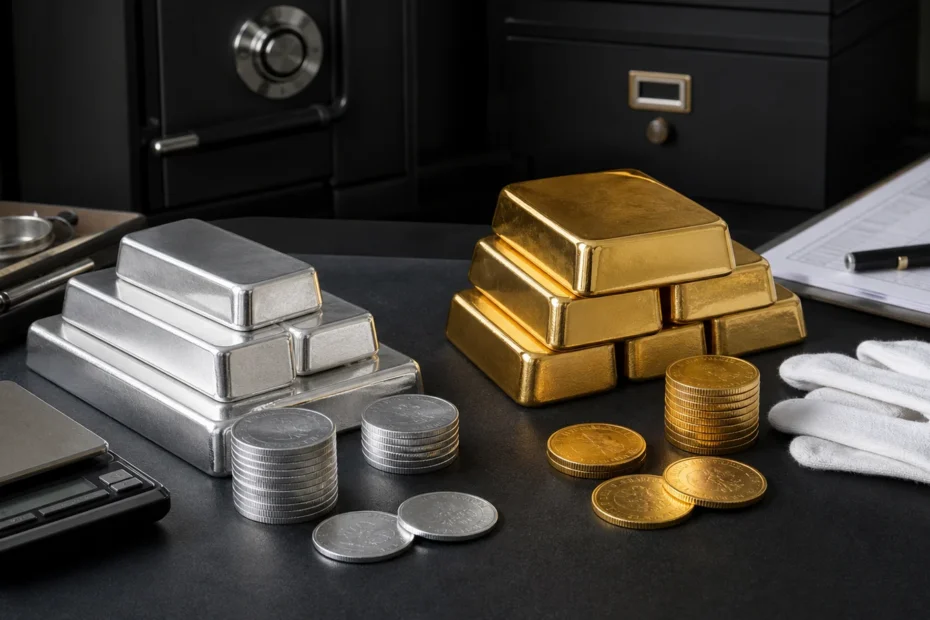
Learn bullion bars, coins, rounds, purity, premiums, spreads, storage, and buyer checks before purchasing physical gold or silver.
- Learn the difference between bullion bars, coins, and private rounds.
- Compare fine weight, premium, buyback spread, and storage before buying.
- Use LBMA and U.S. Mint standards without confusing wholesale and retail products.
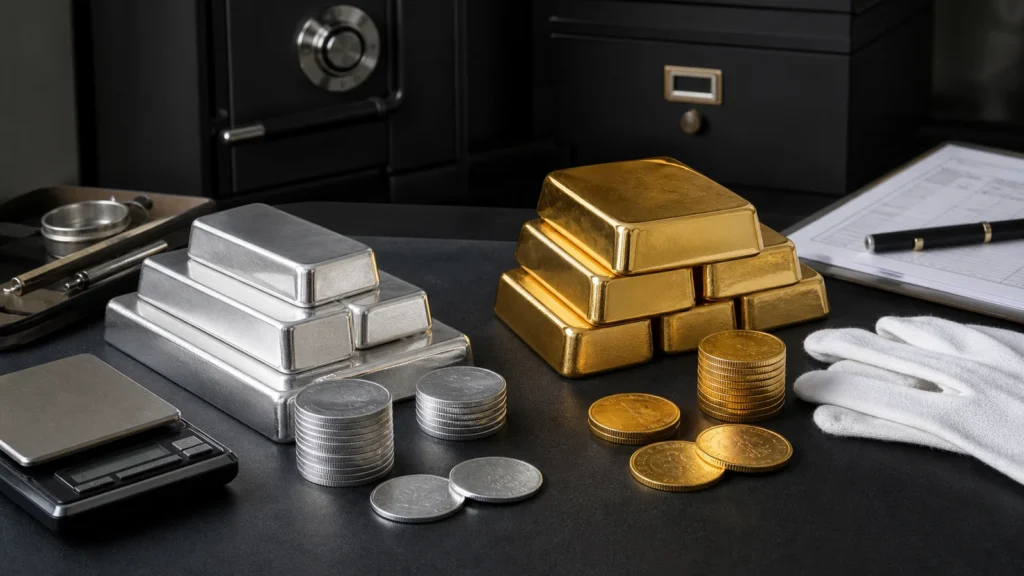
Gold and silver bullion are physical precious metals, usually bars, rounds, or coins, bought primarily for their metal content rather than collectible value. Bullion buyers focus on purity, weight, premium over spot price, liquidity, dealer trust, and secure storage.
- Bullion is valued mainly by metal content, not design or rarity.
- Bars often offer lower premiums, while coins can be easier to resell.
- Purity, weight, dealer reputation, and buyback policy matter before price alone.
- Silver takes more storage space than gold for the same dollar value.
- Bullion is educationally relevant to portfolios, but it is not risk-free or financial advice.
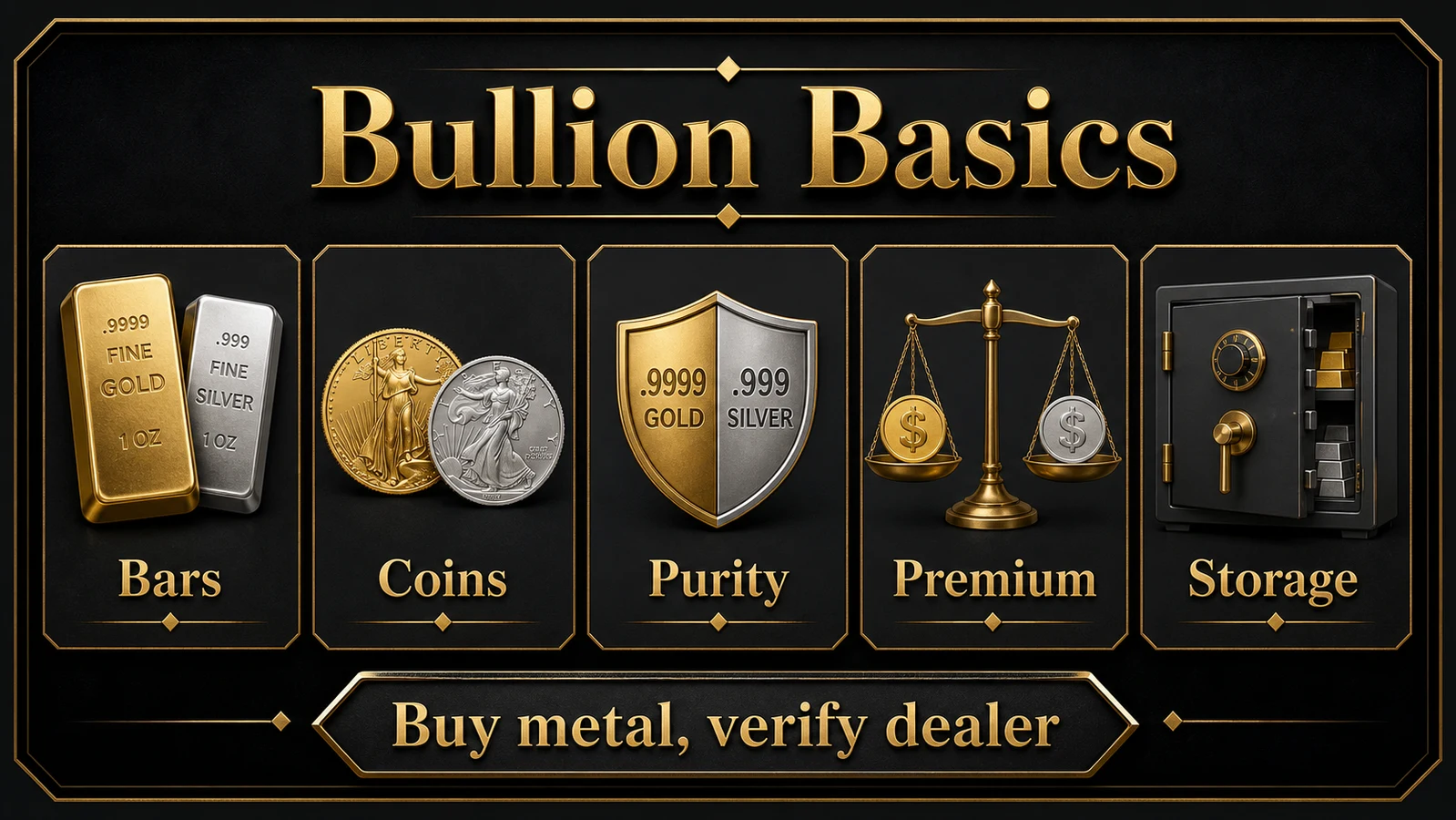
Bullion in Plain English
Bullion means investment-grade precious metal in a standardized physical form. The most common retail forms are gold bars, silver bars, government-minted bullion coins, and privately produced rounds.
Bullion differs from jewelry because the buyer is usually paying for metal content and market liquidity rather than craftsmanship. It also differs from rare coins because collectible premiums can move separately from metal value.
If you are new to physical metal, pair this guide with GoldConsul’s how to invest in gold, how to buy gold bars, and where to store gold articles.
Bars, Coins, and Rounds Compared
| Form | Strength | Tradeoff |
|---|---|---|
| Gold bars | Efficient way to hold value in compact form | May need careful dealer verification on resale |
| Silver bars | Often lower premium per ounce | Bulky compared with gold value |
| Bullion coins | Recognizable and liquid | Premiums can be higher than bars |
| Private rounds | Simple silver exposure | Recognition depends on mint reputation |
The LBMA Good Delivery framework shows how professional wholesale bars are standardized. Retail buyers can also review official bullion information from the U.S. Mint and broader market context from the World Gold Council Goldhub.
What to Check Before Buying Bullion
- Compare the product premium against current spot price.
- Buy from a dealer with transparent pricing and buyback terms.
- Check weight, purity, serial numbers, assay packaging, or mint details.
- Understand storage, insurance, and liquidity before ordering.
- Avoid products you cannot authenticate or resell easily.
Gold and silver behave differently in storage. Gold is compact for value, while silver requires more space and can be heavier to move in meaningful dollar amounts.
Purity and Authentication Basics
Common gold bullion purity is .999 or .9999 fine, while investment silver is often .999 fine. Coins may have different alloy compositions even when their precious metal content is clearly specified.
Use GoldConsul’s testing gold purity guide, gold purity calculator, and gold vs silver weight comparison to understand the physical checks behind bullion verification.
Educational Disclaimer
Editorial Perspective
For readers, bullion is simple in concept but unforgiving in execution. You can own real metal and still make a poor purchase if you ignore premiums, storage, authenticity, and resale terms.
Evaluate bullion as a physical asset with operational details. The metal is only one part of the decision; custody, insurance, bid-ask spread, and your exit path matter too.
Knowledge Gap
Many beginner guides define bullion but skip the practical frictions. Readers need to understand premiums, bid-ask spread, storage risk, and product recognizability before buying.
Another gap is silver logistics. Silver can look cheaper per ounce, but its lower value density changes storage and transport calculations quickly.
Calculate the Real Cost Before You Buy
The spot price is a reference for unfabricated metal, not the amount a retail buyer normally pays. Your entry cost is the metal value plus the dealer premium, shipping, payment fees, insurance, and any applicable tax. Your exit value depends on the dealer’s buyback bid, not the price displayed on the product page.
Total acquisition cost = metal value + premium + transaction costs + tax. To compare two products fairly, divide total acquisition cost by the fine troy ounces received. Then ask the same dealer what it would pay to buy each product back today.
A one-troy-ounce coin and a one-troy-ounce bar can contain the same amount of fine gold yet trade at different premiums. The difference may reflect minting cost, recognition, packaging, dealer inventory, or current demand. A higher premium is not automatically bad, but it needs a resale or handling benefit you actually value.
| If your priority is… | Usually compare first | Main tradeoff |
|---|---|---|
| Lowest cost per ounce | Larger bars and common secondary-market products | Fewer units to sell and a larger authentication stake per item |
| Easy partial resale | Widely recognized one-ounce or fractional coins | Higher fabrication premium, especially on small sizes |
| Compact storage | Gold rather than the same dollar value of silver | More value concentrated in each small item |
| Lower entry price | Silver coins, rounds, or smaller bars | More bulk and often a wider percentage spread |
What “Good Delivery” Does—and Does Not—Mean
The LBMA Good Delivery system accredits refiners and sets specifications for large wholesale bars used in the London market. Current technical rules set minimum fineness at 995 parts per thousand for gold and 999 for silver. Retail one-ounce bars are not themselves 400-ounce Good Delivery bars, even when their refiner appears on an LBMA list.
For a retail purchase, verify the exact product: stated fine weight, fineness, mint or refiner, serial or assay packaging where applicable, dealer return terms, and a realistic buyback route. The U.S. Mint also makes an important distinction: bullion coins are valued mainly by weight and fineness, while the Mint distributes them through authorized purchasers rather than selling them directly to the public.
A Five-Step Bullion Decision
- Choose the purpose. Portfolio hedge, collecting, gifting, and short-term trading call for different products.
- Compare fine metal, not gross weight. A 22-karat coin may still contain a full stated ounce of fine gold.
- Compare both sides of the spread. Request a same-day buy and buyback quote.
- Plan storage before delivery. Home, safe-deposit box, and professional vaulting have different access, insurance, and counterparty risks.
- Document the purchase. Keep invoices, assay information, photographs, and packaging.
Use the live gold price for spot context, the gold weight calculator for unit conversions, and the gold testing guide when a product’s identity is uncertain.
Common Bullion Terms in One Minute
- Spot price
- The current wholesale reference price for metal, usually quoted per troy ounce.
- Premium
- The amount charged above metal value to cover fabrication, distribution, dealer margin, and market conditions.
- Spread
- The gap between what you pay and what a buyer will bid for the same product.
- Fineness
- The proportion of precious metal by mass, such as .999 silver or .9999 gold.
- Assay
- A test or accompanying certification concerning metal content. Packaging marked “assay” is useful evidence but should still match the product and issuer.
Numismatic value is separate from bullion value. A rare coin may trade mainly on date, grade, provenance, and collector demand even though it contains precious metal. If you cannot explain which part of the price is metal and which part is collectible premium, pause before buying.
Also check local tax and reporting rules instead of copying advice from another country. Gold and silver can receive different treatment, and a legal-tender face value does not determine a bullion coin’s market value.
FAQ: gold and silver bullion
Is bullion the same as coins?
Not always. Some bullion comes as coins, but bullion can also be bars or rounds. The key idea is value based primarily on metal content.
Is gold bullion better than silver bullion?
Neither is universally better. Gold is more compact for value, while silver has a lower per-ounce price but requires more storage space.
What purity should bullion be?
Many gold bars are .999 or .9999 fine, and many silver products are .999 fine. Always check the exact product specification.
Do bullion coins have collectible value?
Some may develop collectible premiums, but bullion coins are mainly bought for metal content and recognizability, not rarity.
Where should bullion be stored?
Options include home safes, safe deposit boxes, and insured vault storage. The right choice depends on value, access needs, insurance, and risk tolerance.
Bottom Line
Gold and silver bullion are physical precious metals bought mainly for metal value. Focus on purity, premium, dealer trust, authentication, storage, and resale terms before treating any product as a good buy.
 When you purchase a service or a product through our links, we sometimes earn a commission, at no extra cost to you.