
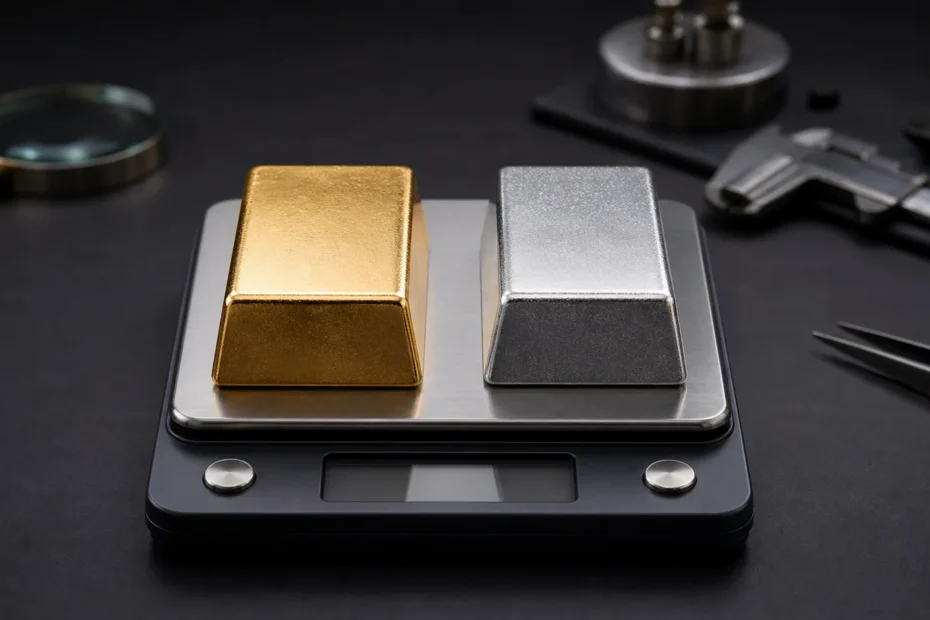
Is Gold Heavier Than Silver? Density, Volume, and a Simple Test
Gold is about 84% denser than silver at equal volume. See the numbers, a worked displacement example, alloy caveats, and test limits.
If you are researching Gold Properties, GoldConsul translates the core details into action-ready guidance for buyers, collectors, and readers who want clear quality signals before making decisions. Within this tag archive, GoldConsul connects Gold Properties to related concepts such as storage, valuation methods, cost structure, and realistic expectations for liquidity, helping you avoid common mistakes. Gold Properties is easier to manage when you align theory with your own risk profile, timeline, and liquidity needs — exactly the framework GoldConsul uses across its editorial workflow. Look for signs of reliability, verify sources, and treat historical claims with context; GoldConsul”s coverage for Gold Properties is written to improve confidence and reduce avoidable risk. This is built for readers who want confident, repeatable decisions and a clear link between headline information and practical outcomes in real gold scenarios. If you”re comparing long-term performance, the discussion around Gold Properties becomes easier when you map fundamentals, risks, and entry points into one checklist.
Gold is about 84% denser than silver at equal volume. See the numbers, a worked displacement example, alloy caveats, and test limits.
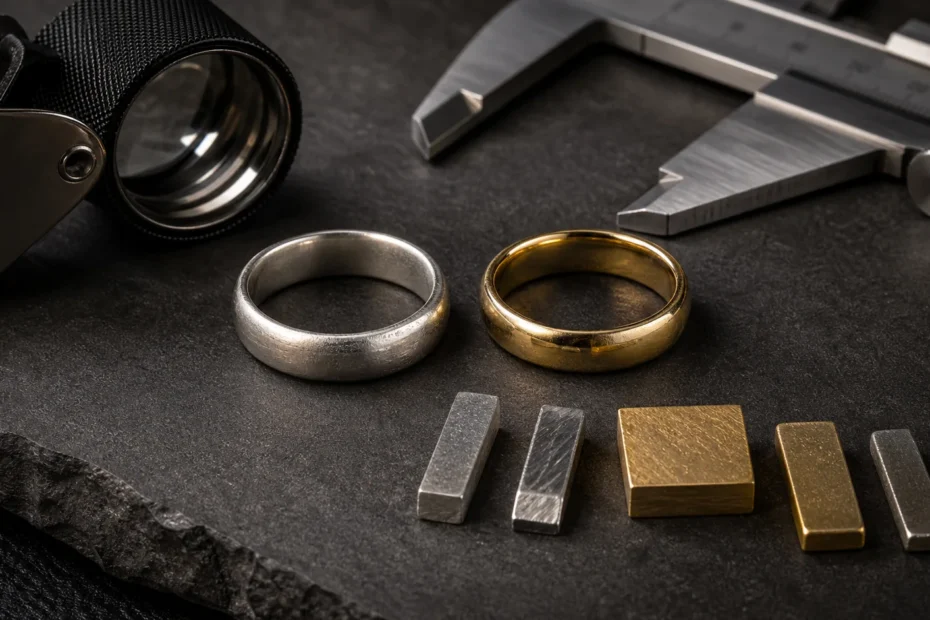
Silver is not universally stronger than gold because pure metals, sterling silver, and 14K, 18K, or 24K gold behave differently. This guide separates hardness, bending,… Read More »Is Silver Stronger Than Gold? | Alloys, Hardness, and Daily-Wear Reality
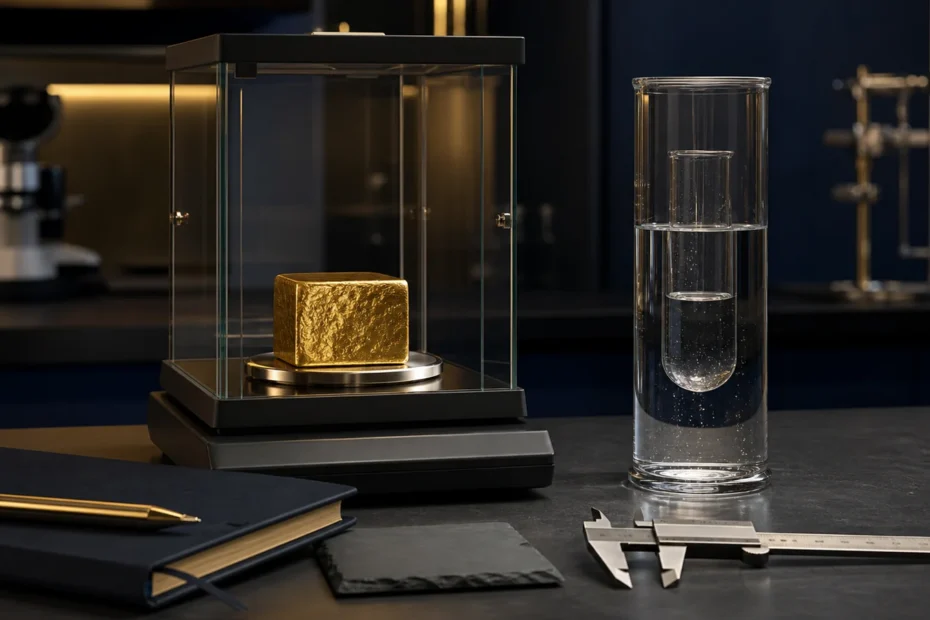
Pure gold has a density of about 19.32 g/cm³ near room temperature. See unit conversions, alloy effects, a water-displacement example, and test limits.
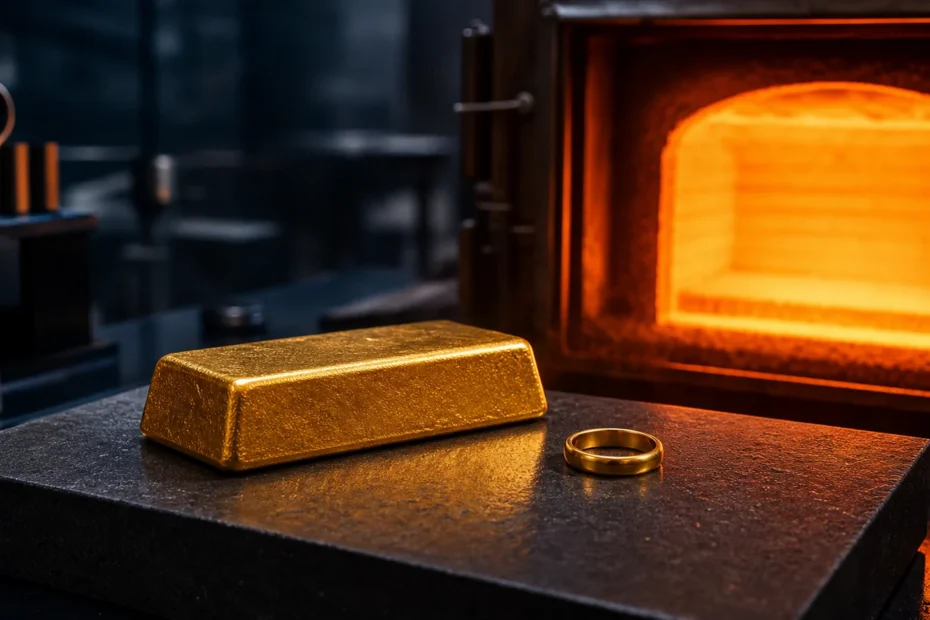
Bulk gold is not flammable in ordinary fire conditions, but it can melt at 1,064.18°C and jewelry can be damaged by alloys, solder, stones, coatings,… Read More »Is Gold Flammable? Fire, Melting Point, and Jewelry Safety
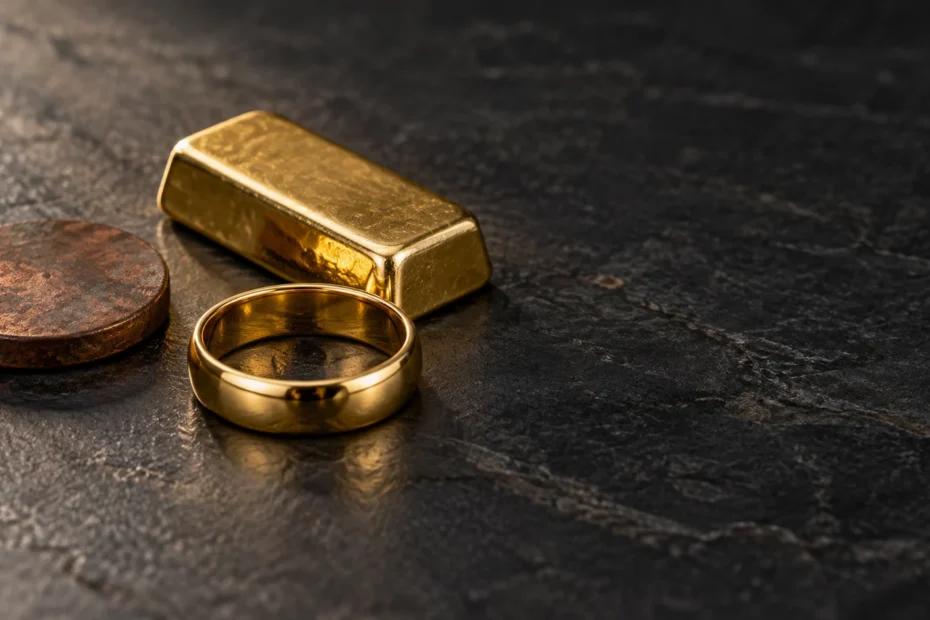
Gold cannot form iron rust. Learn why alloys and plating discolor, what red or dark spots may mean, and how to check an item safely.
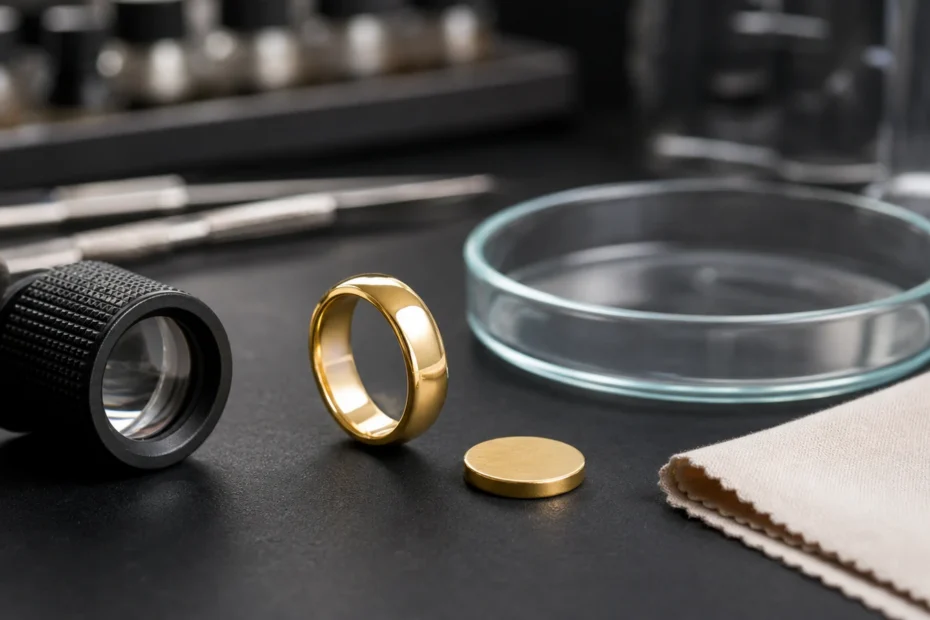
Pure gold has no characteristic smell. Metallic odors usually come from skin chemistry, alloy metals, residue or storage—not from gold itself.
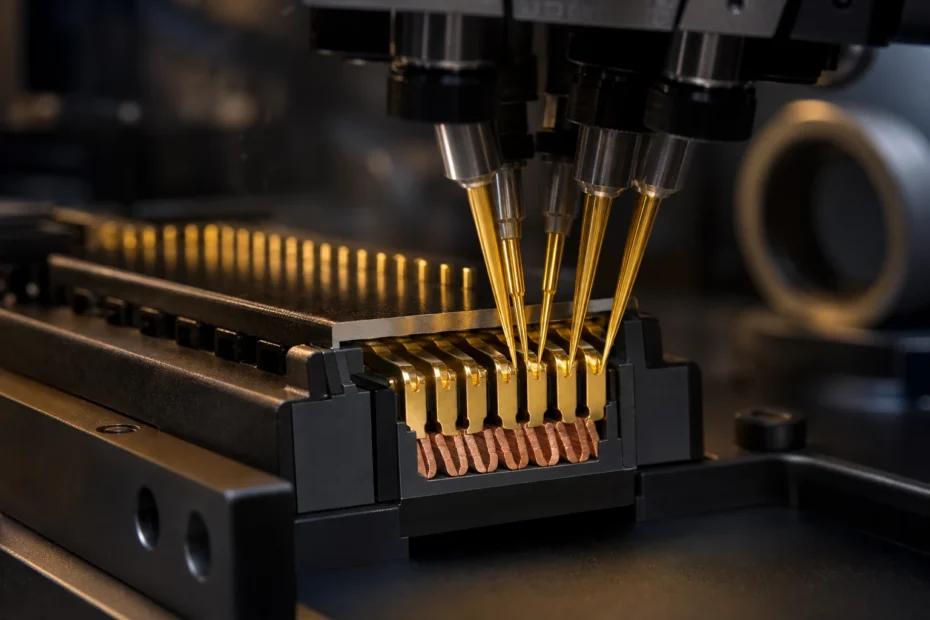
Gold conducts electricity well but trails silver and copper in bulk. Compare conductivity and resistivity, calculate resistance, and see why electronics still use gold.
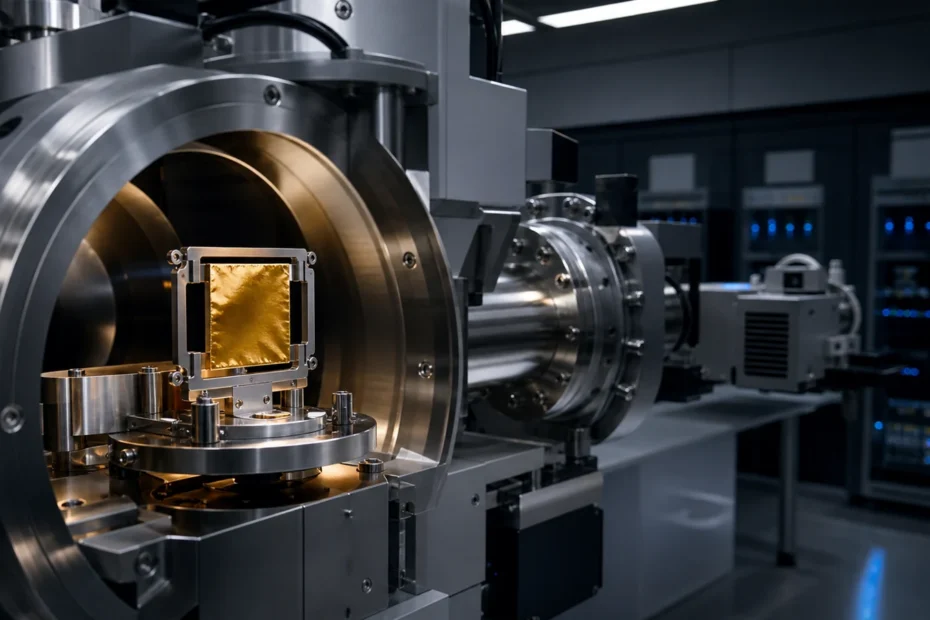
Gold has one naturally occurring stable isotope, 197Au. Compare key radioisotopes, half-lives, production, applications, and what this means for ordinary gold.

Gold is element 79 with electron configuration [Xe] 4f14 5d10 6s1. See how its nucleus, electron structure, relativity, and FCC crystal relate to real properties.