
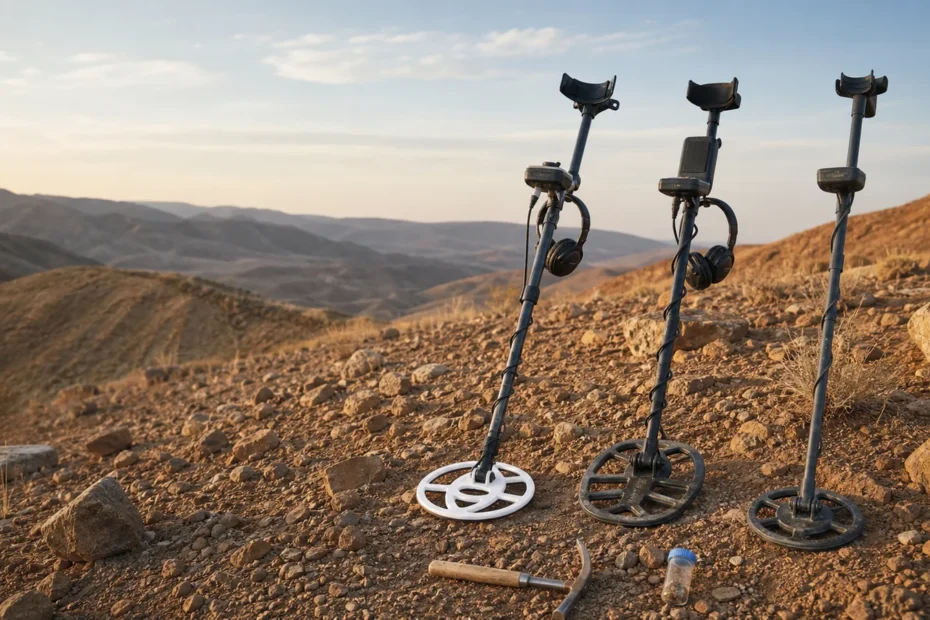
Compare gold prospecting detectors by target size, ground balance, coils and terrain. Choose a dedicated gold or versatile multi-frequency model.
- Choose for the target size and mineralized ground, not maximum depth claims
- Dedicated high-frequency VLF units favor small shallow natural gold
- Multi-frequency models add versatility but are not automatically better for tiny nuggets
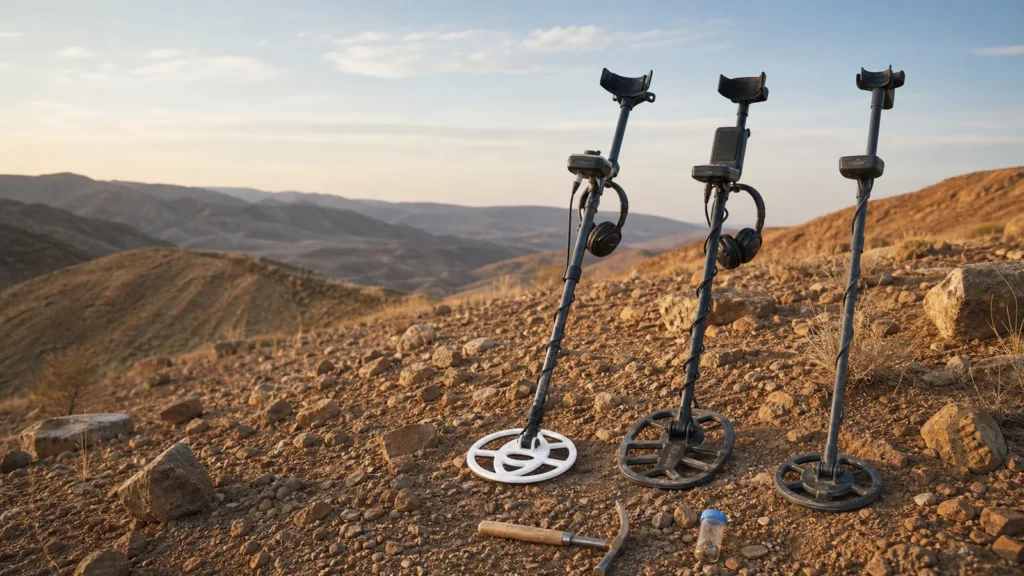
For dedicated small-nugget prospecting, a high-frequency VLF detector such as the Gold Monster 1000 is a clearer fit than a general treasure detector. Choose a two-coil bundle when both bedrock crevices and open ground matter; choose multi-frequency versatility only when coins, jewelry and relics are equally important targets.
See the top pick on Amazon →Minelab Gold Monster 1000

Minelab Gold Monster 1000
Best for: Dedicated small-nugget prospecting with an automatic, high-frequency VLF platform.
Avoid if: Your main targets are coins and relics in varied parks, beaches and urban sites.
Verify before buying: Confirm the exact coils, battery set, warranty route and seller; bundles differ by ASIN.

Minelab Gold Monster 1000 Two-Coil Bundle
Best for: Prospectors who want small- and larger-coil options plus carrying accessories in one listing.
Avoid if: You already own compatible accessories or cannot verify who supports the bundle warranty.
Verify before buying: Compare bundle contents line by line and separate manufacturer items from seller-added accessories.

Nokta Triple Score Pro Pack
Best for: General detecting with multi-frequency flexibility when gold is one target among coins, jewelry and relics.
Avoid if: Your only goal is very small natural gold in highly mineralized goldfields.
Verify before buying: Confirm frequencies, coils, headphones, waterproof limits, firmware support and current pack contents.
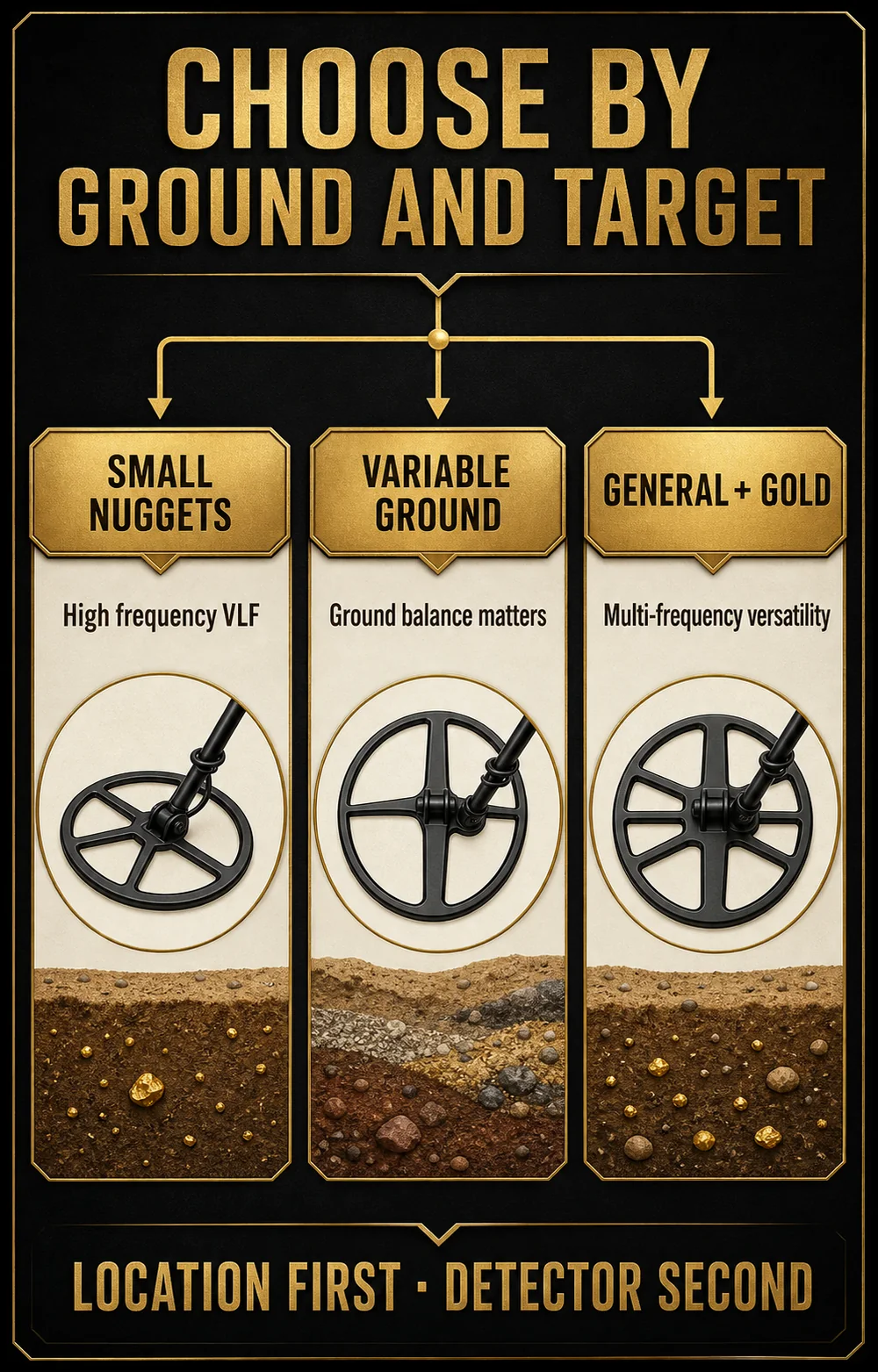
Start With the Ground, Not the Product Ranking
Natural gold can be small, irregular and embedded in mineralized soil. Iron-rich ground and hot rocks create signals that make stable ground balance essential. A detector that works well for coins in a park may chatter or lose sensitivity in a goldfield.
Research local geology and known placer or hard-rock gold districts before comparing screens and accessories. The most expensive detector cannot compensate for unproductive ground or illegal access.
Dedicated Gold vs Multi-Frequency
| Detector path | Strength | Trade-off | Best terrain question |
|---|---|---|---|
| High-frequency VLF | Small shallow nugget sensitivity | Mineralization and depth can limit performance | Can it ground balance smoothly here? |
| Two-coil VLF bundle | Small-coil control plus larger-coil coverage | More gear and bundle variability | Do tight crevices and open flats both matter? |
| Multi-frequency general detector | Coins, relics, jewelry and varied terrain | May not equal dedicated tiny-gold sensitivity | Is natural gold one target among several? |
| Pulse induction | Difficult mineralization and potential depth | Higher price, weight and learning burden | Does the ground justify the investment? |
Specifications That Actually Change the Decision
- Ground balance: automatic is convenient; manual control can help experienced users.
- Operating frequency: influences small-target response and ground behavior.
- Coil size: small coils separate targets and fit crevices; larger coils cover ground faster.
- Weight and balance: fatigue reduces coil control and time in the field.
- Waterproof rating: verify every component separately.
- Warranty route: confirm manufacturer authorization and seller support.
Why Bundle Contents Need Extra Verification
Two listings with the same detector name can include different coils, batteries, headphones, bags or seller-added accessories. A larger bundle is not better when it substitutes low-value items for the coil or battery you need.
Save the exact bundle page before ordering. On delivery, compare model number, serial information, coils, battery system and warranty documents while the return window is open.
Marketing language cannot establish sensitivity in your soil. Manufacturer manuals, independent field comparisons and practice with tiny test targets provide stronger evidence.
Field Checklist Before the First Sweep
- Confirm legal access, mineral claims and detecting restrictions.
- Read the manual before changing factory settings.
- Test several target sizes in representative soil.
- Ground balance away from metal.
- Keep the coil level and close to the surface.
- Investigate repeatable weak signals from more than one direction.
- Fill every hole and pack out all recovered metal.
Our guide to how gold responds to metal detectors explains the physics. Combine it with geological gold indicators and legal prospecting locations.
Frequency Is Only One Part of Sensitivity
High operating frequency can improve response to tiny low-conductive targets, which is why dedicated nugget machines often emphasize it. Coil design, electronics, recovery behavior, ground balance and operator settings also shape the real result.
Do not compare a frequency number across machines as though it were horsepower. Simultaneous multi-frequency systems process more than one response, while single-frequency gold detectors may be tuned around a narrower task.
Small Coil or Large Coil?
A small coil fits between rocks, separates nearby signals and remains easier to control on uneven bedrock. It covers less ground per sweep and usually gives up depth on larger targets.
A larger coil covers open ground faster and may respond deeper to larger pieces, but it sees more mineralized ground at once. That can make stability and tiny-target separation harder. A two-coil bundle is valuable only if you will actually use both terrains.
Bundle and Warranty Checklist
- Match the detector model and every coil to the saved listing.
- Identify manufacturer components versus seller-added accessories.
- Confirm batteries, chargers and headphones work before the return window closes.
- Register the serial number through the official warranty route when available.
- Inspect coil ears, cable connectors, locks and shaft sections for damage.
- Update firmware only through the manufacturer-supported process.
When Not to Buy a Gold Detector
Do not buy one merely because a nearby place has “gold” in its history. Research whether detectable natural gold remains, whether access is legal and whether mineralization and target size suit the machine. Many days in productive districts still produce no nugget.
Rent, borrow or join a club when you are unsure whether prospecting fits your travel, terrain and patience. A lower-cost pan can test your interest in placer geology before a much larger detector purchase.
Practice Before Traveling
Bury tiny lead-free test targets or manufacturer-approved samples at shallow controlled depths in representative soil. Listen to weak repeatable responses, practice ground balancing and learn how coil height changes the signal.
Do not scatter natural gold or toxic metals outdoors for practice. Recover every test target and use a controlled area where digging is permitted.
Buy a detector for specific ground and realistic target sizes. Dedicated gold VLF models make sense for small nuggets; multi-frequency models make sense when broader treasure hunting is equally important.
FAQ: Gold Prospecting Metal Detectors
What type of metal detector is best for gold prospecting?
A high-frequency VLF detector is a practical choice for small shallow nuggets in moderate mineralization. More difficult ground or larger/deeper targets may justify different technology and much higher cost.
Can any metal detector find gold?
Many detectors can respond to sufficiently large gold, but sensitivity to tiny natural nuggets, ground balance and coil options vary. A general coin detector is not automatically a good goldfields detector.
Is higher frequency always better for gold?
Higher frequency generally improves sensitivity to small low-conductive targets, but can lose depth on larger targets and struggle differently in mineralized ground. Ground handling and coil choice also matter.
Do I need a waterproof detector for prospecting?
Only if the sites and working method require it. Confirm whether the entire detector or only the coil is submersible; “waterproof coil” does not mean the control box can be submerged.
Will a detector guarantee I find gold?
No. Geology, access, target abundance, operator technique and time on productive ground matter more than marketing depth. A detector only reports electromagnetic responses.
Sources
 When you purchase a service or a product through our links, we sometimes earn a commission, at no extra cost to you.