
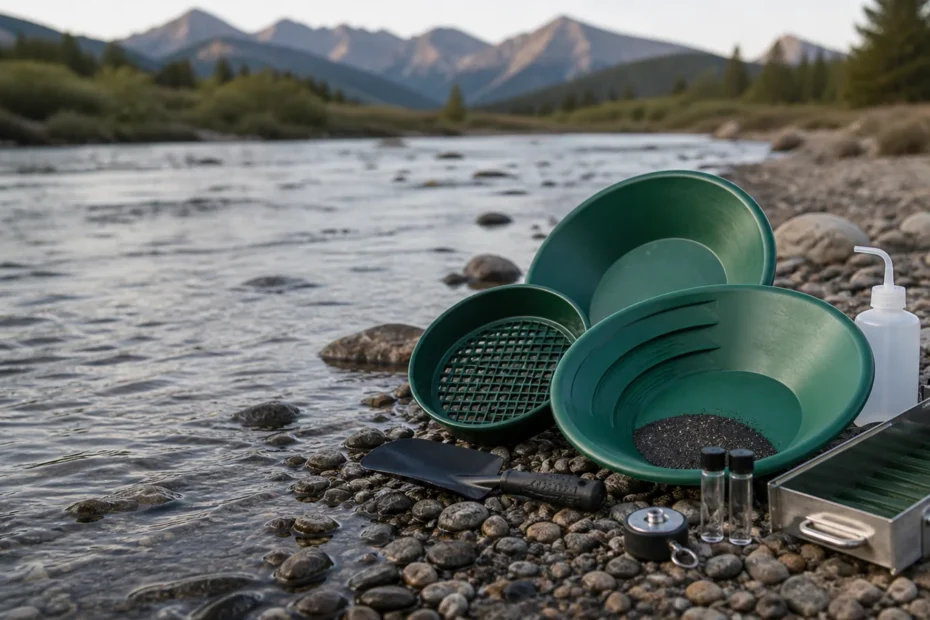
Compare beginner gold panning kits by pans, classifiers, recovery tools, portability and sluice equipment before your first legal trip.
- A pan, classifier, snuffer bottle, and vial form the useful core
- A sluice adds capacity but also weight, setup, and legal restrictions
- Check land access and equipment rules before buying the largest kit
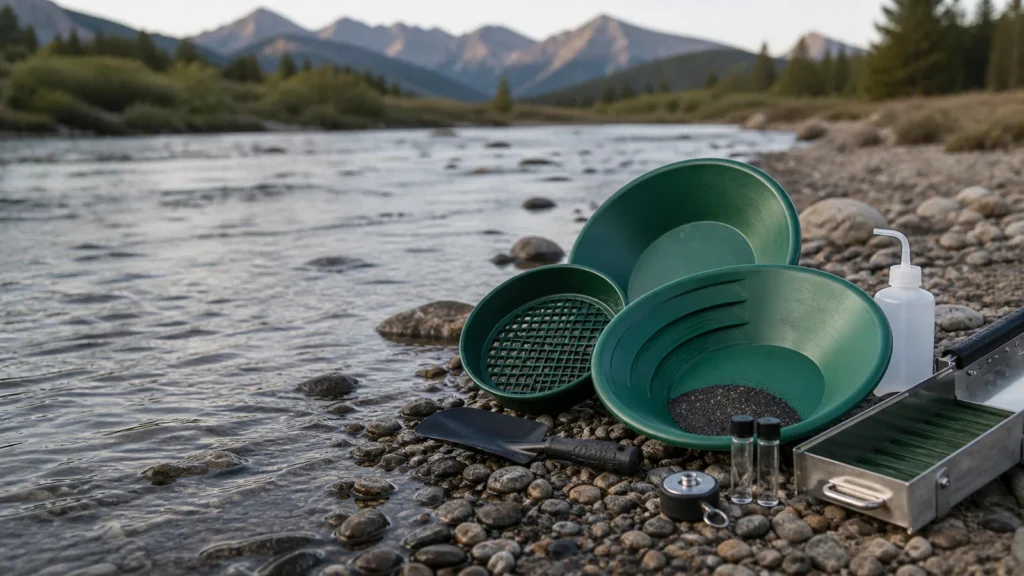
The best beginner kit contains a controllable riffled pan, a classifier, a snuffer bottle and a vial. Add a compact sluice only after confirming local rules and deciding that higher processing capacity is worth the transport and setup.
See the top pick on Amazon →ASR Outdoor 19-Piece Gold Panning Kit

ASR Outdoor 19-Piece Gold Panning Kit
Best for: Beginners who want pans, classifiers and recovery accessories without starting with a sluice.
Avoid if: You need the lightest possible day kit or already own pans and classifiers.
Verify before buying: Confirm the current piece list, classifier mesh sizes and whether every accessory fits your transport plan.

18-Piece Panning Kit With Mini Folding Sluice
Best for: Beginners who want to practice both panning and small-sluice material processing.
Avoid if: Local rules prohibit sluices or you want to master a pan before adding more equipment.
Verify before buying: Check folded dimensions, riffle/mat retention, fasteners and all local equipment restrictions.

37-Piece Kit With 50-Inch Folding Sluice
Best for: A vehicle-based setup where capacity and a longer sluice matter more than pack weight.
Avoid if: You hike far, prospect in small water, or cannot legally operate a sluice at the site.
Verify before buying: Confirm assembled size, material, hardware, pack weight and land-manager rules before buying.
The Four Tools That Matter Most
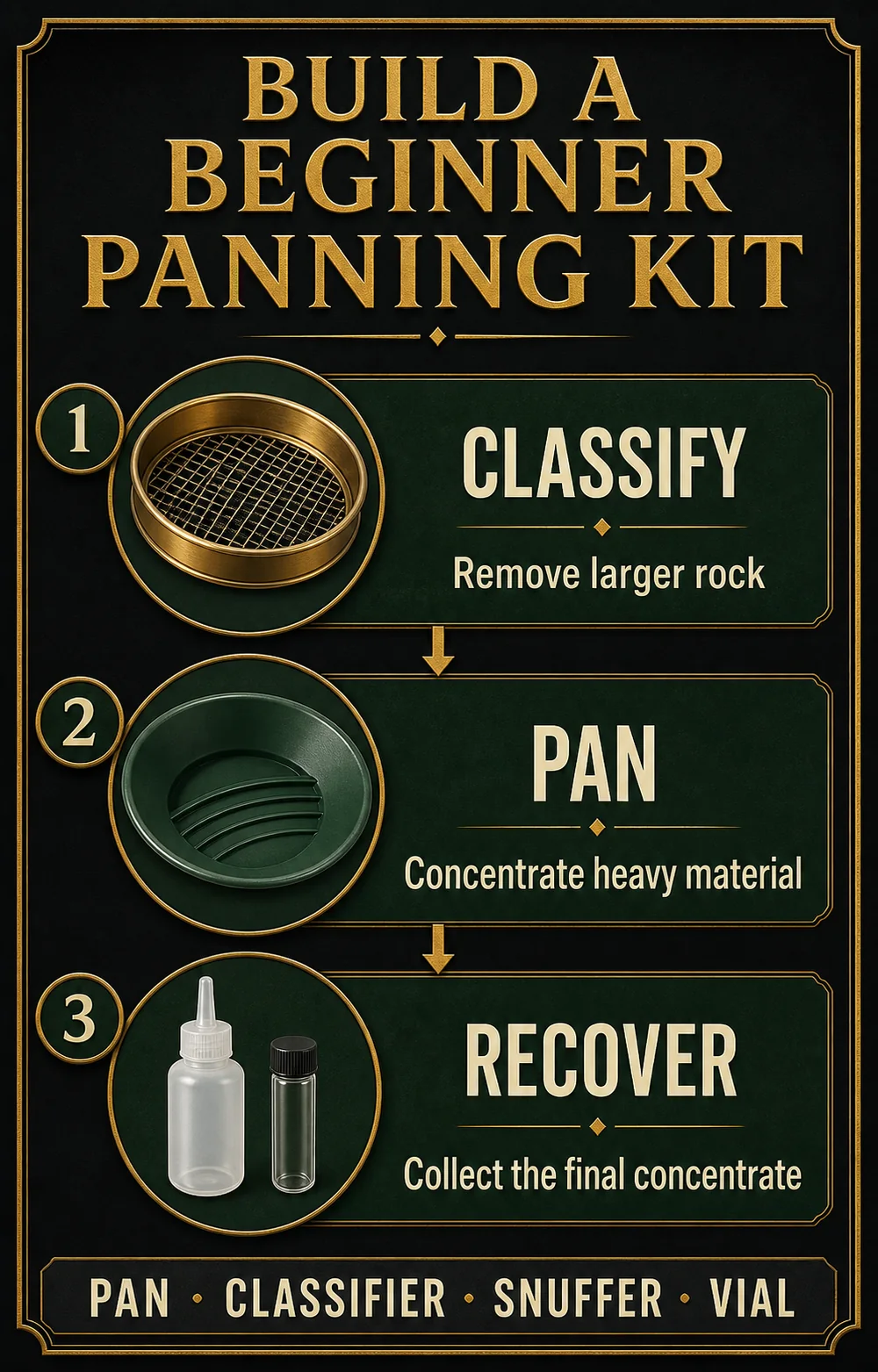
A beginner does not need dozens of pieces to learn recovery. The core workflow is simple: remove oversized material, stratify and wash lighter material from the pan, then collect the remaining concentrate.
- Riffled pan: the primary separation tool.
- Classifier: creates a more consistent feed size.
- Snuffer bottle: lifts small heavy particles from the final concentrate.
- Vial: keeps recovered material contained and visible.
Core Kit, Compact Sluice, or Full Sluice?
| Setup | Best for | Trade-off | Check first |
|---|---|---|---|
| Pan-only core kit | Learning technique and hiking | Processes material slowly | Pan size and classifier fit |
| Mini folding sluice | Adding capacity in suitable water | More setup and local restrictions | Mat, riffles, hardware and legality |
| Long folding sluice | Vehicle access and sustained processing | Weight, bulk and water-flow needs | Assembled length and transport |
Land Access Is Part of the Buying Decision
Owning equipment does not create a right to use it. Public land can contain active mining claims, protected resources, seasonal closures and site-specific restrictions. National parks generally prohibit removing natural resources.
Start with the responsible Bureau of Land Management, Forest Service, state or local office. Verify land status, claims, access, hand-tool limits and whether a sluice is permitted before the trip.
A place mentioned online can be claimed, closed, private or subject to new rules. Our gold panning sites guide is a starting point, not permission.
How to Evaluate Kit Quality
- Pans should be rigid enough to control without sharp unfinished edges.
- Riffles should provide more than one recovery zone.
- Classifier screens should fit a bucket or pan securely.
- Snuffer caps and vials should seal without leaks.
- Sluice hinges and fasteners should lock without excessive play.
- Count only tools you will actually carry and use.
A Better First Trip
- Practice at home with sand and known heavy material.
- Pack water, eye protection, gloves and weather gear.
- Use a tub or controlled area when learning to avoid losing concentrates.
- Classify similar-size material before panning.
- Keep concentrates for a second pass instead of chasing speed.
- Leave the site stable and pack out every item.
Learn how natural gold moves through waterways in our field indicators guide, then review legal panning destinations.
Do Not Pay for Piece Count
“Thirty-seven pieces” sounds more complete than “eleven pieces,” but the number can include repeated vials, small tools and accessories that do not improve separation. Evaluate the pan, classifiers and recovery tools first, then treat every additional item as optional.
A compact kit often reaches the stream more frequently because it fits in a day pack. A long folding sluice may process more material, but only when transport, water flow, setup time and legal rules all cooperate.
Pan and Classifier Fit
A pan should feel controllable when partly filled with wet gravel. Very large pans hold more material but fatigue the hands and encourage beginners to rush. A smaller finishing pan can help during the final cleanup.
Classifier mesh size should match the material and sit securely over the receiving bucket or pan. Consistent feed lets small gold and black sand stratify more predictably than a mixture that includes large stones.
What to Inspect When the Kit Arrives
- Check pans and screens for cracks, sharp edges and warping.
- Confirm the classifier dimensions fit the intended bucket.
- Fill the snuffer bottle with water and check the cap and tube for leaks.
- Close every vial and invert it over a tray before field use.
- Assemble a folding sluice and inspect hinges, bolts, mat and riffles.
- Weigh the complete pack instead of relying on a marketing description.
When to Skip the Sluice
Skip it when access requires a long hike, water is too shallow, the site only allows hand panning or you are still losing concentrate from a pan. A sluice multiplies material throughput, not recovery skill.
Upgrade when you can classify consistently, identify productive material and clean the sluice without losing the final concentrate. Keep a pan in the workflow because sluice concentrates still need final separation.
Buy a compact core kit first. Upgrade to a sluice only when the site allows it, the water and material justify it, and you are prepared to carry and clean it correctly.
FAQ: Beginner Gold Panning Kits
What should a beginner gold panning kit include?
At minimum: a riffled gold pan, classifier screen, snuffer bottle and sample vial. A second finishing pan, magnet, tweezers and small hand tools are useful additions.
Do beginners need a sluice box?
No. A sluice processes more material but adds transport, setup, water-flow requirements and legal restrictions. Learn to classify and pan concentrates first.
What color gold pan is best?
The best color is one that gives strong contrast with black sand and any visible gold under your lighting. Green and blue are common choices; pan shape and controllable riffles matter more.
Can I pan for gold anywhere on public land?
No. Land status, mineral claims, local closures, protected areas and equipment rules all matter. Check the responsible land manager and current claim status before disturbing material.
Are large gold panning kits worth it?
Only if you will use the extra classifiers, sluice and transport accessories. A large piece count can include duplicates that add weight without improving recovery.
Sources
 When you purchase a service or a product through our links, we sometimes earn a commission, at no extra cost to you.