
US Gold Coin Weight & Diameter Checker
Compare measured American Gold Eagle or Gold Buffalo dimensions with U.S. Mint specifications. The comparison can flag a mismatch; matching measurements cannot authenticate a coin.
Compare your measurements
Choose the bullion coin named on your item, then measure its total weight and outside diameter. Measure a bare coin only when it is safe and appropriate to do so; opening sealed or graded packaging can affect value. Do not compare a 22K Eagle’s total weight with its fine-gold content.
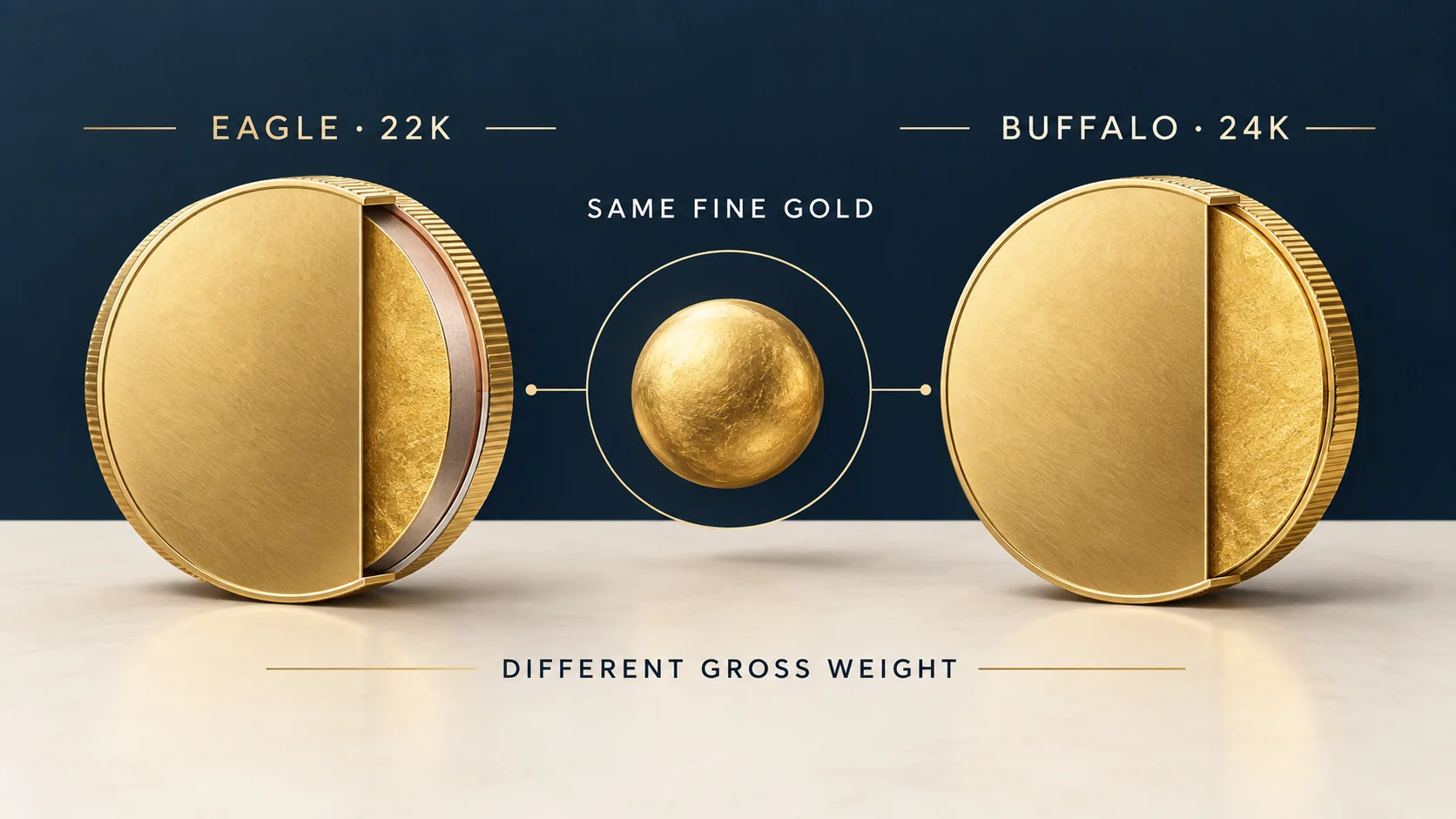
One fine ounce; two different total weights
The 1-oz Eagle and 1-oz Buffalo each contain one fine troy ounce of gold. An Eagle is a 22K alloy, so its published gross weight is higher than the Buffalo’s.
Published coin specifications
The reference values below come from U.S. Mint coin-program specifications. Gold Eagles contain their stated fine gold weight plus silver and copper, while the Gold Buffalo is .9999 fine gold.
| US bullion coin | Fine gold | Total weight | Diameter | Official source |
|---|---|---|---|---|
| American Gold Eagle · 1 oz | 1.000 oz t | 33.931 g | 32.70 mm | U.S. Mint |
| American Gold Eagle · 1/2 oz | 0.500 oz t | 16.966 g | 27.00 mm | U.S. Mint size specifications |
| American Gold Eagle · 1/4 oz | 0.250 oz t | 8.483 g | 22.00 mm | U.S. Mint size specifications |
| American Gold Eagle · 1/10 oz | 0.100 oz t | 3.393 g | 16.50 mm | U.S. Mint size specifications |
| American Gold Buffalo · 1 oz | 1.000 oz t | 31.103 g | 32.70 mm | U.S. Mint |
The linked American Eagle proof page supplies size specifications for the four Eagle denominations; this checker is intended for their bullion counterparts. Confirm the coin type and finish before using a reference.
Measure carefully before interpreting a difference
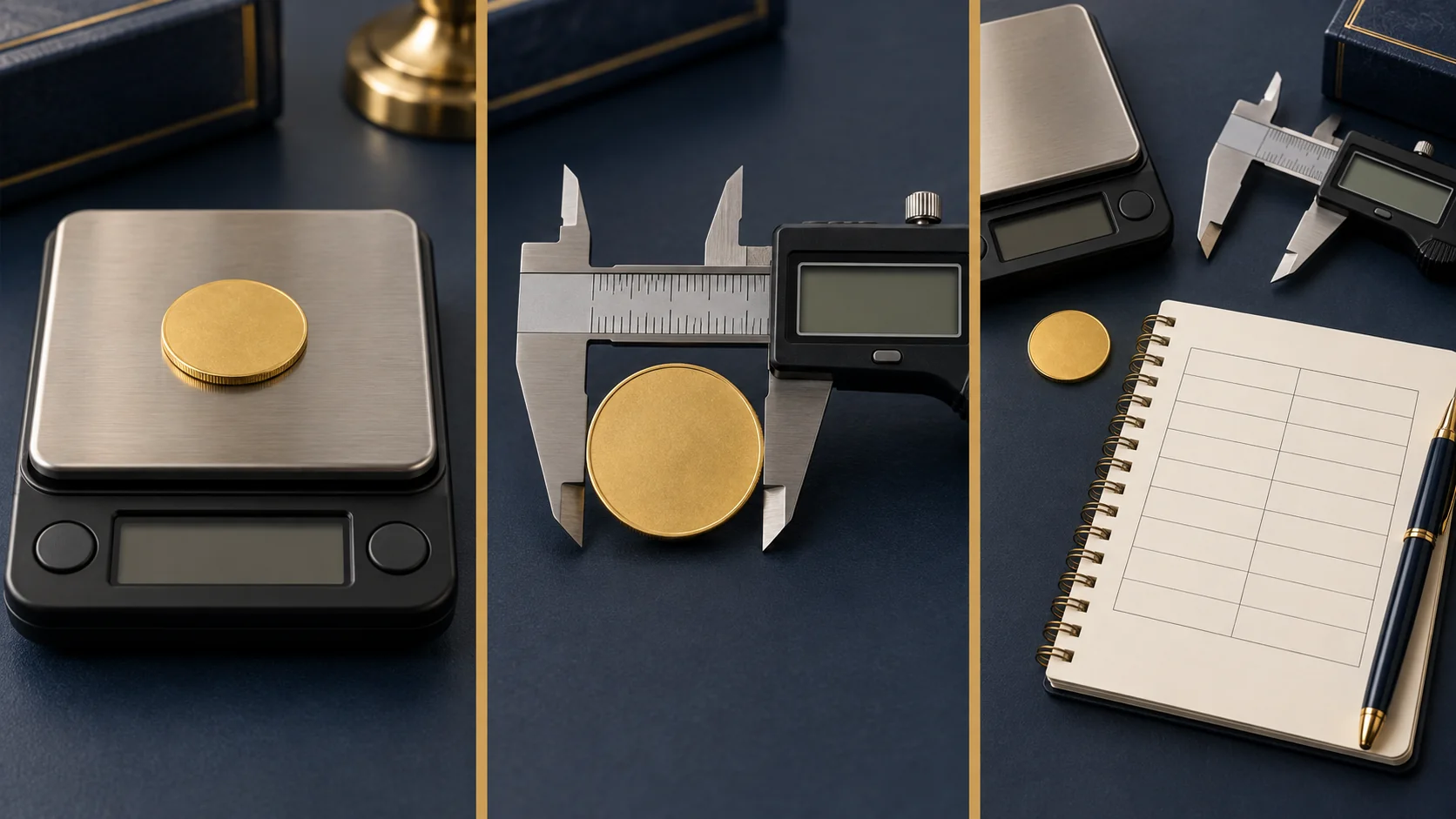
- Identify the exact issue. Confirm denomination and whether it is bullion, proof, or another finish before selecting a reference.
- Weigh safely. Zero a suitable calibrated gram scale on a level surface. Measure the bare coin only if removing it from packaging is appropriate.
- Measure across the widest edges. Hold calipers gently across the diameter; check a second orientation and note the instrument resolution.
- Record both readings. Enter total weight and diameter, then compare the numerical differences with the Mint values and your instrument’s uncertainty.
How to use a mismatch
Confirm the denomination and scale zero. Measure outside a holder only when removing it is appropriate, then check a second diameter orientation.
Wear, damage, holder residue, and instrument accuracy matter. A material difference deserves a pause and better evidence.
Use a reputable professional for testing or authentication before relying on a valuable coin’s identity.
The U.S. Mint consumer guidance recommends comparing weight and diameter with published specifications. It also describes additional checks; physical measurements alone are not proof of authenticity.
Worked example: A 1-oz American Gold Eagle with a measured total weight of 33.930 g and diameter of 32.70 mm differs from the published values by −0.001 g and 0.00 mm. A 1-oz Gold Buffalo has the same published diameter but weighs 31.103 g, so selecting the wrong coin type would produce a misleading comparison.
Common questions
Why does a one-ounce Eagle weigh more than one ounce?
One ounce describes its fine gold content. The 22-karat coin also contains alloy metals, making its total weight about 33.931 g.
Are the screening limits official Mint tolerances?
No. Both fields start blank. You may enter your own limits for a screening comparison, but the linked Mint specifications do not publish those tolerances.
Can matching measurements prove the coin is genuine?
No. Counterfeit pieces may match simple measurements. Use documentation and professional verification where the financial stakes warrant it.
Does this cover collectible or historical coins?
No. It covers the listed modern Eagle and Buffalo bullion types. Other coins and finishes need their own official specifications.