
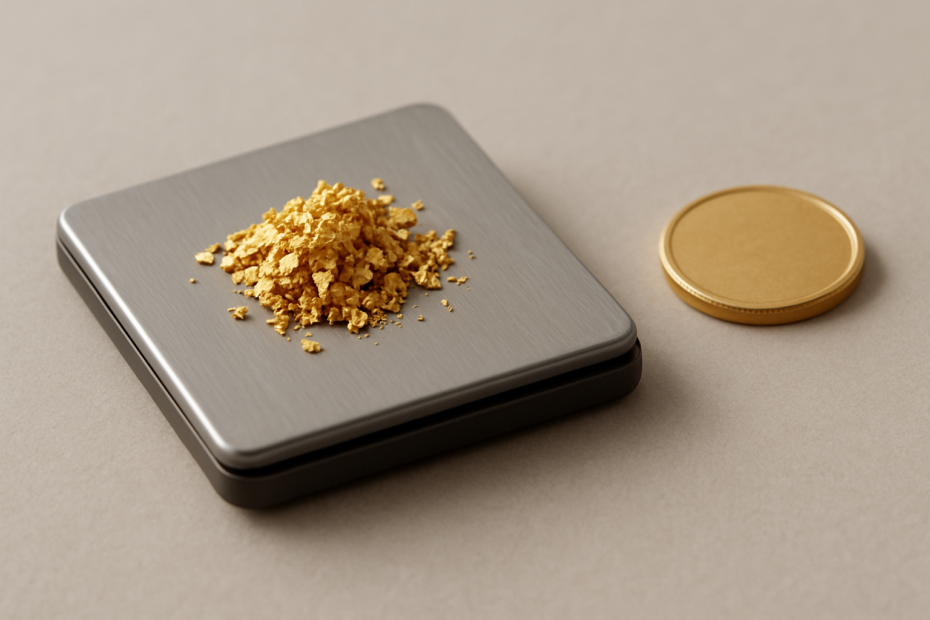
Calculate how much 14 milligrams of gold is worth using spot price, troy ounce conversion, and purity, with a realistic small-value example. today.
- Convert 14 milligrams to 0.014 grams before doing any price math.
- Use live spot price and purity, then expect dealer payouts to be lower.
- Remember tiny weights can sound valuable while being worth very little.
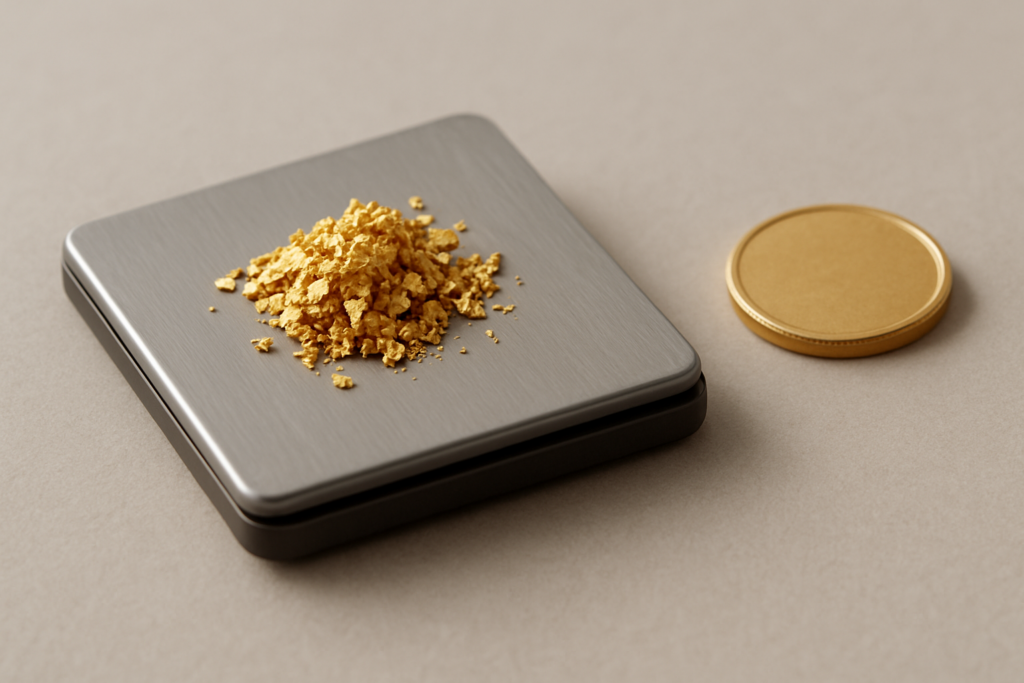
Fourteen milligrams of pure gold is worth only a small amount because it is 0.014 grams, or about 0.00045 troy ounces. To estimate the value, divide the current gold spot price per troy ounce by 31.1035 to get price per gram, then multiply by 0.014 and by purity. At the opposite end of the scale, the 12 kg gold-bar calculation shows why exact kilograms, 400 troy ounces, and fineness must not be treated as interchangeable.
- 14 milligrams equals 0.014 grams.
- Pure-gold value equals spot price per gram times 0.014.
- For 14K gold, multiply the pure-gold result by about 58.3%.
- Dealer payout can be lower than melt value because of refining and margin.
- Use a live spot price or calculator instead of relying on a stale fixed number.
The Formula for 14 Milligrams of Gold
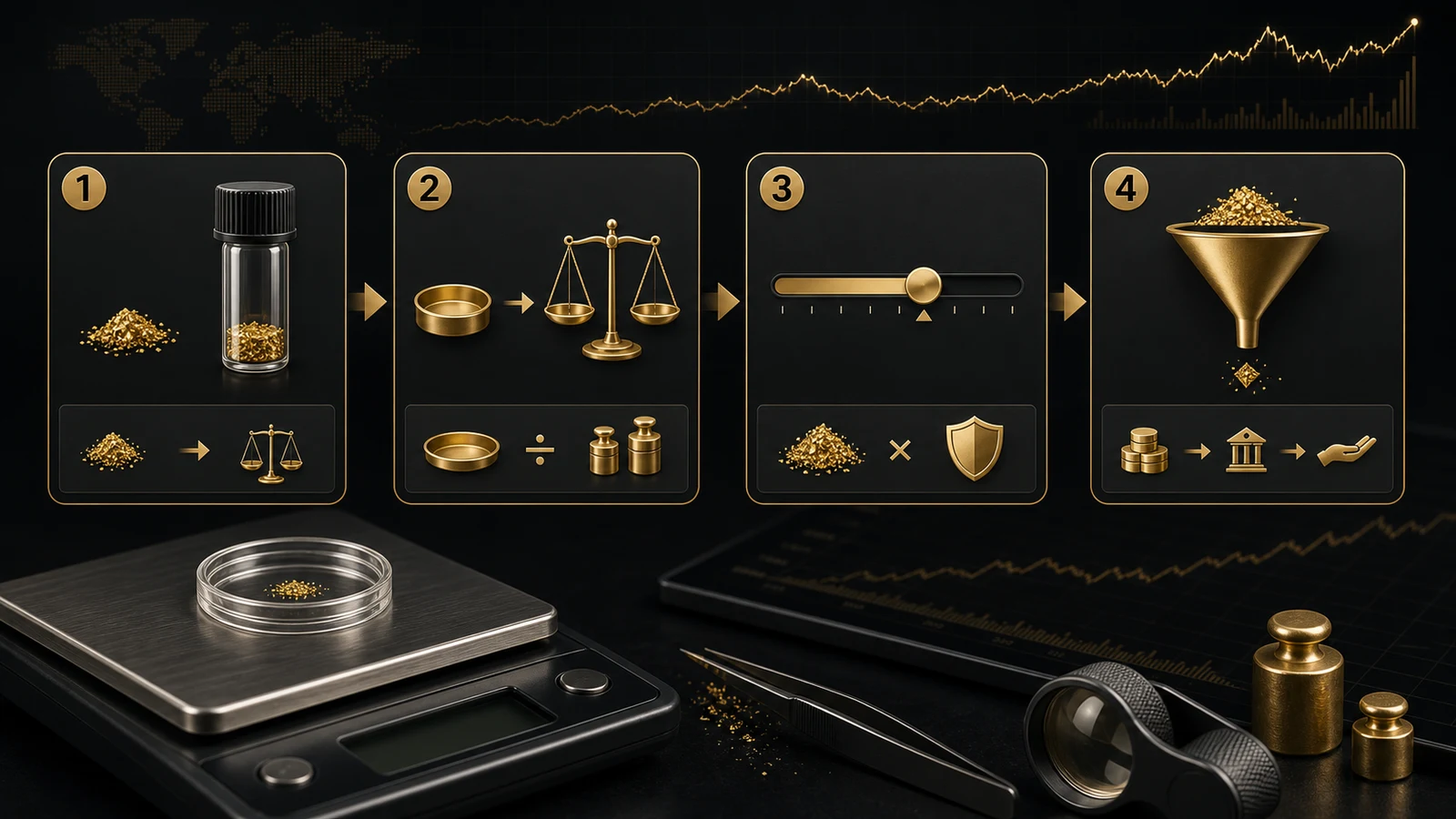
The clean formula is simple: gold value equals spot price per gram multiplied by gold weight in grams multiplied by purity. Fourteen milligrams is 0.014 grams, so even at a high gold price the result is small.
Use this formula: (gold spot price per troy ounce / 31.1035) x 0.014 x purity percentage. For pure gold, the purity percentage is 1. For 14K gold, it is about 0.583.
Because gold prices move constantly, this page avoids hardcoding a live dollar value. Use the formula with the current spot price from a reliable source or use GoldConsul’s scrap gold calculator.
Quick Conversion Table
| Measurement | Equivalent | Why it matters |
|---|---|---|
| 14 milligrams | 0.014 grams | Convert to grams before pricing. |
| 14 milligrams | About 0.00045 troy ounces | Gold spot is quoted per troy ounce. |
| 24K gold | 99.9%+ gold in practical bullion terms | Use near-full spot value before costs. |
| 14K gold | About 58.3% gold | Multiply by purity before estimating value. |
Example Without Using a Stale Price
Suppose the spot price is $X per troy ounce. First divide $X by 31.1035 to get the approximate price per gram. Then multiply by 0.014.
If the material is 24K, that gives a near pure-gold melt estimate before buyer fees. If the material is 14K, multiply the result by 0.583 because 14K gold is 14 parts gold out of 24.
For fast calculation, use the gold weight estimator, the gold purity calculator, and live gold price today.
Why the Selling Price May Be Lower
Melt value is not the same as what a buyer pays. A scrap buyer or refiner may deduct for testing, refining, handling, minimum lot size, and business margin. A very tiny amount of gold may not be worth processing by itself.
If the gold is attached to electronics, plating, or mixed material, the practical recovery value may be lower than the theoretical gold content. Weight, purity, and recoverability all matter.
Checklist Before You Estimate Tiny Gold Amounts
- Convert milligrams to grams first.
- Use troy ounces, not regular ounces, for spot-price math.
- Check whether the gold is pure, 18K, 14K, 10K, plated, or unknown.
- Separate theoretical melt value from actual payout.
- Do not spend more on testing or shipping than the material is worth.
Sources and Further Reading
Related GoldConsul Guides
For practical calculation, continue with the scrap gold calculator, gold weight estimator, gold purity calculator, gold price history, and how much gold is in computers.
How to Apply This Guide
Use the quick answer as orientation, then slow down before acting. Gold topics often combine material science, market value, legal access, or historical interpretation. A simple fact can be true and still incomplete when applied to a specific item, place, or claim.
The safest workflow is to identify the exact thing in front of you first. For jewelry, that means karat, construction, plating, wear, hallmarks, and seller disclosure. For gold value, that means weight, purity, troy-ounce conversion, spot price, and buyer payout. For prospecting or history, that means land status, source quality, artifact context, and whether a story has been simplified over time.
Evidence Ladder
| Confidence level | What it looks like | How to use it |
|---|---|---|
| General fact | A broad rule such as gold is dense, gold can be recycled, or Texas has some gold occurrences. | Use it to ask better questions, not to make a final decision. |
| Case-specific evidence | Weight, dimensions, hallmark, source record, official land status, or a clearly documented calculation. | Use it to narrow the likely answer for this exact situation. |
| Independent confirmation | Professional testing, official agency guidance, refiner documentation, museum source, or trusted benchmark data. | Use it when money, safety, legality, or resale trust is involved. |
This ladder prevents overconfidence. A single clue can be useful, but it rarely carries the whole answer. The more money or risk involved, the higher you should move on the ladder before taking action.
Common Mistakes to Avoid
- Do not treat one clue as proof when the topic needs multiple checks.
- Do not apply a general gold fact to a plated, alloyed, repaired, or unknown item without checking construction.
- Do not use historical rumors or location lists as a substitute for primary sources, permissions, or official rules.
- Do not confuse theoretical value with the amount a dealer, refiner, or buyer may actually pay.
- Do not choose a risky cleaning, testing, recovery, or prospecting method when a lower-risk verification step is available.
When to Escalate
Escalate when the answer affects a purchase, sale, heirloom, legal access, chemical safety, or a claim you plan to repeat as fact. For jewelry, that may mean a jeweler, XRF test, assay, or appraisal. For scrap and value questions, it may mean using current spot prices and comparing multiple buyers. For prospecting, it may mean checking the relevant agency or landowner before visiting a site.
For history and myth, escalation means using museum, archaeological, or academic references instead of repeating the most dramatic version of the story. Gold attracts exaggerated claims because it is valuable, symbolic, and visually persuasive. Better decisions come from matching the claim to the right evidence.
What This Guide Cannot Prove
This guide can explain the concept, show the calculation path, identify common traps, and point to stronger sources. It cannot authenticate a specific object through the screen, grant permission to prospect, guarantee a buyer payout, or settle every historical dispute.
That limitation is useful. It tells you when a quick answer is enough and when the next step should be documentation, official rules, or professional review. The goal is to make the reader more confident without making the answer sound more certain than the evidence allows.
Practical Takeaway
Simple facts help orientation, but they should not replace documentation, official rules, professional testing, or careful source checks when value, safety, legality, or resale trust is involved.
FAQ: how much is 14 milligrams of gold worth
How many grams is 14 milligrams of gold?
Fourteen milligrams is 0.014 grams.
How many troy ounces is 14 milligrams of gold?
It is about 0.00045 troy ounces because one troy ounce is 31.1035 grams.
Is 14 milligrams of gold worth much?
No. It is a very small amount, so the value is usually small even when gold prices are high.
How do I calculate 14K gold value for 14 milligrams?
Calculate pure-gold value first, then multiply by 14/24, or about 58.3%.
Will a buyer pay full melt value?
Usually not. Buyers may deduct for refining, testing, handling, and margin, especially for very small amounts.
Bottom Line
Fourteen milligrams of pure gold is worth only a small amount because it is 0.014 grams, or about 0.00045 troy ounces. To estimate the value, divide the current gold spot price per troy ounce by 31.1035 to get price per gram, then multiply by 0.014 and by purity. Use the checklist, sources, and related GoldConsul guides above to move from a quick answer to a practical decision.
 When you purchase a service or a product through our links, we sometimes earn a commission, at no extra cost to you.