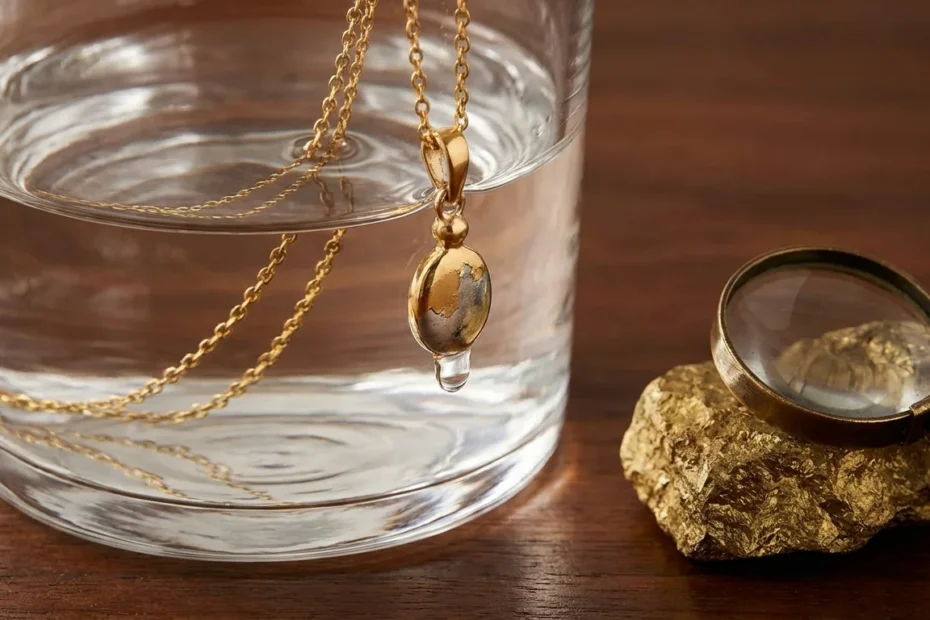
Find out whether gold-plated jewelry is waterproof, how water, sweat, chlorine, and friction affect plating, and how to protect the finish longer.
- One splash may not ruin plating, but repeated water contact shortens its life.
- Soap, sweat, sunscreen, and friction usually do more damage than water alone.
- Remove plated pieces before showers, pools, workouts, and sleep.
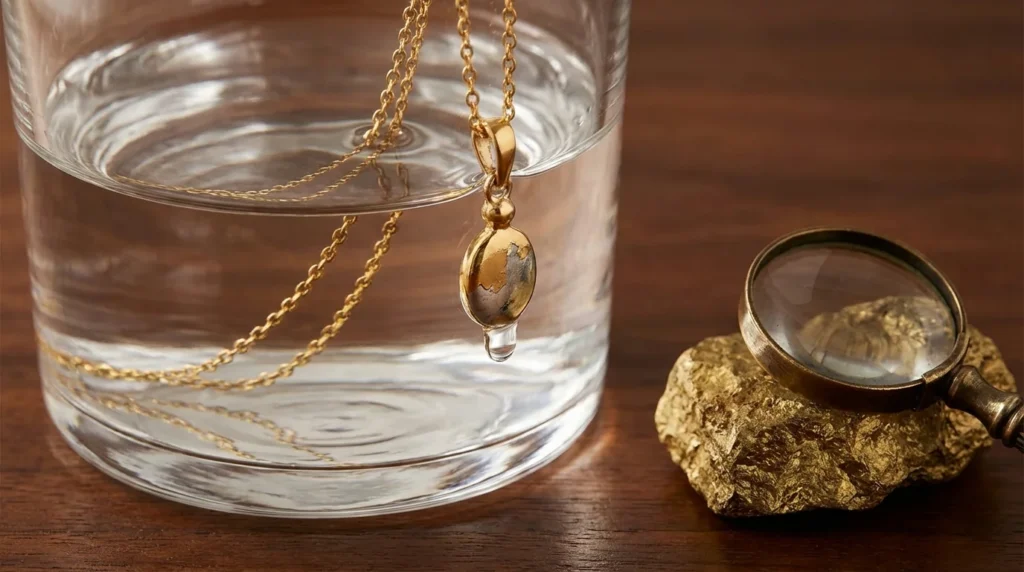
Gold-plated jewelry is not meaningfully waterproof, even if it survives the occasional splash.
The more useful answer is about damage pattern, not just a yes-or-no label. Water alone is not always the whole problem. Moisture plus soap, shampoo, sweat, friction, sunscreen, and repeated wear is what shortens plating life fastest.
If you only ask whether one contact with water ruins the piece, you miss the real ownership question. Gold plating is a surface finish, and surface finishes wear down through accumulation, not just one dramatic event.
TL;DR
- Gold-plated jewelry is not waterproof in any durable, long-term sense.
- A brief splash usually does less damage than repeated showering, swimming, sweating, or wearing the piece with soap and skincare on it.
- The real risk is cumulative wear: moisture, chemicals, and friction gradually thin the plated layer.
- Gold-plated jewelry, gold vermeil, and solid gold do not behave the same way around water.
- The best rule is simple: occasional accidental contact is manageable, but routine water exposure is a bad habit if you want plating to last.
What Most Readers Miss
The wrong question is whether water touches the jewelry once. The right question is whether your normal routine keeps exposing a thin plated surface to moisture, product buildup, and rubbing until the finish starts fading faster than expected.
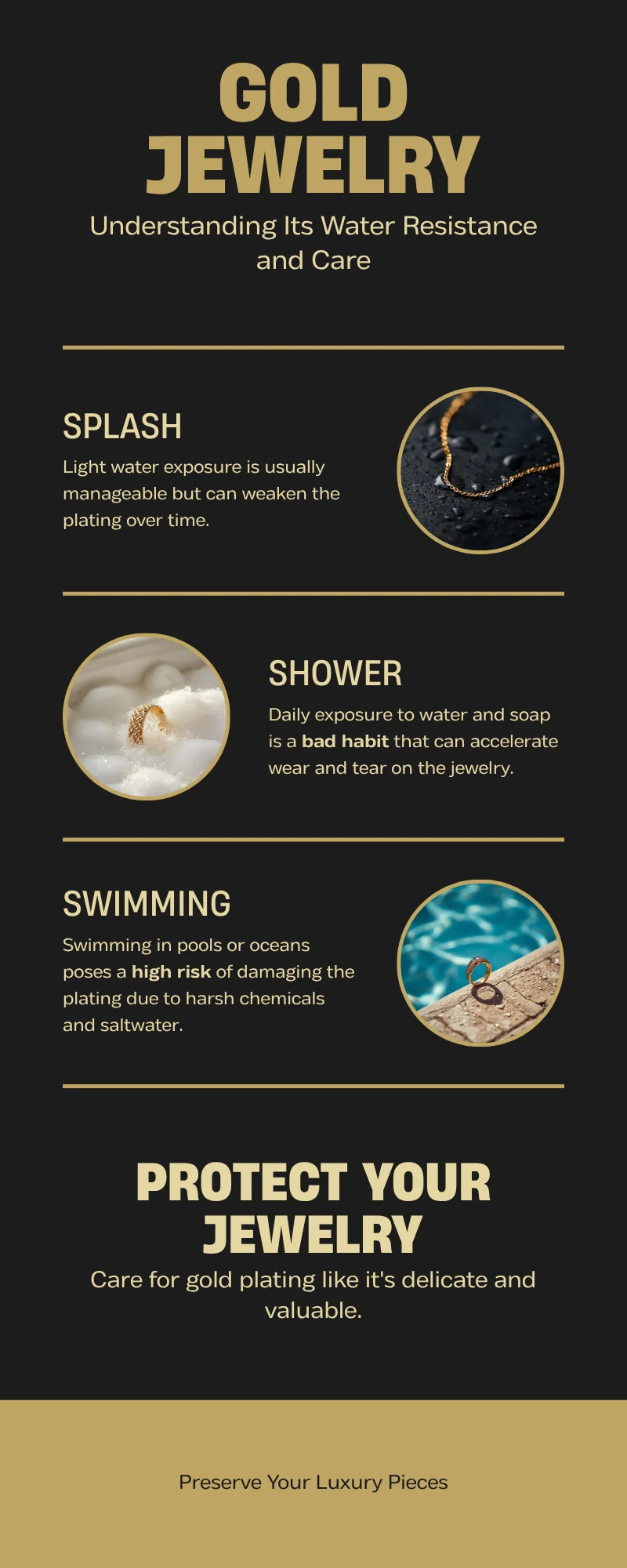
One splash:
Usually not ideal, but often not catastrophic if the piece is dried quickly.
Daily showering:
A much worse pattern because soap, heat, and repeated moisture keep attacking the finish.
Real rule:
Gold plating fails by cumulative wear, not just by one dramatic water event.
Is Gold-Plated Jewelry Waterproof?
No, not in the way most buyers hope it is.
Gold plating is a thin outer layer over another base metal. Once you understand that construction, the problem becomes clearer. You are not protecting a solid gold object. You are protecting a surface finish that can gradually wear, fade, or expose the base metal underneath.
That is why the better answer is not just “no.” It is “no, and repeated water exposure accelerates the wear path more than most casual buyers realize.”
Chart 1: Water Exposure Risk by Habit
A practical wear-risk map for how plated jewelry usually performs in real life.
Interpretation: One contact with water is usually not the main enemy. Repetition plus chemicals is.
What Water Actually Does to Gold Plating
The What Is White Gold guide explains the alloy, karat, color, care, and buying distinctions behind the material.
Water is rarely acting alone.
It often comes bundled with soap film, shampoo, conditioner, body wash, sunscreen, hand cream, sweat, and constant skin friction. All of that increases the likelihood that the plated layer will dull, thin, or begin exposing the base metal faster.
The exact speed depends on plating thickness, wear location, and how often the piece is worn. But the direction is predictable: more exposure and more friction usually mean shorter plating life.
- Moisture can sit on the surface and around edges or closures.
- Soap and skincare products leave residue that changes appearance over time.
- Repeated rubbing is especially hard on rings, bracelets, and chain contact points.
- Once the thin gold layer starts wearing, the piece often changes quickly rather than gradually.
The care language from brands like gorjana and support material from Mejuri’s gold vermeil guidance points in the same direction: avoid routine exposure to water, products, and chemical contact if you want the finish to last longer.
Chart 2: Why “Waterproof” Is the Wrong Word
The actual wear path is usually a combination problem.
| Factor | Effect on plating | Risk level |
|---|---|---|
| Plain brief water contact | Usually limited if dried quickly | Medium |
| Soap and shampoo | Residue plus repeated exposure accelerates surface wear | High |
| Chlorine or saltwater | Aggressive environment for plated finishes | High |
| Skin friction and daily wear | Mechanically thins the plated layer over time | High |
Interpretation: Most damage is cumulative. “Waterproof” hides the real issue by sounding too absolute and too simple.
One Splash vs Daily Shower: What Actually Matters
The guide to why white gold can turn yellow shows how alloy color and rhodium wear produce different maintenance needs.
This is where the article should be most useful.
If you accidentally get gold-plated jewelry wet once and dry it promptly, that is not the same thing as wearing it in the shower every day. Repeated showering adds water, heat, product exposure, and friction in one routine, which is exactly the combination that speeds up plating failure.
That is also why many buyers think the piece was “fine at first” and then suddenly starts fading. The early exposures accumulate quietly before the surface finish begins to show obvious wear.
Video walkthrough: This clip is useful because it answers the shower question directly, which is where many buyers first test whether plated jewelry is “waterproof.”
Gold-Plated vs Vermeil vs Solid Gold Around Water
These categories should never be treated as interchangeable.
Gold-plated jewelry usually has the thinnest protective gold layer, which makes it the most sensitive to surface wear. Gold vermeil can be more durable because it uses sterling silver as a base and usually a thicker layer than ordinary plating, but it is still not a true waterproof everyday-beater material. Solid gold is a very different category entirely.
- Gold plated: thinnest layer, highest wear sensitivity.
- Gold vermeil: better than basic plating, but still not a routine shower piece.
- Solid gold: structurally different and much more tolerant of normal exposure, though still not immune to bad care habits.
This is also why readers should connect this article to gold vermeil in the shower and whether gold-plated jewelry tarnishes. The construction method matters as much as the color or marketing label.
Chart 3: Water Tolerance by Jewelry Type
A practical comparison of how the main gold-finish categories usually behave.
| Type | Routine water tolerance | Practical reading |
|---|---|---|
| Gold plated | Low | Best treated as remove-before-water jewelry. |
| Gold vermeil | Medium-low | More durable than basic plating, but still not a real shower habit piece. |
| Solid gold | Higher | Much stronger long-term category, though still worth protecting from chemicals and buildup. |
Interpretation: Buyers often confuse gold color with material durability. The construction method is the real decision variable.
How to Make Gold-Plated Jewelry Last Longer
The Does 14K Gold Tarnish guide separates changes in the alloy surface from damage to the gold itself.
The rule is not complicated, but it has to be consistent.
- Remove the piece before showering, swimming, or exercising heavily.
- Keep it away from perfumes, sunscreen, lotion, and hair products until those products have dried on your skin.
- Store it dry and separate from rougher pieces that can scratch the plated surface.
- Wipe it gently after wear if it has been exposed to sweat or moisture.
If you want better long-term durability, the more honest solution is often not better “care tricks” but a better material category.
The GoldConsul Editorial Perspective
The practical rule is simple: treat gold-plated jewelry as appearance-first jewelry, not as waterproof utility jewelry. Buyers usually lose money when they expect a thin surface finish to behave like a solid metal piece.
What the Top Pages Usually Get Wrong
They answer the word “waterproof” without explaining the wear pattern.
The better framework is:
- One splash: manageable if dried quickly.
- Repeated showering: a bad durability habit.
- Swimming and chlorine: much worse than ordinary water.
- Real fix: reduce exposure or move up to a better jewelry category.
That makes the article more useful than a flat yes-or-no answer.
Knowledge gap: Buyers often hear “water resistant” or see “anti-tarnish” language and assume the piece is safe for daily water use. That is usually marketing language outrunning the actual limits of a thin plated surface.
FAQ: Is Gold-Plated Jewelry Waterproof?
Can gold-plated jewelry get wet once?
Yes, brief accidental contact is usually survivable if you dry the piece quickly. The bigger problem is repeated exposure, not one isolated splash.
Can you shower with gold-plated jewelry?
You should not make that a habit. Showering repeatedly exposes the plating to water, soap, heat, and friction, which speeds up wear.
Is gold-plated jewelry safe for swimming?
No. Chlorine and saltwater are much harsher environments for plated finishes than ordinary brief water contact.
Is gold vermeil more water-safe than gold plating?
Usually yes in relative terms, but it still is not a true waterproof everyday category. Better construction does not turn it into a shower-safe habit piece.
What is the safest rule if I want plating to last?
Remove gold-plated jewelry before showering, swimming, exercising heavily, or applying products. Treat it as a finish that needs protection, not as waterproof jewelry.
 When you purchase a service or a product through our links, we sometimes earn a commission, at no extra cost to you.