
Review white gold properties, including alloys, rhodium plating, magnetism, care, durability, hallmarks, and how to judge authenticity. in practical context.
- White gold's look depends on alloy recipe and rhodium finish, not pure gold alone.
- Karat affects durability, color warmth, price, and repair behavior.
- Inspect plating wear, hallmarks, nickel risk, and maintenance before buying.
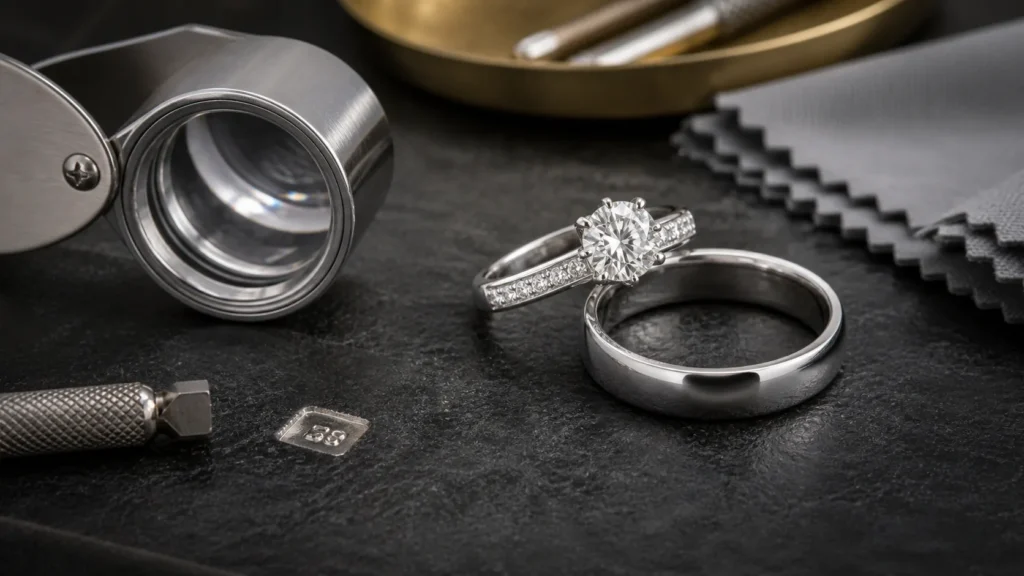
White gold is not a naturally white metal. It is yellow gold mixed with pale alloy metals, then often finished with rhodium to create the bright, icy surface many buyers associate with engagement rings and fine jewelry.
That makes white gold practical and beautiful, but it also means buyers should understand what they are actually evaluating: karat, alloy recipe, plating condition, hallmark quality, and maintenance expectations. This guide explains the key white gold properties in plain terms so you can judge jewelry more confidently before buying, resizing, repairing, or selling it.
TL;DR: White Gold Properties
- White gold is an alloy: pure gold plus whitening metals such as palladium, silver, nickel, zinc, or copper.
- Most modern white gold jewelry is rhodium plated, so the surface color may be whiter than the underlying alloy.
- 14K white gold is usually more scratch-resistant than 18K white gold, while 18K contains more actual gold.
- Authenticity starts with hallmarks, but valuable pieces should also be checked by a jeweler or assay method.
- Yellowing is usually worn rhodium plating, not proof that the piece is fake.
What White Gold Is Made Of
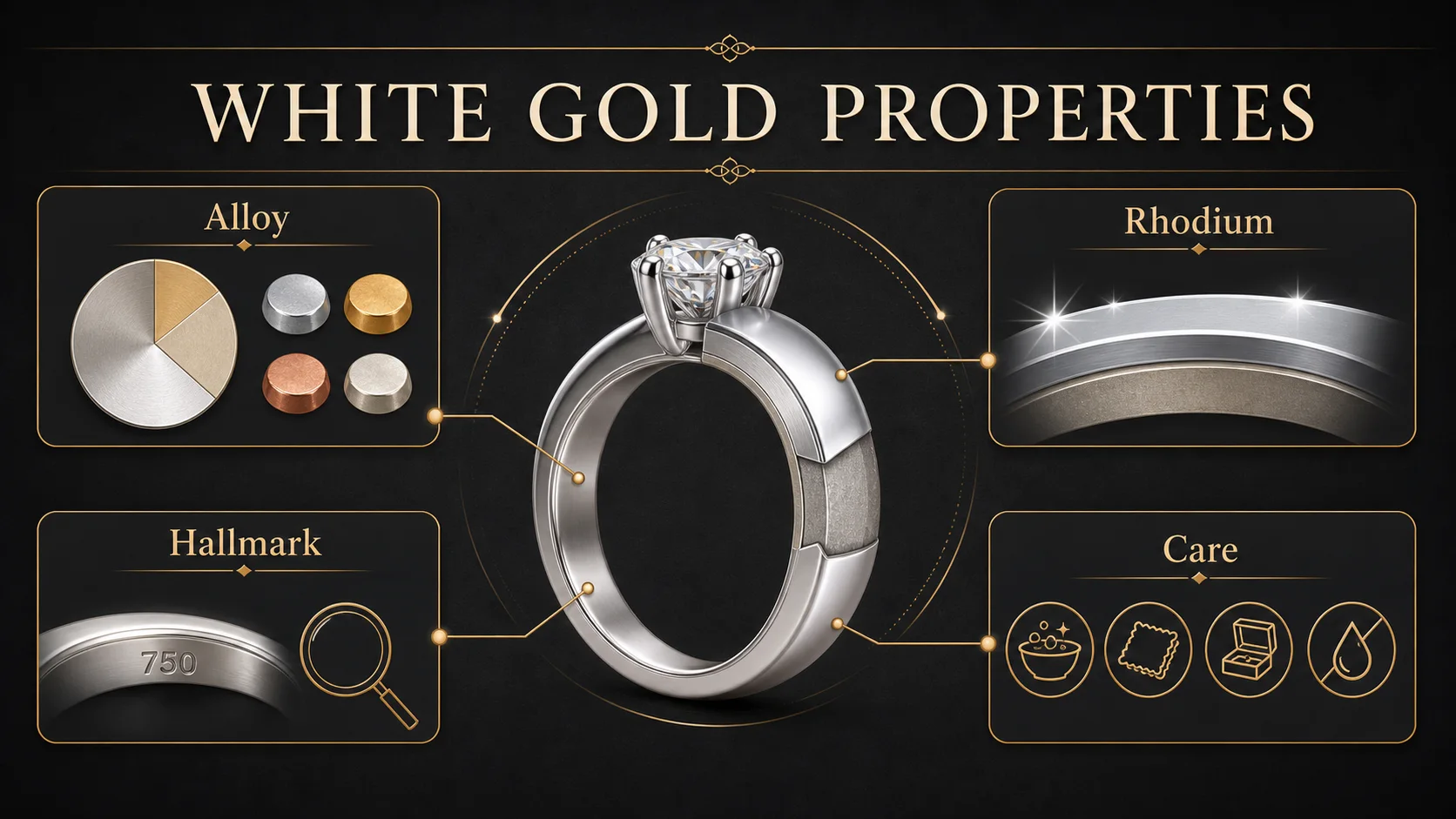
Gold is naturally yellow. To make white gold, refiners combine gold with paler metals that shift the color, improve hardness, and make the metal suitable for jewelry.
A simple way to think about it: the karat tells you how much gold is present, while the alloy recipe explains how the piece behaves. A 14K white gold ring contains 58.5% gold by weight. An 18K white gold ring contains 75% gold by weight, with less room for strengthening metals.
White gold can be made with nickel-based or palladium-based alloy systems. Nickel can make the alloy harder and whiter, but it can also matter for sensitive skin. Palladium white gold is usually more expensive and often more hypoallergenic, though each finished piece still depends on its full alloy and surface condition.
If you want a foundation before comparing white gold to related metals, start with GoldConsul’s primer on what white gold is.
Key White Gold Properties That Matter in Jewelry
White gold is popular because it balances precious-metal value, a neutral color, and everyday wearability. Its most important properties are not just visual.
- Color: naturally off-white to grayish depending on alloy, often made bright white by rhodium plating.
- Hardness: generally harder than high-karat yellow gold, especially in 10K and 14K jewelry.
- Durability: suitable for rings, chains, earrings, and settings when the design is built for wear.
- Maintenance: rhodium plating can wear and may need refreshing, especially on rings.
- Value: tied to gold content, craftsmanship, brand, gemstones, and resale channel rather than color alone.
These properties explain why white gold is common in engagement rings and diamond settings. Its pale color visually supports colorless diamonds, while the alloy can hold prongs and fine details more securely than very high-karat soft gold.
White Gold Properties Comparison Table
| Property | 10K White Gold | 14K White Gold | 18K White Gold | Platinum |
|---|---|---|---|---|
| Gold content | 41.7% | 58.5% | 75% | Usually 90-95% platinum in jewelry |
| Typical color | Pale gray-white, often plated | Good white tone with rhodium finish | Warmer white underneath plating | Naturally gray-white |
| Wear behavior | Harder, lower gold value | Strong everyday balance | Richer gold content, slightly softer | Dense, durable, develops patina |
| Maintenance | Rhodium refresh as needed | Rhodium refresh common on rings | Rhodium wear more visible if alloy is warm | No rhodium required for natural color |
| Best fit | Budget jewelry, daily pieces | Engagement rings, wedding bands, practical fine jewelry | Higher-end jewelry where gold content matters | Buyers who want a naturally white premium metal |
Interpretation: 14K white gold is often the practical middle ground. 18K has more gold, but 14K often wins for daily ring durability.
Why Rhodium Plating Changes the White Gold Story
Many shoppers judge white gold by the surface they see in a store case. That surface is often rhodium, a platinum-group metal used as a bright, hard, reflective coating.
Rhodium plating is legitimate and common. It is not the same thing as fake white gold. The important distinction is that the plating is a finish, while the underlying metal is the gold alloy.
This matters when a ring begins to look creamy, gray, or faintly yellow at high-contact areas. The change may simply mean the rhodium layer is thinning. GoldConsul covers that specific issue in more detail in does white gold turn yellow? and why a white gold ring turns yellow.
For technical background, the Gemological Institute of America is a useful authority on jewelry materials and gemstone settings, while the FTC Jewelry Guides explain U.S. marketing rules around precious-metal descriptions.
Authenticity: How to Check White Gold Without Guesswork
White color alone proves very little. Stainless steel, silver, platinum, rhodium-plated brass, and plated costume jewelry can all look pale and reflective under store lighting.
Start with the easy checks, then escalate if the item has real value.
- Look for a karat mark: common marks include 10K, 14K, 18K, 417, 585, and 750.
- Check the maker’s mark: a quality mark is more reliable when paired with a responsible maker or retailer mark.
- Inspect wear points: plating wear at the palm side of a ring can reveal the underlying alloy tone.
- Do not rely on magnets alone: most gold is not strongly magnetic, but clasps, springs, repairs, or base-metal fakes can complicate results.
- Use professional testing for meaningful value: XRF, acid testing, or jeweler evaluation is better than visual guessing.
GoldConsul’s guide on whether white gold is magnetic explains why a magnet test can be a clue but not a final verdict. For broader testing logic, compare it with our authenticity guide on how to tell if rose gold is real; the same principle applies: alloy color is not proof by itself.
Buyer and Care Checklist
Before You Buy
- Confirm the karat mark and ask what alloy family is used if you have nickel sensitivity.
- Ask whether the piece is rhodium plated and whether first replating is included.
- Inspect prongs, solder seams, and the inside shank for rough finishing or mismatched color.
- Compare 14K and 18K by intended use, not only by price.
- Get valuable stones and settings checked independently if the purchase is significant.
After You Own It
- Clean with mild soap, warm water, and a soft brush; avoid abrasive polishing cloths on plated surfaces.
- Remove rings before chlorine exposure, heavy lifting, gym equipment, or harsh cleaners.
- Store white gold separately from harder stones and metals that can scratch it.
- Have prongs inspected periodically, especially on engagement rings.
- Plan for rhodium refreshing when the finish no longer matches your preference.
White Gold vs Platinum vs Yellow Gold
The choice is not only about color. Platinum is naturally white-gray and does not need rhodium to stay that color, but it is denser and behaves differently under wear. If you are comparing the two for a ring, read GoldConsul’s deeper guide on whether platinum is better than gold.
Yellow gold is simpler visually because its color is closer to the metal’s natural appearance. White gold is more engineered: the alloy recipe and surface finish do more of the work. That engineering is not a flaw, but it does create maintenance questions.
Some buyers also ask whether yellow gold can be changed into white gold. In practice, the answer depends on whether you mean surface plating, remaking, or replacing the item. GoldConsul explains the distinction in can you change yellow gold to white gold?.
When White Gold Is a Good Choice
White gold makes the most sense when you want a pale precious-metal look, good design flexibility, and a lower price than many comparable platinum pieces. It is especially strong for diamond rings, earrings, pendants, and wedding bands where a bright white finish is part of the intended design.
It is less ideal if you want a metal that stays naturally white with no plating maintenance. It may also be a poor fit if you have a known nickel allergy and the seller cannot explain the alloy.
The CDC/NIOSH skin exposure resources are a useful reminder that contact sensitivity is a real material issue, not just a cosmetic preference. For jewelry purchases, ask the jeweler for alloy details rather than assuming every white gold piece is skin-safe.
Editorial Perspective
The most common mistake is treating white gold as one uniform material. In reality, a 10K nickel white gold fashion ring, a 14K rhodium-plated bridal ring, and an 18K palladium white gold designer piece can all be genuine white gold while wearing, aging, and costing very differently. A good purchase decision starts with the exact karat, alloy, finish, and use case.
Knowledge Gap
Many online explanations say white gold is simply “gold mixed with nickel” or “gold covered in rhodium.” Both are incomplete. The better question is: what is the karat, what metals whiten the alloy, how thick and fresh is the rhodium finish, and how will the item be worn?
That gap matters because two pieces with the same showroom color can have different allergy risks, repair behavior, resale value, and long-term maintenance costs.
Bottom Line
The essential white gold properties are alloy-based strength, engineered white color, rhodium-enhanced brightness, and practical maintainability. It is real gold when properly marked and tested, but it is not pure gold and it is not naturally as white as a fresh rhodium surface suggests.
For most everyday fine jewelry, 14K white gold offers the best balance of cost, durability, and appearance. For higher gold content, 18K can be excellent if the design is sturdy and the buyer accepts more careful wear. For a naturally white metal with no rhodium expectation, platinum deserves comparison.
FAQ: White Gold Properties
Is white gold real gold?
Yes, properly marked white gold is real gold alloyed with other metals. The karat mark tells you the gold percentage: 14K is 58.5% gold, while 18K is 75% gold.
Why does white gold look yellow over time?
White gold often looks yellowish when rhodium plating wears down and the warmer underlying alloy becomes visible. That is common on rings and does not automatically mean the item is fake.
Is 14K or 18K white gold better?
14K white gold is usually better for everyday durability and price. 18K white gold is better when higher gold content and luxury positioning matter more than maximum wear resistance.
Can white gold be worn every day?
Yes, well-made white gold can be worn daily, especially in 14K. Rings need the most care because they face constant contact, chemicals, and impact.
How can I tell if white gold is authentic?
Check for a karat mark, maker’s mark, consistent construction, and appropriate weight. For valuable pieces, use a jeweler’s test or XRF analysis rather than relying only on color or a magnet.
Is white gold hypoallergenic?
Not always. Some white gold contains nickel, which can bother sensitive skin. Palladium white gold or platinum may be better options for buyers with known nickel sensitivity.
Is rhodium plating bad?
No. Rhodium plating is a normal finish for white gold. The key is knowing that it can wear and may need refreshing if you want the bright white look to continue.
 When you purchase a service or a product through our links, we sometimes earn a commission, at no extra cost to you.