
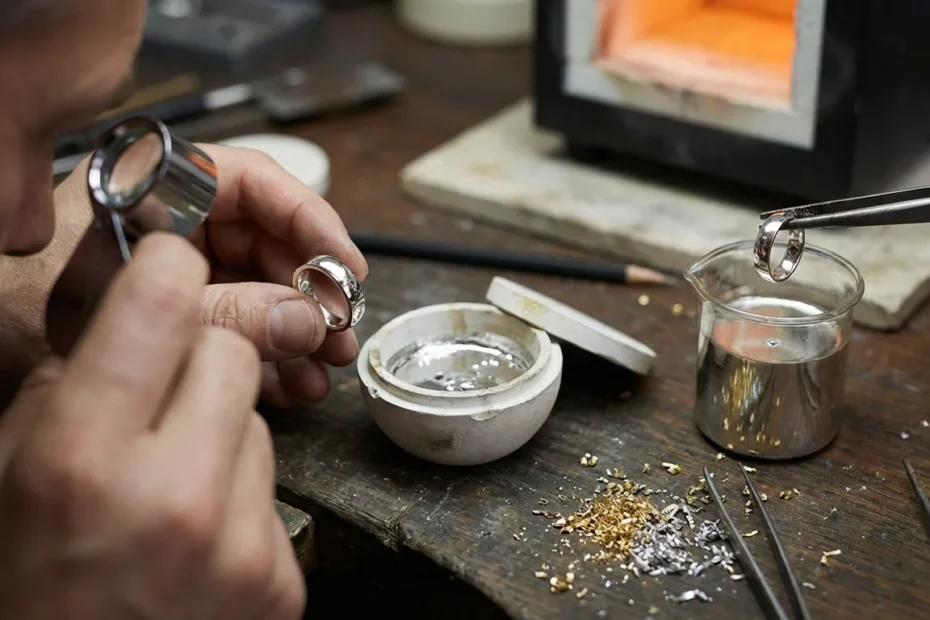
No, the bright outer finish on most white gold jewelry is usually not white gold.
In most standard jewelry-store contexts, the bright white surface is rhodium plating applied over a white-gold alloy base. That is why a solid white-gold ring can still need replating even though the ring itself is already white gold.
The confusion comes from product labeling. A solid white-gold ring can be rhodium plated, while a cheaper item can also be described as white-gold plated if it only has a thin white-gold layer over another base metal. Those are different product classes.
TL;DR
- Most white-gold jewelry does not get a white-gold finish layer. It gets a rhodium finish.
- White gold is usually the base alloy. Rhodium is usually the bright outer plating.
- Some cheaper products may genuinely be white-gold plated over another metal, but that is not the normal meaning when jewelers discuss solid white-gold rings.
- The safest buyer question is: “Is this solid white gold with rhodium plating, or is it base metal with a white-gold layer?”
What Most Buyers Miss
The phrase white gold can refer to the base metal, while the bright white look usually comes from rhodium. Many buyer mistakes happen because those two layers get treated as if they were the same thing.
Most White Gold Plating Is Actually Rhodium Plating
When jewelers talk about keeping white gold bright, they usually mean rhodium plating.
GIA’s white-metal guidance and the usual jewelry-trade explanations agree on the practical point: white gold is an alloy, but the bright reflective finish many buyers expect is often created with rhodium. Brilliant Earth’s rhodium FAQ makes the same maintenance reality clear.
That means the answer to the headline question is usually no. The finish work is not white gold. It is rhodium over white gold, which is why many buyers later end up asking does white gold turn yellow.
Chart 1: What Layer Usually Does What?
Buyer confusion usually happens because these jobs get blended together
Interpretation: In fine-jewelry white-gold rings, alloy plus rhodium is the normal stack. A literal white-gold plating layer is not the usual explanation.
What White Gold Actually Is
White gold is not a coating. It is a gold alloy.
GIA’s gold guide explains the foundation clearly: white gold is made by mixing gold with white-colored metals. That gives the ring a paler body color than yellow gold, but not always the bright refrigerator-white tone many buyers expect in showroom lighting.
That gap between alloy color and showroom-white appearance is the reason rhodium plating became so standard.
When White-Gold Plating Can Actually Mean White Gold
There is one important exception.
If the product itself is not solid white gold, a seller may use white-gold plated to mean a thin layer of white-gold alloy over another base. That is a different class of product from a solid white-gold ring that has a rhodium finish.
This is where buyers need to slow down. The same words can point to two different structures:
| Product type | Base structure | What the outer finish usually is |
|---|---|---|
| Solid white-gold ring | White-gold alloy through the piece | Usually rhodium |
| White-gold plated fashion jewelry | Often silver or base metal underneath | Thin white-gold layer or white-finish layer depending on product |
| Store description that just says white gold | Could be unclear without karat/hallmark details | Needs direct confirmation |
Why the Labeling Confuses Buyers
Because solid white gold and white-gold plated are not parallel descriptions.
One describes what the whole item is made of. The other can describe only a thin surface layer. The bright white look can then come from rhodium on top of that, which adds another layer of confusion.
The cleaner mental model is this: ask what the core metal is first, then ask what the bright finish is second.
Chart 2: Where the White Look Usually Comes From
Conceptual finish split in typical fine-jewelry white-gold pieces
Interpretation: The visual finish most buyers care about is usually a rhodium story.
Ask these two questions before buying
Question 1
Is the piece solid white gold, or is it plated over another metal?
Question 2
Is the bright finish rhodium, and how often should I expect replating?
Question 3
What karat and hallmark should I see if the item is actually solid white gold?
Video walkthrough: This clip helps explain why white gold is rhodium plated and why buyers should separate alloy color from finish color.
Why White Gold Still Needs Replating
If the body metal is already white gold, buyers often assume the color should stay unchanged forever.
That is the wrong expectation. White gold can still show a warmer or grayer undertone as the rhodium finish wears, which is the same maintenance pattern behind why a white gold ring starts turning yellow. James Allen’s metal guide is useful here because it reinforces how buyers should compare practical metal behavior, not just headline names.
So the maintenance cycle is not proof that the piece is fake. It is often proof that the bright finish layer is doing exactly what it normally does: wearing over time.
Chart 3: Decision Map for Product Labels
How to interpret the wording before you buy
Interpretation: The danger is not white gold itself. The danger is buying off wording you have not decoded.
The GoldConsul Editorial Perspective
Most buyer confusion comes from treating white gold as both the core metal and the finish language at the same time. The better habit is to separate structure from surface every time.
What the Top Results Usually Miss
They answer the chemistry but skip the sales-language trap.
The useful buyer answer is not only that rhodium is common. It is that you can see the same white gold words used for solid-alloy fine jewelry and for plated products with a very different long-term value path.
That is the gap worth closing because it directly changes what a buyer should ask before checkout.
The missing distinction is structure versus finish
Structure answers what the item is made of through its body.
Finish answers what thin outer layer creates the color you see on day one. Buyers who mix those two ideas usually misread both value and maintenance.
This article is educational and product-comparison focused. For a specific purchase, always confirm karat stamp, hallmark, plating disclosure, and return policy in writing before you rely on the seller’s wording alone.
FAQ: Does White Gold Plating Actually Use White Gold?
Is the bright finish on most white gold jewelry actually white gold?
No. In most standard fine-jewelry cases, the bright finish is rhodium. The white gold is the alloy underneath.
Can white-gold plated jewelry really contain a thin layer of white gold?
Yes. Some plated products may use a thin white-gold layer over another metal. That is different from a solid white-gold ring with rhodium on top.
Why does a solid white-gold ring still need replating?
Because the bright showroom-white look often comes from rhodium. As that finish wears, the underlying white-gold body color can look warmer or duller.
Does white-gold plating mean the same thing as rhodium plating?
No. Rhodium plating is a rhodium finish layer. White-gold plating implies a white-gold layer. The terms should not be treated as interchangeable.
What should I ask before buying?
Ask what the base metal is, what the finish layer is, what karat stamp the piece carries, and what maintenance the seller expects over time.
 When you purchase a service or a product through our links, we sometimes earn a commission, at no extra cost to you.