
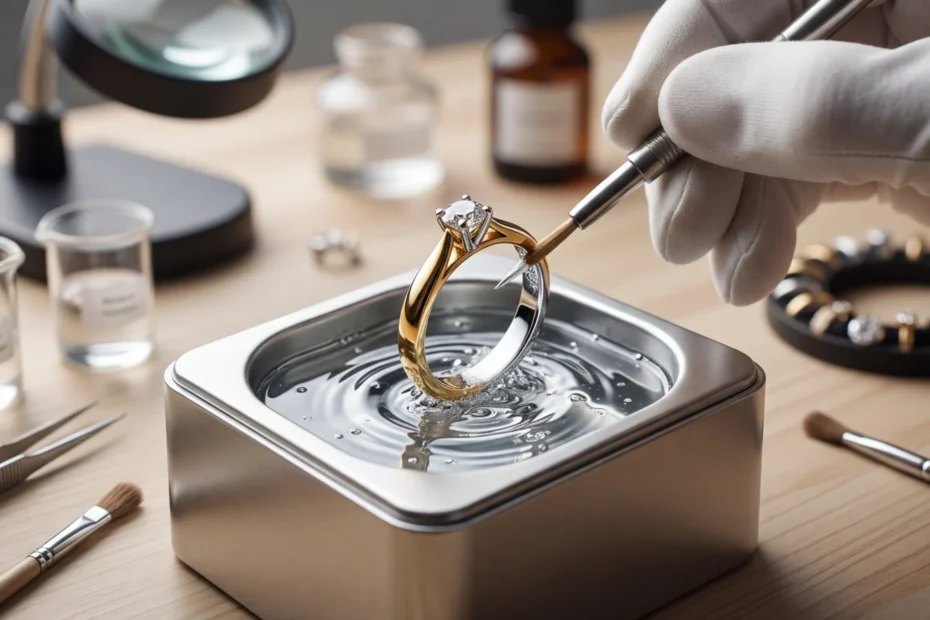
Yes, you can change yellow gold to white gold in appearance. No, you usually cannot permanently change the base alloy color without remaking the piece.
That distinction is where most buyers lose money.
They pay once expecting a forever result, then get surprised when yellow undertones reappear in high-contact areas.
TL;DR
- You can make yellow gold look white with rhodium plating, but this is a surface conversion, not a permanent metal transformation.
- Plating wear is expected, especially on ring bottoms, edges, and prongs that rub daily.
- The best decision is often between three paths: re-plate, re-mount in white gold, or keep yellow gold and reset expectations.
- Total ownership cost depends on maintenance cycle, not just first jeweler invoice.
How Yellow Gold Becomes “White” in Practice
Most jewelers create the white look by applying a thin rhodium layer over the existing piece.
Rhodium is a bright, hard, corrosion-resistant platinum-group metal used in fine-jewelry finishing and electroplating systems.
If you want a quick technical baseline for the metal itself, see the Royal Society of Chemistry element profile for rhodium.
For consumer-level metal context, Blue Nile’s education section on gold jewelry metals is a practical companion read.
What Most Buyers Miss
A white finish on yellow gold is usually a maintenance model, not a one-time transformation.
Expectation:
“One payment, permanent white.”
Reality:
Wear zones eventually reveal warmer undertones.
Decision:
Choose conversion path based on 3-year ownership, not one invoice.
The GoldConsul Editorial Perspective
The wrong question is “Can it be done?” The right question is “Which conversion route gives me the best look, durability, and maintenance fit for my real wear pattern?”
Knowledge Gap: Color Match vs Structural Value
Many shoppers optimize only for color outcome.
- Color: easy to adjust short-term with plating.
- Structure: depends on prong health, solder joints, and alloy behavior.
- Value: improves when maintenance plan is explicit before conversion.
Three Real Options: Re-Plate, Re-Mount, or Keep Yellow Gold
In most cases, your jeweler decision tree is straightforward once you separate appearance goals from durability goals.
Use this comparison first, then request quote details.
| Path | Upfront Cost | Durability Profile | Best For |
|---|---|---|---|
| Rhodium plate existing yellow gold | Low to medium | Finish wears over time | Fast visual change, moderate wear |
| Re-mount stones into white-gold setting | Medium to high | Better long-horizon consistency | Daily wear and long-term use |
| Keep yellow gold, polish and maintain | Low | No coating cycle risk | Sentimental pieces and low-friction ownership |
Chart 1: Wear-Speed by Contact Zone (Horizontal Bars)
Conceptual plating wear risk (0-100 relative scale)
Interpretation: Reappearance usually starts where friction and skin/oil contact are highest, not uniformly across the ring.
Chart 2: 36-Month Ownership Cost Shape (Line)
Illustrative cost paths: plating cycle vs re-mount
Re-mount path
M0M6M12M18M24M30M36
Interpretation: Lower entry cost can still approach higher lifetime cost when re-plating intervals are short and labor rates rise.
Chart 3: Conversion Risk Heatmap
Relative risk score (1 low, 5 high)
| Factor | Re-plate | Re-mount | Keep Yellow |
|---|---|---|---|
| Color drift risk | 4 | 2 | 1 |
| Upfront spend pressure | 1 | 4 | 1 |
| Long-term maintenance burden | 5 | 3 | 2 |
Interpretation: The “cheapest today” path can have the highest maintenance burden if you wear the piece daily.
Quick Decision Checklist Before You Authorize Conversion
Internal Deep Dives for Next Step Decisions
If your main concern is color return, read does white gold turn yellow and why white gold turns yellow.
For metal behavior and care, pair this guide with what is white gold, what white gold is made of, and how to clean white gold.
Video walkthrough
This clip compares yellow and white gold characteristics and helps you align conversion expectations before paying for work.
Bottom Line
You can change yellow gold to white in look, but this is usually a finish-management decision rather than a permanent alloy conversion.
If you want stable long-term color with less maintenance friction, a proper white-gold re-mount is often the cleaner route despite higher upfront cost.
FAQ: Can You Turn Yellow Gold Into White Gold?
Can yellow gold be permanently turned into white gold?
Not in a simple plating service. Plating changes surface appearance, while permanent base-color change usually requires remaking or re-mounting in a white-gold alloy.
How long does rhodium plating usually last on converted yellow gold?
It depends on wear pattern, skin chemistry, and jewelry shape. High-friction daily-wear zones tend to show color return sooner than low-contact areas.
Will conversion damage my ring?
Quality conversion should not damage a structurally sound ring, but worn prongs, weak joints, and previous repair history should be checked before any finishing work.
Is re-mounting better than repeated re-plating?
For daily wear and long-term consistency, re-mounting can be better despite higher upfront cost. For occasional wear, re-plating may remain cost-efficient.
What should I ask a jeweler before approving conversion?
Ask for process scope, expected wear timeline, structural inspection notes, maintenance interval, and any limits on color durability in writing.
 When you purchase a service or a product through our links, we sometimes earn a commission, at no extra cost to you.