
Understand underwater gold mining, from placer deposits and dredging to technology, regulations, environmental risk, permits, and realistic economics.
- Focus on marine mineral systems, not treasure-on-the-seafloor myths.
- Check legal, technical, economic, and environmental hurdles together.
- Treat underwater gold as a niche supply story, not a near-term gold boom.
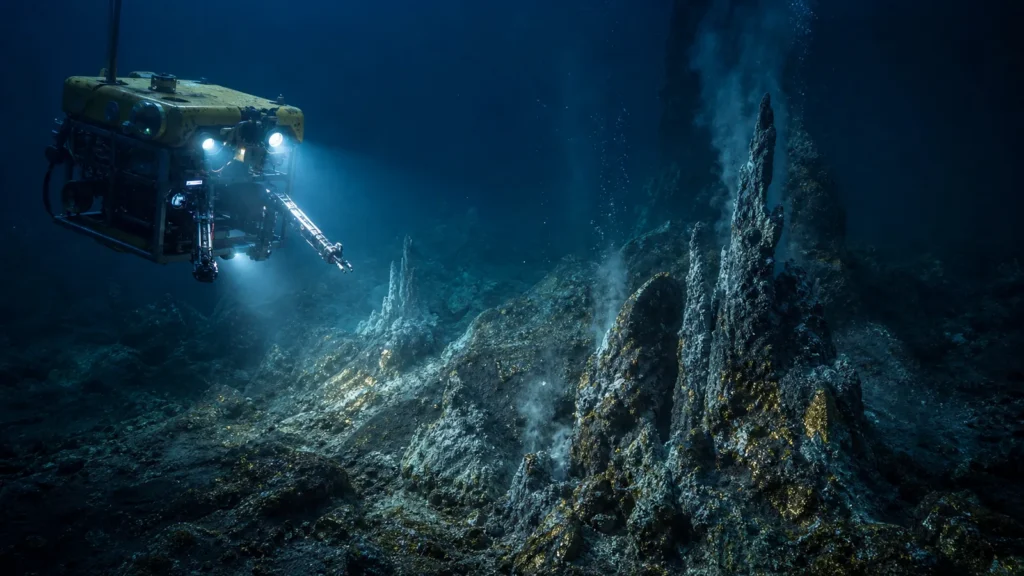
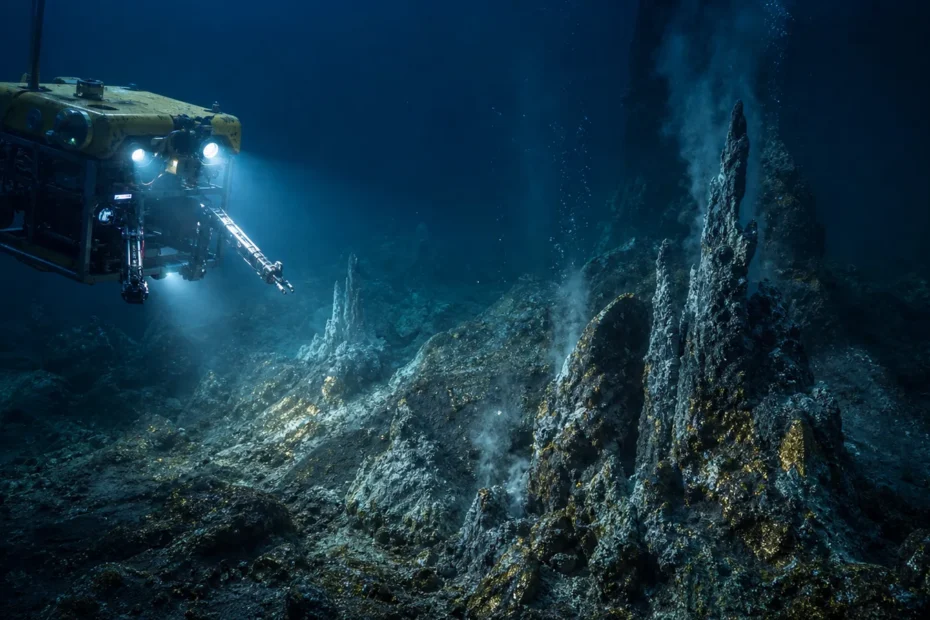
Gold mining underwater sounds futuristic, but the realistic story is narrower than the headline. The most credible targets are not loose treasure on the seafloor. They are marine mineral systems such as seafloor massive sulfides, where copper, zinc, silver, and sometimes gold can occur together in hard-rock deposits formed around hydrothermal activity.
The hard question is not whether gold exists under the ocean. It does. The better question is whether underwater gold mining can be legal, economical, technically reliable, and environmentally defensible at the same time. In 2026, that answer is still mostly unproven.
TL;DR: Gold Mining Underwater
- Underwater gold is most relevant in seafloor massive sulfide systems, not as easy-to-scoop nuggets.
- The technology exists for surveying and sampling, but large-scale commercial recovery remains difficult and costly.
- Legal status depends on location: national waters, the high seas, and the international seabed Area are governed differently.
- Environmental risk is central because deep-sea habitats recover slowly and baseline science is incomplete.
- For investors and readers, underwater gold mining should be treated as a speculative frontier, not a near-term replacement for land-based gold supply.
What Does Gold Mining Underwater Actually Mean?
In practical terms, underwater gold mining means exploring, sampling, and potentially extracting gold-bearing material from the seafloor or beneath shallow water. That can include nearshore placer settings, submerged river channels, and deep-ocean mineral deposits.
The deep-ocean version gets the most attention because it feels new. The U.S. Geological Survey notes that seafloor massive sulfides may be enriched in copper, zinc, iron, gold, and silver. These are not conventional gold veins; they are polymetallic systems formed by hot fluids circulating through oceanic crust.
That distinction matters. A mine designed around a mixed copper-zinc-gold sulfide ore faces different metallurgy, permitting, economics, and waste questions than a placer operation. Readers comparing this with land-based extraction can use GoldConsul’s guides to gold ore and how to identify gold ore as useful background.
Where Underwater Gold Might Occur
There are three broad settings to understand. Only one is usually central to deep-sea mining debates.
- Nearshore placers: waves and currents can concentrate dense minerals, including gold, in beach or shallow offshore sediments.
- Submerged paleochannels: old river systems may now sit below water after sea-level change, burial, or coastal evolution.
- Seafloor massive sulfides: hydrothermal systems can create metal-rich deposits that may contain gold as a byproduct metal.
For the future of underwater gold mining, seafloor massive sulfides are the most important category. They are also the category with the most unresolved environmental and regulatory questions.
Method, Technology, and Regulation Table
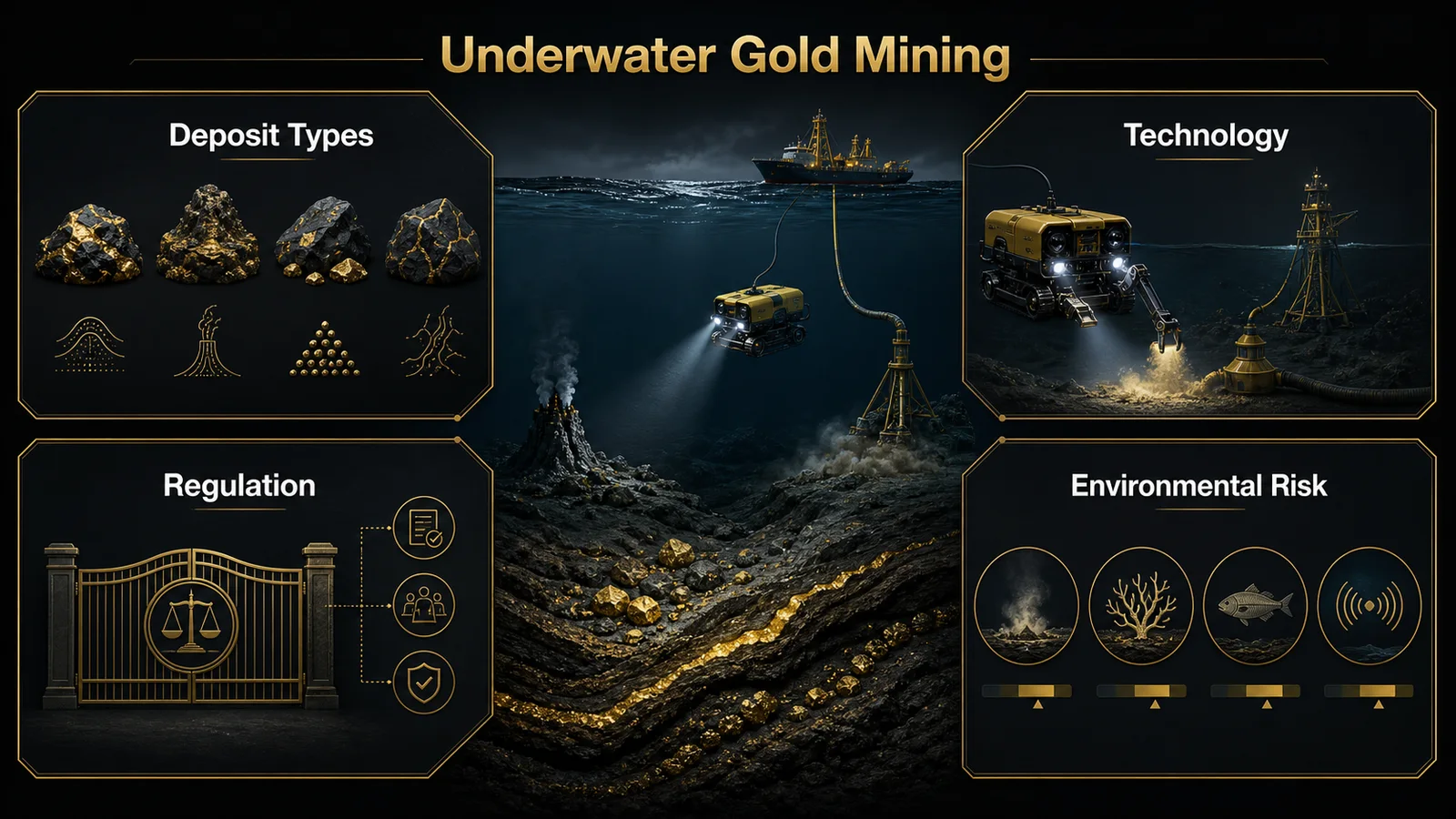
The table below separates the concept from the practical barriers. A project can fail at any row even if the geology is promising.
| Stage | Typical Technology | Gold Relevance | Regulatory and Risk Gate |
|---|---|---|---|
| Survey | Ship-based mapping, sonar, magnetics, autonomous vehicles, ROV inspection. | Identifies mineralized structures and targets for sampling. | Requires access rights, data quality, and environmental baseline planning. |
| Sampling | ROV grabs, drilling, cores, and geochemical assays. | Confirms whether gold is present and whether grade is meaningful. | Small disturbance still needs controls, documentation, and permission. |
| Extraction | Remote seafloor cutting or collection, riser systems, support vessels. | Gold is often a byproduct recovered from polymetallic ore. | Highest uncertainty: plume effects, habitat removal, monitoring, liability, and closure. |
| Processing | Dewatering, transport, metallurgical recovery, tailings or residue management. | Economic value depends on total recoverable metals, not gold alone. | Waste handling, discharge rules, and chain-of-custody controls become decisive. |
The Technology Is Impressive, but It Is Not Magic
Modern ocean engineering can map deep seafloor terrain, deploy remotely operated vehicles, and recover samples from extreme depths. That makes underwater mineral exploration possible in places that were unreachable a few generations ago.
Mining is a different standard. A commercial system must work for long periods in high pressure, corrosive saltwater, rough weather, limited visibility, and remote locations. Equipment downtime at sea is expensive, and ore handling becomes more complicated when every ton starts underwater.
This is why gold-only language can mislead readers. In many deep-sea concepts, gold would not be the main commodity. It would be one value stream inside a broader polymetallic deposit, similar to how some land mines recover gold alongside copper or silver. GoldConsul’s overview of the top gold mining companies shows how scale, capital, metallurgy, and jurisdiction matter even on land.
The Legal Reality: Location Controls Everything
Underwater mining rules change sharply with geography. A project inside a country’s waters may fall under that country’s mineral, environmental, maritime, fisheries, and cultural-resource laws. A project in the international seabed Area is a different legal category.
The International Seabed Authority reported in March 2026 that negotiations continued on draft exploitation regulations for mineral resources in the Area. That means readers should be cautious about claims that high-seas deep-sea mining is already a settled, open commercial lane.
In the United States context, NOAA explains that U.S. companies need government authorization before engaging in deep seabed mining activities beyond national jurisdiction. The legal path is not simply “find ore, start mining.”
Environmental and Legal Caution
This article is educational, not legal, investment, or environmental permitting advice. Underwater mineral work can affect protected habitats, fisheries, cultural resources, water quality, and international obligations. Any real project requires current legal review, scientific baseline studies, and regulator engagement before field activity.
Environmental Risk Is Not a Footnote
The environmental debate is not only about visible damage. Deep-sea habitats can be slow-growing, poorly mapped, and scientifically under-sampled. Removing hard substrate, disturbing vent communities, or creating sediment plumes may have effects that are hard to measure quickly.
Baseline data is especially important. If scientists do not know what lived there before disturbance, it becomes difficult to judge recovery, compensation, or long-term harm. This is one reason the environmental standard for underwater mining should be higher than a simple “can the machine do it?” test.
There is also a knowledge problem around inactive versus active hydrothermal systems. Mining an inactive deposit may sound less harmful than disturbing an active vent ecosystem, but the classification itself can be scientifically complex. That uncertainty belongs in the decision, not outside it.
Could Underwater Mining Change Gold Supply?
In the near term, probably not in a major way. Land-based gold mining, recycling, and above-ground stocks still dominate the market conversation. Underwater deposits may eventually contribute specialized supply, but they face capital, permitting, technology, social-license, and environmental hurdles.
For investors, the practical approach is skepticism without dismissal. A company presentation may show attractive metal grades, but the real questions are broader: depth, tonnage, recovery method, jurisdiction, permitting path, environmental liabilities, financing, and whether the gold is material to project economics.
If your interest is the broader mechanics of extraction, compare this frontier with GoldConsul’s guides to early gold mining techniques, gold rush mining techniques, and gold mining in Arizona. The contrast is useful: mining methods change, but ore quality, access, law, and cost still decide the outcome.
Reader Checklist: How to Judge an Underwater Gold Claim
Before You Trust the Story
- Deposit type: Is it placer sediment, massive sulfide, nodules, crusts, or vague “seafloor gold” language?
- Grade and tonnage: Are there independent assays and enough material to matter?
- Recovery plan: Is gold a main product or a byproduct in a polymetallic ore?
- Jurisdiction: Is the project in national waters, beyond national jurisdiction, or under a pending legal framework?
- Environmental baseline: Has the company mapped habitats, currents, plume behavior, and monitoring methods?
- Financing realism: Does the project have credible capital for offshore engineering, processing, insurance, and delays?
Knowledge Gap: The Ocean Is Still Under-Mapped
Weak underwater gold content usually jumps from “metals exist on the seafloor” to “mining is inevitable.” That skips the hard middle.
The missing work is baseline science: deposit continuity, ecosystem mapping, plume modeling, recovery timelines, and enforceable monitoring. Until those gaps shrink, confident claims deserve scrutiny.
Editorial Perspective
The GoldConsul Editorial Perspective
Underwater gold mining is best treated as a technical frontier, not a simple gold rush. The responsible lens is evidence first: geology, recoverability, law, and environmental proof before excitement.
Bottom Line
The future of gold mining underwater is real enough to study, but not mature enough to treat as inevitable. The strongest opportunities are likely tied to polymetallic seafloor systems where gold is one part of a broader metal mix.
The responsible conclusion is cautious. Underwater gold mining may become more important if technology, regulation, and environmental monitoring improve. Until then, every claim should be tested against deposit quality, legal authority, ecological risk, and economic discipline.
FAQ: Gold Mining Underwater
Is there gold under the ocean?
Yes. Gold can occur in marine mineral systems, especially seafloor massive sulfides, and in some nearshore placer environments. The challenge is finding enough recoverable gold under legal and environmental constraints.
Is underwater gold mining happening commercially now?
Commercial underwater mineral extraction remains limited and controversial, especially in deep-sea settings. Exploration and technology development are more advanced than broad, routine commercial recovery.
What technology is used for underwater gold exploration?
Projects may use sonar mapping, autonomous underwater vehicles, remotely operated vehicles, seabed sampling, drilling, and geochemical assays. Extraction would require much heavier seafloor and ship-based systems.
Who regulates deep-sea mining?
It depends on location. National waters are governed by national law. Mineral activities in the international seabed Area involve the International Seabed Authority and its evolving Mining Code framework.
Why is underwater gold mining controversial?
The main concerns are habitat disturbance, sediment plumes, biodiversity loss, weak baseline data, monitoring difficulty, and unresolved liability. The ocean engineering challenge is large, but the environmental governance challenge may be larger.
 When you purchase a service or a product through our links, we sometimes earn a commission, at no extra cost to you.