Understand pink gold jewelry, including copper alloys, karats, color differences, buying checks, care, allergies, and how it compares with rose gold.
- Pink, rose, and red gold differ mainly by copper tone and alloy balance.
- Ask whether the piece is solid alloy, plated, vermeil, or gold-filled.
- Check karat, color match, wear areas, and return terms before buying.
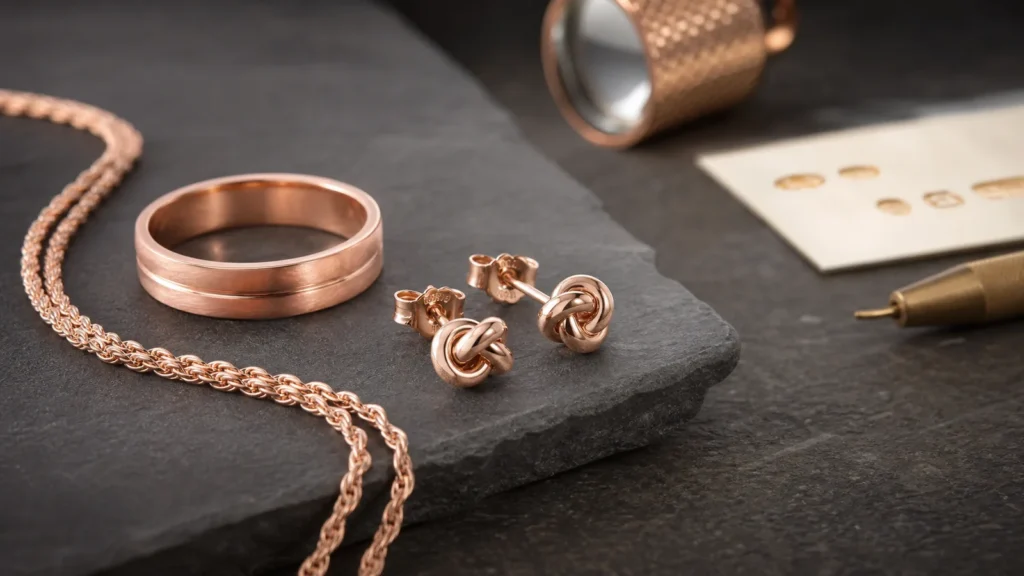
Pink gold jewelry is gold alloyed for a soft blush color, usually by adding copper and sometimes small amounts of silver or zinc. In everyday jewelry language, “pink gold,” “rose gold,” and “red gold” sit on the same color family, but they do not always mean the exact same shade.
The practical buyer’s question is not just whether the color looks pretty. It is whether the piece is solid karat gold, plated, gold-filled, vermeil, or simply rose-colored base metal.
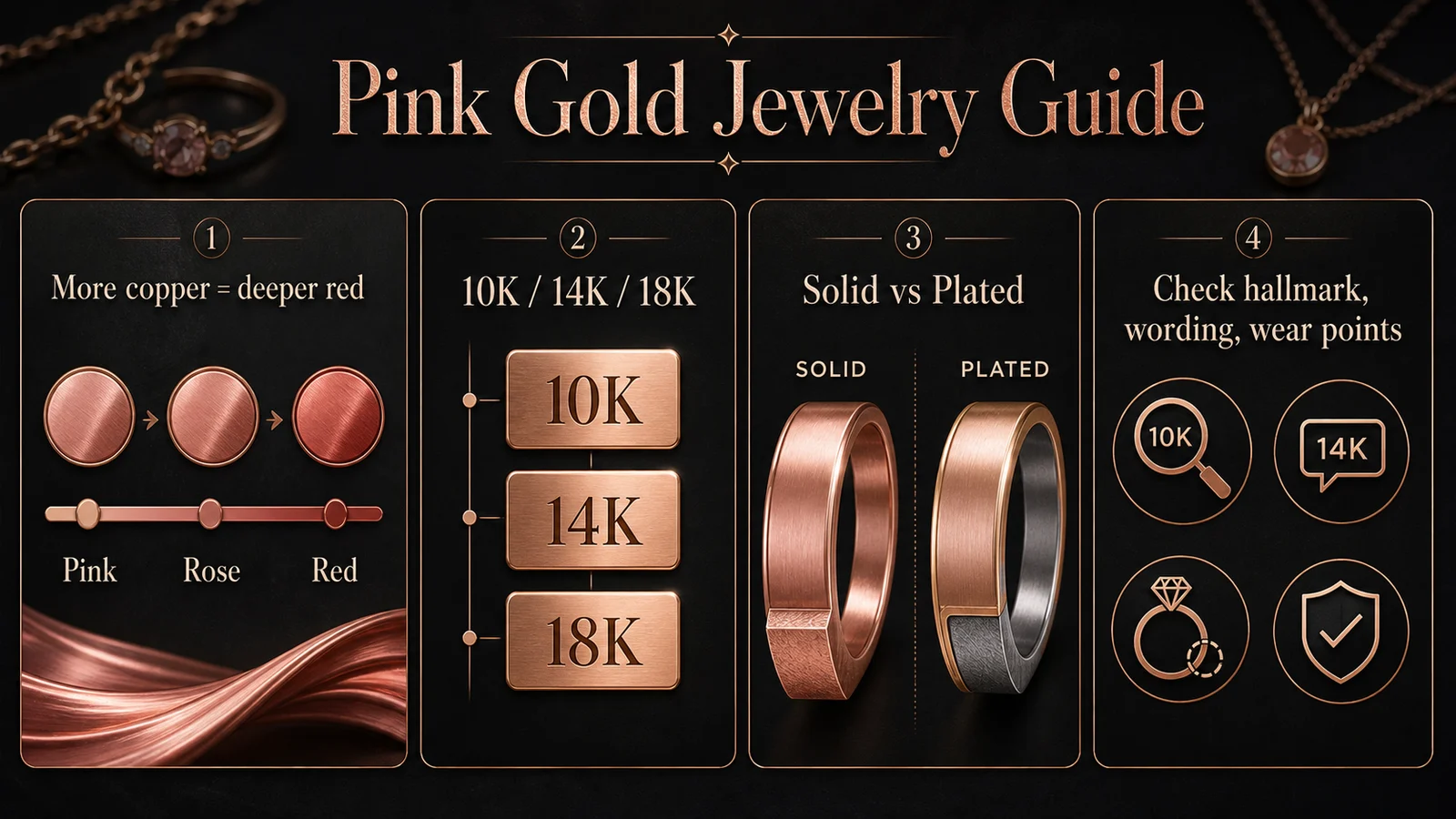
- Pink gold is a gold-copper alloy; more copper usually pushes the color from blush pink toward rose or red.
- Karat still matters: 10K, 14K, and 18K describe gold purity, not just color.
- Pink gold and rose gold are often used interchangeably, while red gold usually signals a deeper copper-rich tone.
- Solid pink gold is different from pink-gold plating; check hallmark, listing wording, and wear points before buying.
- For everyday jewelry, 14K is often the practical middle ground between durability, color, and price.
What Is Pink Gold Jewelry?
Pink gold jewelry is made from gold mixed with other metals to create a warm pink color and enough hardness for normal wear. Pure 24K gold is naturally yellow and soft, so most jewelry gold is alloyed for strength and color.
The World Gold Council explains that jewelry gold color depends on alloying metals, with copper producing the soft pink complexion associated with rose gold. That is the technical baseline: pink gold is not a separate precious metal; it is a gold alloy.
Pink Gold vs Rose Gold vs Red Gold
In retail listings, pink gold and rose gold are often used as near-synonyms. When a jeweler makes a distinction, pink gold usually means a lighter blush tone, rose gold a warmer middle tone, and red gold a deeper copper-rich tone.
The names are less standardized than karat marks. A brand’s “pink gold” can look like another brand’s “rose gold” because the non-gold alloy mix can vary while the karat stays the same.
| Term | Typical shade | Alloy logic | Buyer interpretation |
|---|---|---|---|
| Pink gold | Soft blush, light peach-pink | Gold alloy with copper, often balanced by lighter alloy metals | Good phrase for color, but still confirm karat and construction. |
| Rose gold | Warm pink-copper | Gold plus copper, sometimes with silver or zinc | Common retail term; see our guide on how to tell if rose gold is real. |
| Red gold | Deeper red or coppery tone | Usually a higher copper influence within the non-gold alloy portion | Attractive if intentional, but very orange color can also signal cheap plating. |
| Rose gold tone | Any pink-metal appearance | May not contain meaningful gold unless stated | Treat as a color description, not a gold-content claim. |
How Copper and Karat Change the Color
Copper is the main reason pink gold looks pink. More copper in the alloy portion generally creates a deeper rose or red tone, while more silver or lighter alloy metals can soften the color.
Karat tells you the gold fraction. The GIA 4Cs guide to white, yellow, and rose gold engagement rings explains karat as parts of gold out of 24, with 18K equal to 18 parts gold and 6 parts alloying metals. That same logic applies to pink gold.
| Karat mark | Gold content | Typical pink-gold effect | Best use case |
|---|---|---|---|
| 10K / 417 | 41.7% gold | Can look stronger or more coppery depending on alloy mix | Budget and durability, but lower gold content. |
| 14K / 585 | 58.5% gold | Often the most practical balance of color, strength, and price | Daily rings, chains, earrings, bracelets, and wedding bands. |
| 18K / 750 | 75% gold | Higher gold content; color can be warmer and less aggressively pink | Fine jewelry where metal value and luxury feel matter more. |
| Plated / tone | Surface layer or no stated gold content | Color depends on coating, not solid alloy | Fashion jewelry if priced and disclosed honestly. |
If you want the purity math before comparing prices, use GoldConsul’s gold purity calculator. For care expectations by karat, the guide on whether 14K gold tarnishes is a useful companion.
Solid Pink Gold vs Plated Pink Gold
Solid pink gold means the pink gold alloy runs through the piece. It can scratch, dull, or need polishing, but the pink color is not just a thin skin over another metal.
Plated pink gold is different. It has a surface layer over a base metal, so the color can wear through at clasps, ring bottoms, chain links, and high-friction edges.
The U.S. FTC Jewelry Guides in 16 CFR Part 23 are clear that gold-content, plating, coating, and quality claims should not mislead consumers. For buyers, that means the exact words in a listing matter.
If your main concern is water and coating durability, compare this with GoldConsul’s guide to whether gold-plated jewelry is waterproof. For a broader surface-layer comparison, read whether white gold plating actually uses white gold and what gold filled means.
Who Pink Gold Looks Best On
Pink gold works well when you want warmth without the stronger traditional signal of yellow gold. It can soften white diamonds, flatter warm gemstones, and make simple jewelry feel less stark than white metals.
Skin tone rules are not absolute, but there are useful tendencies. Pink gold often suits neutral, warm, olive, and deeper skin tones because the copper warmth reads intentional rather than harsh. On very cool undertones, a lighter blush pink can be easier than a deep red-gold tone.
| Style goal | Good pink-gold choice | What to avoid | Practical move |
|---|---|---|---|
| Daily minimal jewelry | 14K solid pink gold studs, chain, or simple band | Very thin plating on pieces worn daily | Choose clean shapes and inspect clasps closely. |
| Engagement or wedding jewelry | 14K or 18K solid rose/pink gold with clear hallmark | Trend-heavy halos if you want a timeless look | Try the ring beside your normal watch, bracelets, and wardrobe colors. |
| Mixed-metal styling | Pink gold plus either yellow or white gold | Too many metal colors competing at once | Make pink gold the warm anchor, not a random accent. |
| Budget fashion jewelry | Clearly disclosed plating or vermeil at a fair price | Listings priced like solid gold but worded like costume jewelry | Read every construction term before checkout. |
If your concern is whether the color itself looks dated, see the companion guide on whether rose gold is tacky. The short version: color is rarely the problem by itself; poor construction and overdesigned settings are what make pink-gold jewelry look cheap.
Buying Checklist for Pink Gold Jewelry
- Hallmark: look for 10K/417, 14K/585, 18K/750, or a market-specific official mark.
- Construction wording: solid, hollow, filled, vermeil, plated, electroplated, tone, or color are not interchangeable.
- Wear points: check ring undersides, prongs, clasps, chain links, and earring posts for exposed base metal.
- Return window: buy with enough time to inspect the piece under neutral light and, if needed, ask a jeweler.
- Price logic: if a claimed solid 18K piece is priced like costume jewelry, verify before you fall in love with the color.
For secondhand pieces, use more than one clue. A hallmark is useful, but weight, wear pattern, seller documentation, and professional testing all matter. The same practical checks in the rose gold authenticity guide apply to pink gold.
Care Tips: How to Keep Pink Gold Looking Good
- Clean solid pink gold with mild soap, lukewarm water, and a soft cloth.
- Dry jewelry fully before storage, especially chains and ring settings.
- Remove pieces before pools, chlorine, harsh cleaning products, and abrasive gym work.
- Store pink gold separately so harder stones or other jewelry do not scratch it.
- Be gentler with plated or vermeil pieces because polishing can accelerate surface-layer wear.
Solid pink gold is generally manageable for daily wear, but it is not immune to scratches or surface dulling. Plated jewelry needs more caution because once the top layer wears, cleaning cannot restore missing metal.
Bottom Line
Pink gold jewelry can be elegant, durable, and practical when the alloy and construction are clear. Treat pink, rose, and red gold as related color terms, then use karat and construction to decide whether the piece is worth the price.
For most buyers, 14K solid pink or rose gold is the safest everyday choice. Choose plating only when the price, disclosure, and expected lifespan match a fashion-jewelry purchase.
FAQ: Pink Gold Jewelry
Is pink gold the same as rose gold?
Often, yes. Many sellers use pink gold and rose gold interchangeably. When they separate the terms, pink gold usually means a lighter blush tone and rose gold a warmer copper-pink tone.
What is pink gold made of?
Pink gold is usually made from gold alloyed with copper, sometimes with silver or zinc added to adjust color and hardness. The gold percentage depends on the karat mark.
Is pink gold real gold?
It can be. Solid 10K, 14K, or 18K pink gold is real gold alloy. Pink-gold plated or pink-gold tone jewelry may only have a surface layer or color finish, so the wording matters.
Does pink gold tarnish or turn green?
Solid pink gold can dull or discolor slightly from alloy reactions, sweat, lotions, or residues, but it should not behave like cheap base metal. Green marks are more common with copper exposure or worn plating.
Is 14K or 18K pink gold better?
14K is often better for daily wear because it balances durability, price, and gold content. 18K has more gold and a luxury feel, but it is usually more expensive and can be softer.
 When you purchase a service or a product through our links, we sometimes earn a commission, at no extra cost to you.