
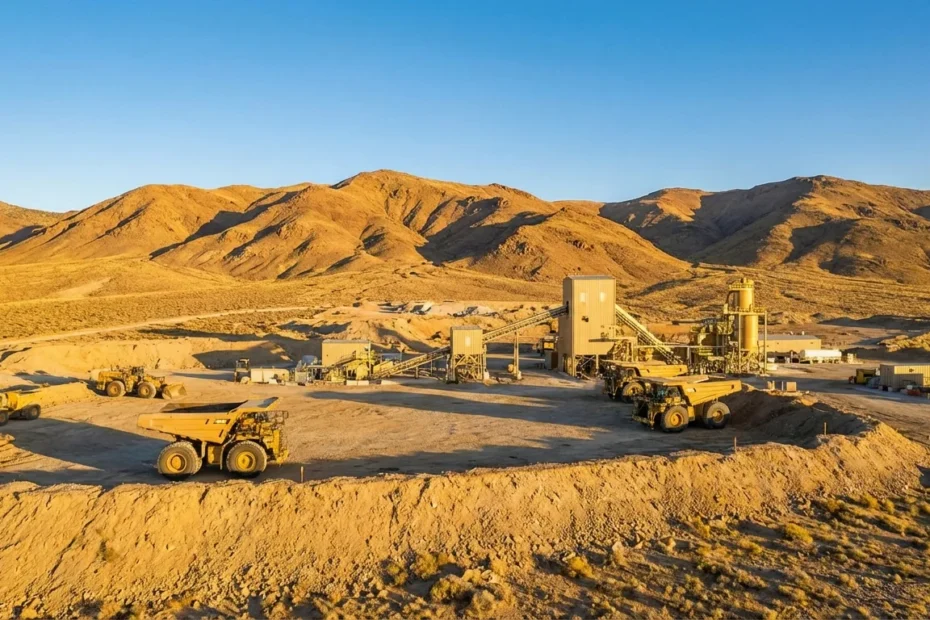
Gold mining in Nevada remains one of the strongest U.S. prospecting themes, but beginners usually overestimate “district fame” and underestimate legal-access friction. Nevada has enormous mining significance, yet recreational success depends less on mythology and more on land status checks, claim awareness, and repeatable sampling discipline.
TL;DR
- Nevada is a legitimate gold state for both industrial output and recreational prospecting interest.
- Legal status and claim checks are the first filter, not optional admin details.
- Most beginners should optimize for access + repeatable sampling, not “best district” hype.
- A structured three-trip plan outperforms random site-hopping.
Gold Mining in Nevada: The Direct Answer
Nevada is one of the most important mining jurisdictions in the United States, but recreational prospecting outcomes vary sharply by access quality and execution discipline. For legal context, start with official references: the Nevada Division of Minerals, BLM Nevada mining/minerals guidance, and NRS Chapter 517.
Public-land assumptions are where most beginners go wrong. Before any field trip, treat land status and claim status as a hard gate, not a post-check. The BLM collecting/mineral context PDF is useful baseline reading: Collecting on Public Lands.
Chart 1: District Opportunity vs Access Friction
Illustrative planning map for beginner-level decision quality:
Interpretation: famous zones can be excellent geologically while still being poor beginner choices due to claim and access complexity.
What Most Prospectors Miss
In Nevada, your first failure is usually legal/logistical, not technical. People lose weeks by driving to “hot” names without validating claim status and workable access.
Chart 2: Site Type vs Realistic Recreational Outcome
Practical expectations for beginner/intermediate field work:
Interpretation: success in Nevada is usually process-first. Recreational prospecting should be framed as a data-driven field hobby, not a quick income model.
The GoldConsul Editorial Perspective
Nevada has elite geological credentials, but beginner performance comes from legal discipline and repeatable field execution, not from chasing famous names.
Knowledge Gap: District Reputation vs Practical Access
Most rankings list “best places” but skip the first operational truth: if legal access is weak, the site is functionally low quality for your trip.
- Geology signal: high in many Nevada belts.
- Access signal: highly variable and frequently the true bottleneck.
- Action signal: plan trips around accessible, verifiable sites first.
Beginner District Strategy
| District Type | Why It Attracts People | Beginner Filter |
|---|---|---|
| Major industrial trend zones | Strong geological reputation | High access/claim complexity |
| Peripheral historical localities | Better practical entry points | Still requires legal validation |
| Random roadside targets | Convenience and speed | Usually poor decision quality |
Chart 3: Starter Budget vs Learning Curve
How to build capability efficiently:
Interpretation: in Nevada, better process quality usually beats buying bigger gear too early.
Legal and Field Checklist Before Any Trip
- Confirm land status and mineral-entry context for your exact target area.
- Validate claim status before sampling activity.
- Follow BLM/state guidance and avoid assumption-based entry.
- Carry water, fuel margin, and basic emergency planning for remote desert routes.
- Document each site, method, and recovery so trip two is better than trip one.
Three-Trip Starter Plan
- Trip 1: legal-status verification + low-risk test sampling.
- Trip 2: repeat same zone with tighter method control.
- Trip 3: compare second vetted zone and update your field playbook.
For related U.S. coverage, compare with gold mining in Virginia, gold mining in Idaho, and gold mining in Michigan.
Video walkthrough: on-the-ground Nevada mine context to align expectations before field planning.
Bottom Line
Nevada is a top-tier gold state, but beginners who win in this environment are the ones who treat legal access, trip structure, and evidence-based site selection as non-negotiable. District reputation helps, process quality decides.
FAQ: Gold Mining in Nevada
Can beginners legally prospect for gold in Nevada?
Is Nevada better than other states for gold prospecting?
Do famous Nevada districts guarantee good recreational outcomes?
What gear should a first-time prospector bring?
What is the most common beginner mistake in Nevada?
 When you purchase a service or a product through our links, we sometimes earn a commission, at no extra cost to you.